
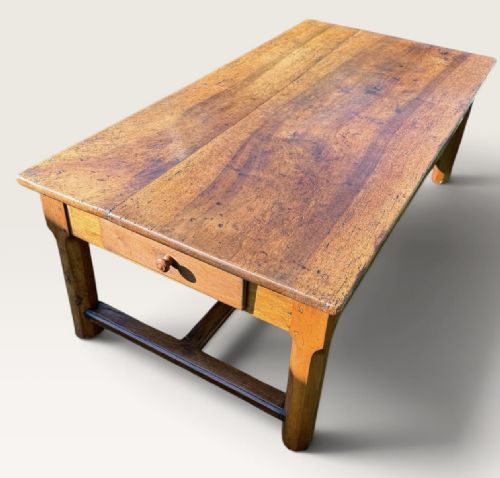


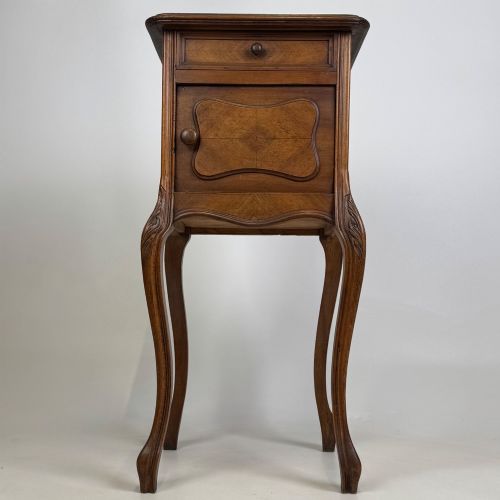
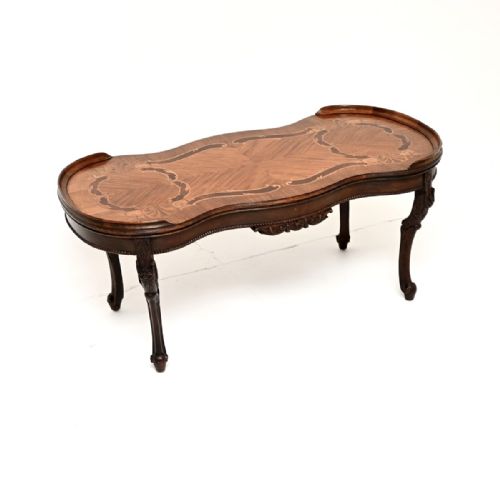
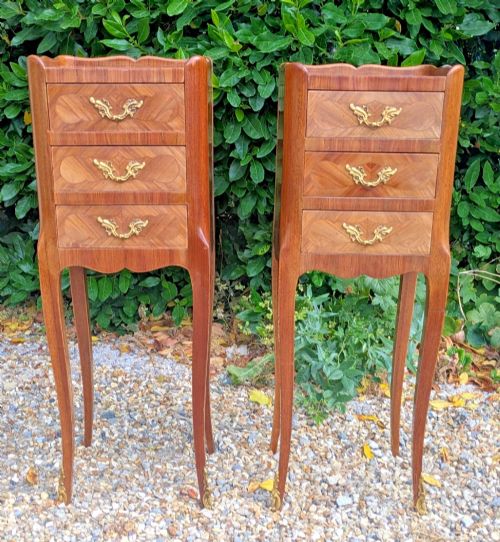
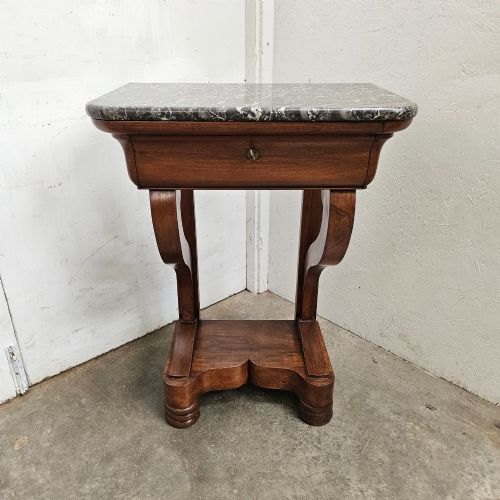
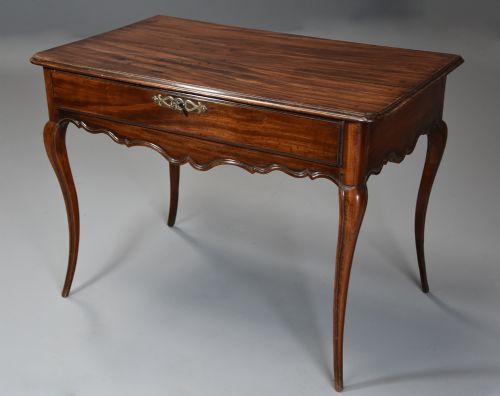
Provincial Walnut Table
A provincial walnut table brings rustic warmth and rich, figured grain to a room, offering practical surface space with distinct regional character.
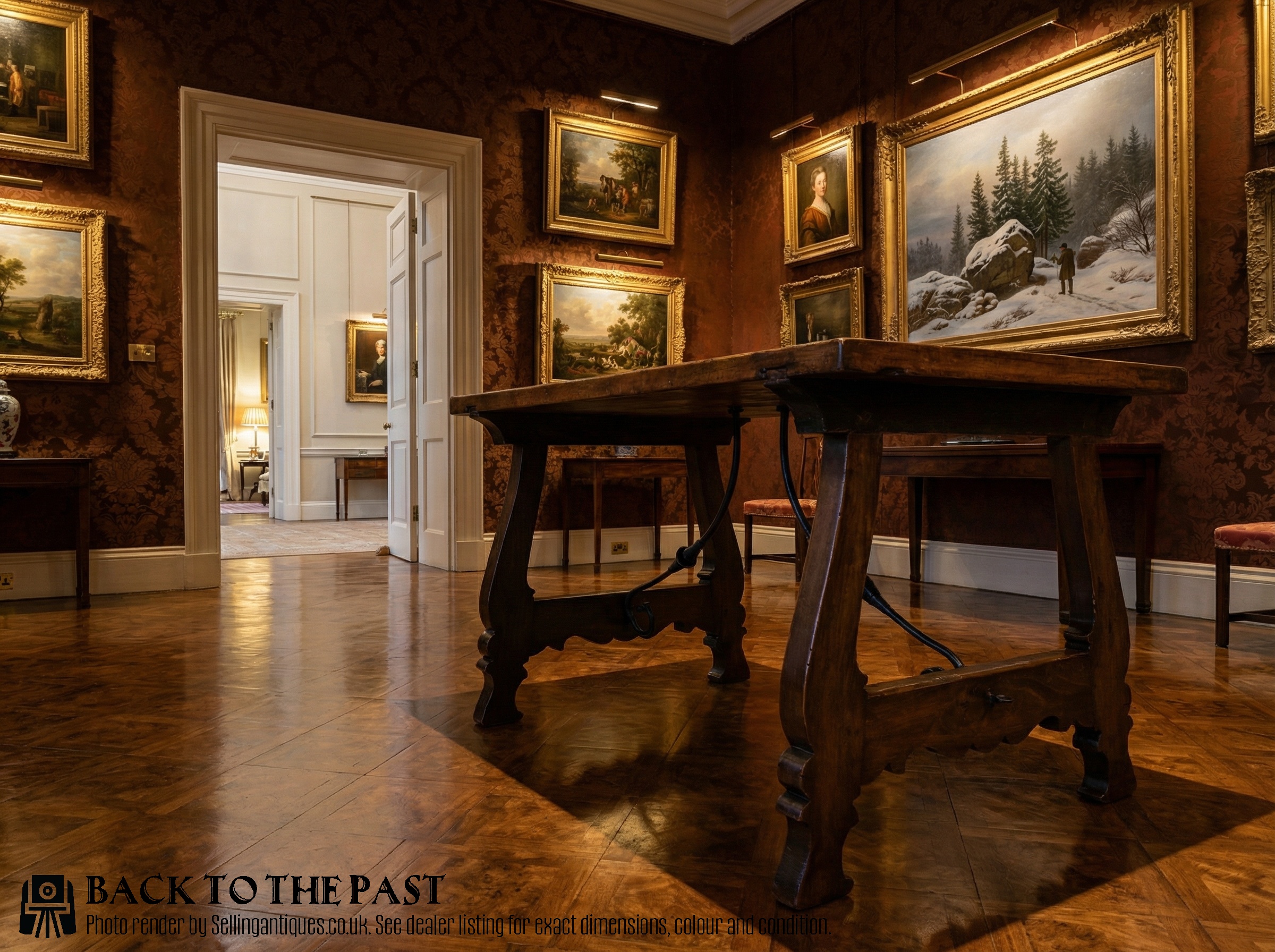
Provincial Walnut Table
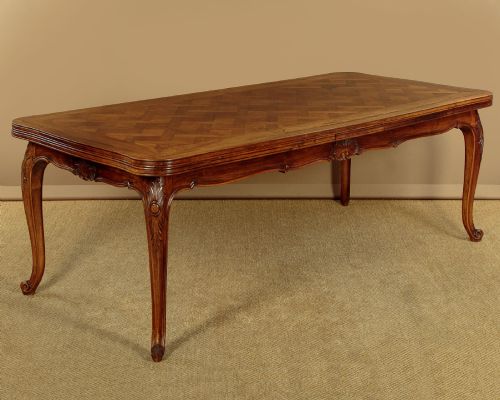
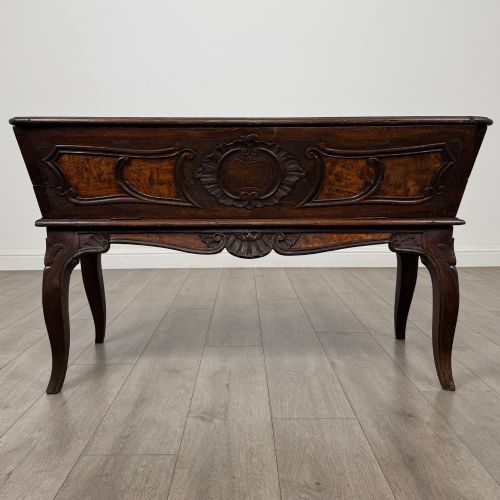
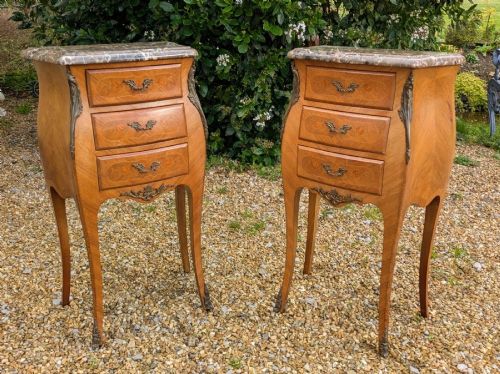
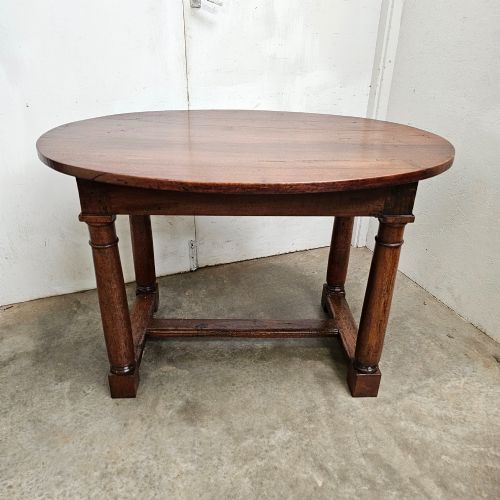
A provincial walnut table embodies domestic utility shaped by regional French and English cabinet-makers across the eighteenth and nineteenth centuries. These pieces encompass dining tables, coffee tables, bedside cabinets, and side tables designed for everyday household tasks.
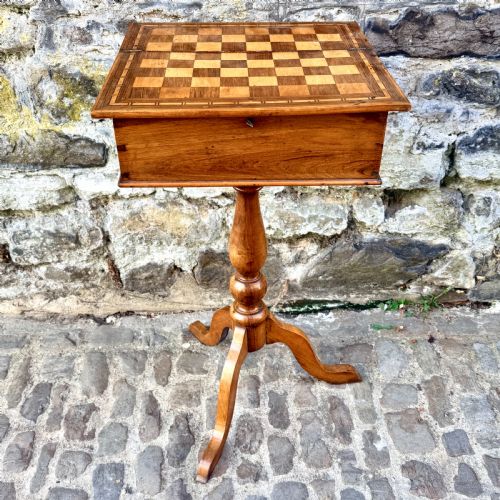
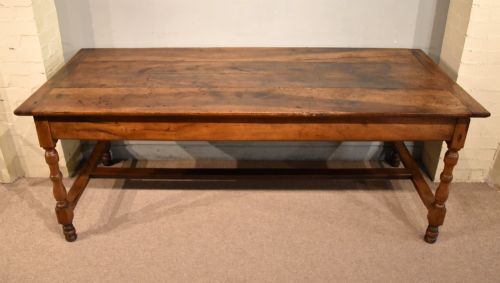
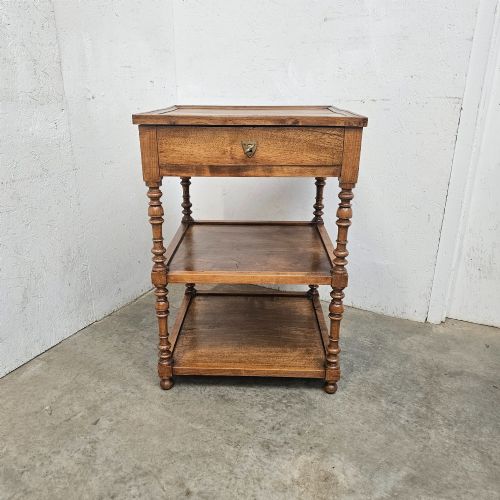
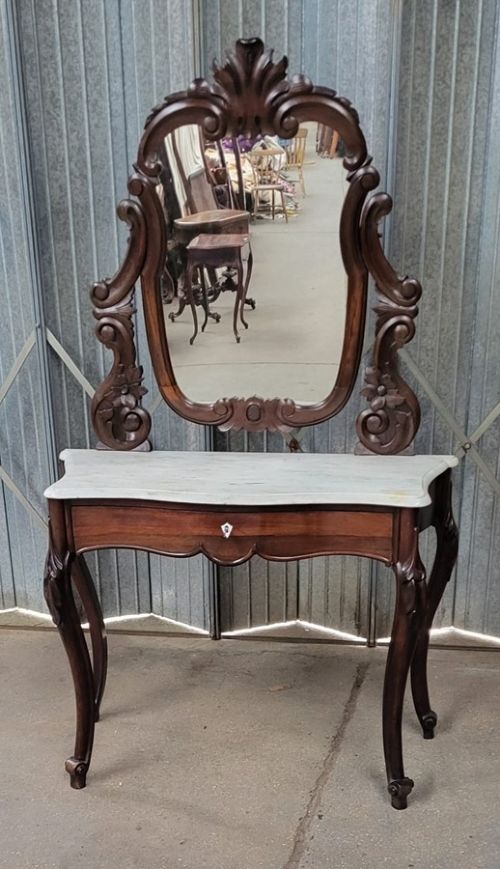
The versions most commonly met on this page date from the nineteenth century and the early twentieth century, reflecting styles such as French Louis XV, Rococo Revival, and rustic farmhouse. They range from diminutive end tables and bedside chests to long refectory dining boards.
How they were made
Constructed primarily from solid walnut and fruitwood, these tables often incorporate decorative veneer, parquetry, and marquetry geometric patterns onto the primary surfaces. Cabinet-makers utilised brass mounts, leather inserts, and inset slabs of Belgian Sainte-Anne marble to add functional durability and visual contrast.
Joinery techniques relied on traditional hand-cut joints, turned legs, barley twist supports, and carved detailing executed by regional artisans. Surfaces were finished to highlight the natural grain of the timber, frequently achieving a deep patina over decades of use.
Listings span from the seventeenth century through to the Edwardian period, utilising materials including marble, brass, leather, and glass alongside solid walnut.
What varies in quality
Quality in a provincial walnut table lies in the selection of the timber, the crispness of the hand-carved details, and the integrity of the underlying construction. Superior examples display carefully matched grain patterns across table tops and drawer fronts, alongside balanced proportions that suit the domestic scale of the piece.
The refinement of auxiliary materials also marks the division between standard and finer pieces, such as heavy, well-cast ormolu mounts, finely worked parquetry, and intact marble tops fitted precisely into the wooden frame.
The Provincial Walnut Table Glossary
- Parquetry
- Geometric wood-mosaic work used for covering floors or furniture tops. This technique creates patterned surfaces using contrasting timbers like walnut and fruitwood.
- Marquetry
- Decorative inlay work where pieces of veneer are fitted into a backing to form pictorial or scroll designs. It frequently appears on the tops of side cabinets and coffee tables.
- Refectory
- A long dining table traditionally used in communal dining halls. These sturdy walnut boards provide substantial surface area for large gatherings.
- Poudreuse
- A French dressing table fitted with a folding mirror and compartments for cosmetics. These pieces combine utilitarian storage with refined cabinet-making.
Provincial Walnut Table: Frequently Asked Questions
How do I clean a walnut surface?
Dust the wood regularly with a soft, dry cloth to prevent grit accumulation on the polished finish. Avoid using harsh chemical sprays or excess water, which can damage the aged timber.
Apply a microcrystalline wax sparingly when the wood appears dry to nourish the grain and maintain the protective sheen. Buff gently with a clean cloth after application to bring up a natural lustre.
Are marble top tables heavy?
Marble top tables possess significant weight due to the dense stone slab fitted into the wooden frame. This weight helps anchor the piece firmly in place during daily use.
When moving these tables, lift the entire structure rather than dragging it to protect the wooden joints. On certain designs, the marble insert lifts out independently to make relocation manageable.
How do I identify a provincial piece?
Provincial pieces display simpler carving and sturdier proportions than grand court furniture, reflecting local materials and regional tastes. They prioritize domestic utility while retaining characteristic regional decorative motifs.
Examine the secondary woods used inside drawers and beneath table tops to understand the regional workshop origins. These construction choices reveal local building traditions distinct from urban cabinet-making.
Can I use a side table daily?
These tables were built for functional domestic service and easily withstand everyday use in modern living spaces. Their durable construction accommodates lamps, books, and daily household items without difficulty.
Protect the walnut surface from direct heat and moisture by using coasters and placemats. Mindful placement away from direct sunlight preserves the rich colour of the timber over time.