

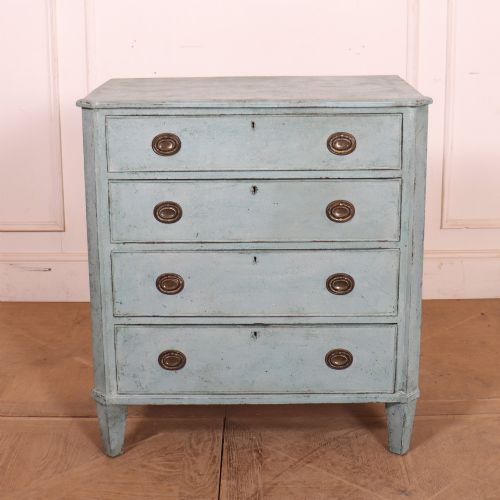

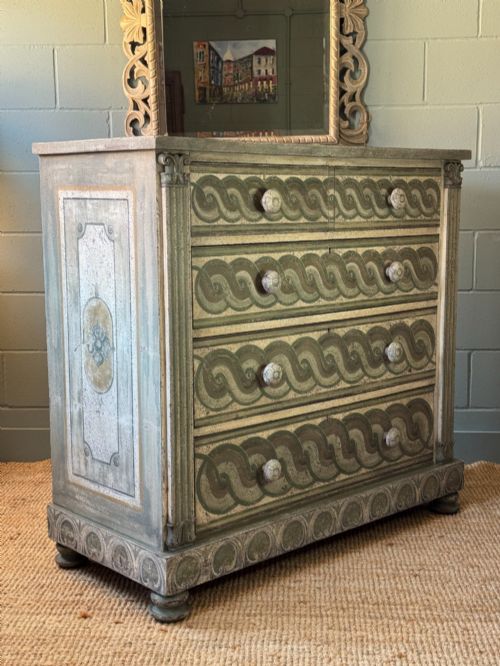


Provincial Painted Dresser
A provincial painted dresser brings functional storage and regional character into a room, spanning centuries of country craftsmanship across Europe and England.
Provincial Painted Dresser
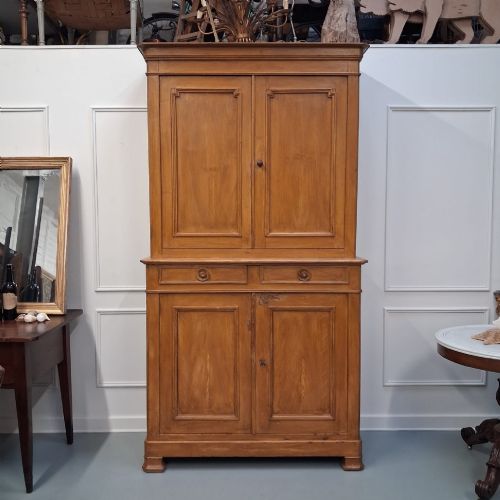
A provincial painted dresser encompasses kitchen dressers, linen cupboards, commodes, and sideboards originating from rural workshops rather than metropolitan centres. Buyers seeking this phrase encounter robust forms designed for everyday utility, finished in historic layers of paint.
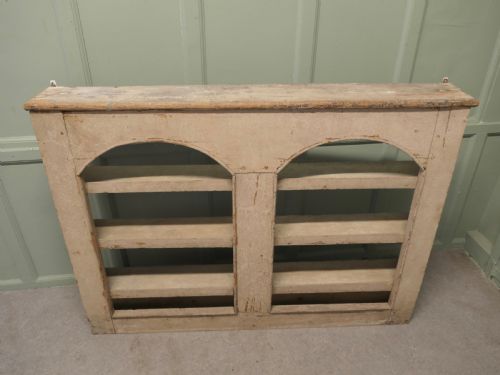
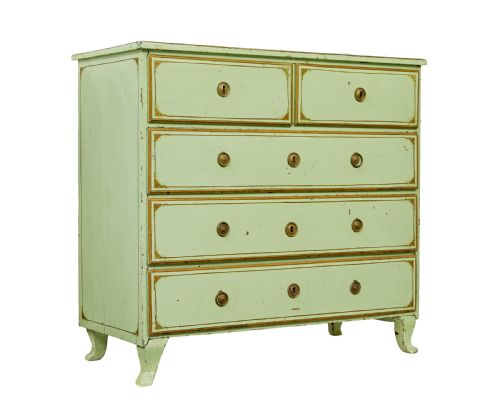
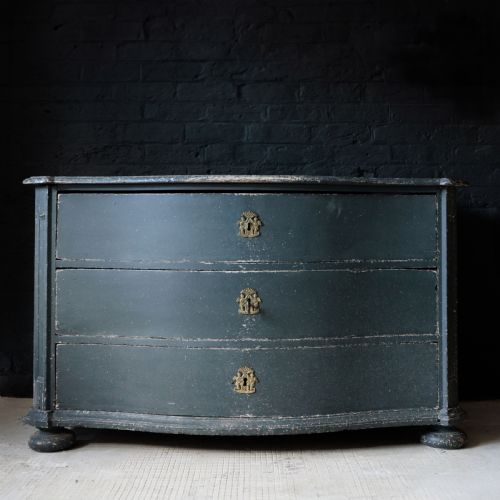
The pieces on this page lean heavily towards continental and English country traditions, including French commodes, Swedish pine chests, and English West Country kitchen dressers. These items date primarily from the eighteenth and nineteenth centuries, reflecting local domestic needs of their respective periods.
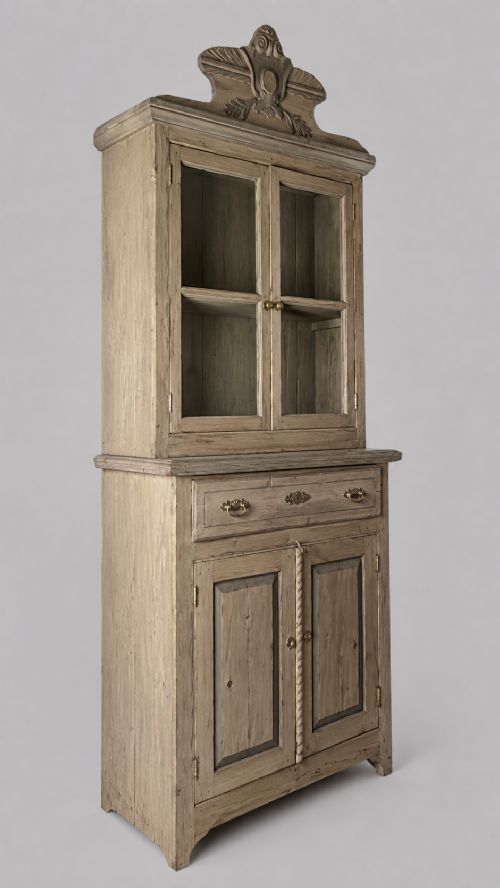
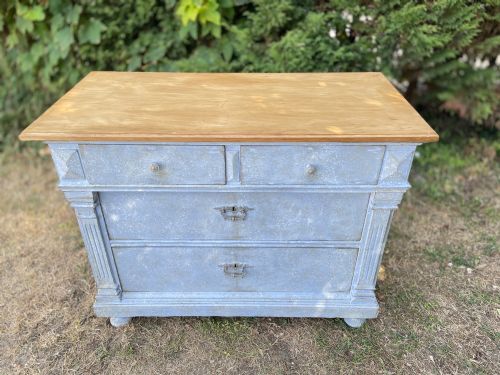
Forms vary from large buffet à deux corps and glazed cupboards to smaller chests of drawers and miniature dressers. Regional variations dictate the silhouette, from the serpentine fronts of French commodes to the clean lines of Scandinavian pieces.
Materials and construction
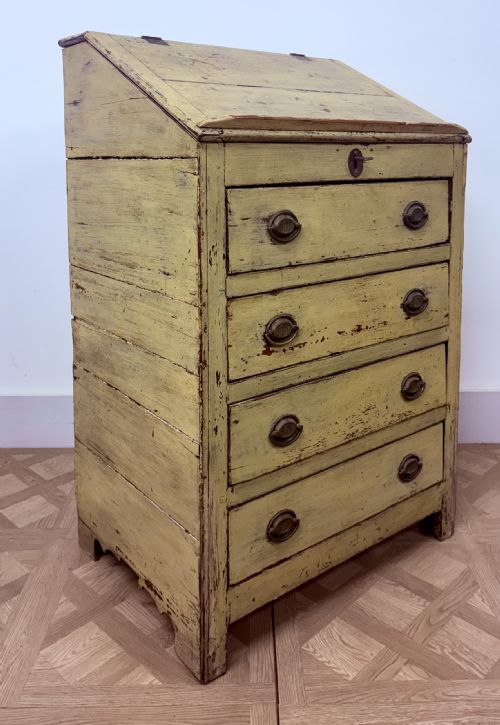
Makers utilised locally available timbers, predominantly pine and oak, supplemented by structural iron hardware and brass fittings. Painted wood surfaces dominate, often applied over earlier layers to refresh the appearance of domestic furniture over generations.
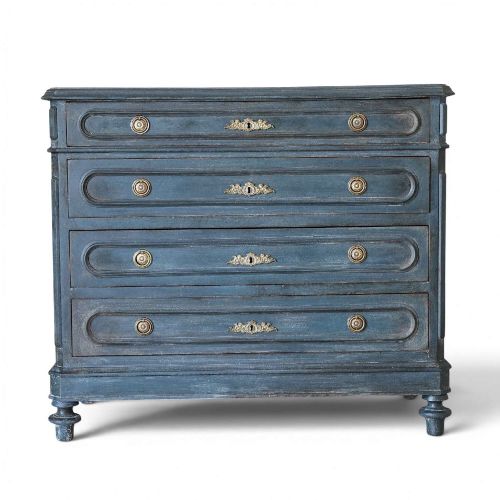
Joinery techniques reflect traditional workshop practices, employing pegged joints, hand-cut dovetails for drawers, and carved detailing on drawer fronts and commode aprons. Surfaces show the tool marks of planes and chisels beneath the historic paint layers.
Several pieces include hidden writing slopes and miniature proportions, proving that rural cabinetmakers enjoyed surprising their clients.
Determinants of quality
Quality rests in the integrity of the timber framing, the retention of original or early surface paint, and the subtlety of regional carving. Superior examples maintain structural soundness without excessive timber replacement while preserving the character accumulated through use.
Proportion and decorative restraint separate standard utility items from finer workshop output, such as pieces featuring serpentine fronts, diamond-point panels, or integrated writing slopes.
The Provincial Painted Dresser Glossary
- Commode
- A low chest of drawers or cabinet, often featuring a decorative serpentine or bombe front.
- Buffet à deux corps
- A large two-part sideboard or cupboard consisting of a lower cabinet surmounted by an upper section.
- Potboard
- An open slatted lower shelf on a kitchen dresser designed for storing heavy pots and pans.
- Serpentine
- A furniture front characterised by a wavy outline with a convex centre flanked by concave curves.
- Vaisselier
- A traditional French open-shelf dresser utilised for displaying tableware and kitchen pottery.
Provincial Painted Dresser: Frequently Asked Questions
What is a provincial painted dresser?
A provincial painted dresser is a functional storage item made in regional workshops outside major capital cities, typically finished with a painted surface.
These pieces include kitchen dressers, commodes, and cupboards from periods such as the eighteenth and nineteenth centuries.
How do I identify French versus Swedish pieces?
French pieces frequently display serpentine fronts, carved oak, and Louis XVI revival details, reflecting southern European tastes.
Swedish items tend to utilise painted pine with lighter, restrained decoration influenced by Gustavian and Baroque revival styles.
Where were these dressers originally used?
They served practical storage roles in rural kitchens, dining rooms, and bedrooms across England, France, Scandinavia, and Italy.
Housekeepers and families relied on them to store linens, tableware, and provisions daily.
How should I care for painted surfaces?
Maintain painted furniture by keeping it away from direct sunlight and fluctuating humidity to prevent timber movement.
Dust gently with a dry cloth and avoid harsh chemical cleaners that can degrade historic paint layers.