


Provincial Nightstands
Provincial nightstands are compact bedroom companions that bring regional European character and practical bedside storage to an interior.
Provincial Nightstands
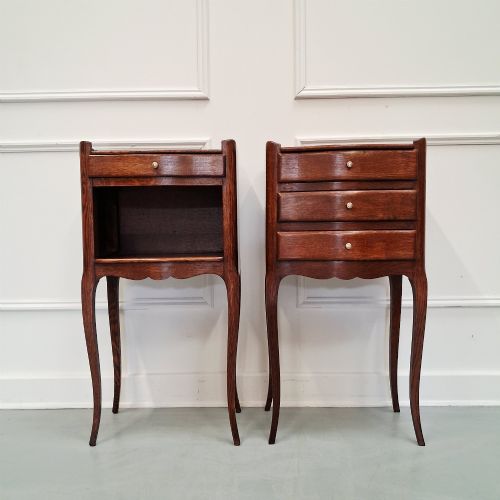
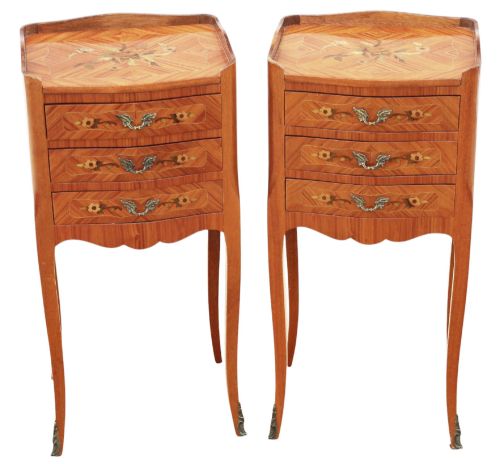
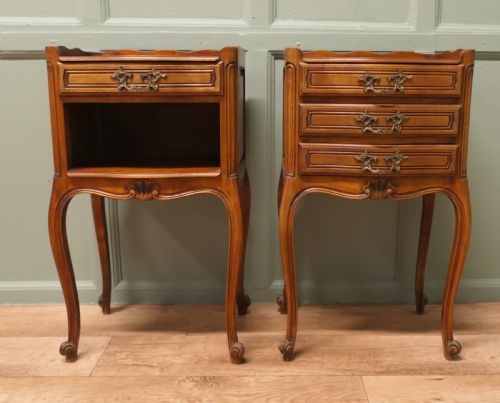
Provincial nightstands encompass bedside tables, cabinets, lockers, and cupboards originating from regional European workshops rather than metropolitan centres. The pieces appearing here span from the eighteenth century through to the art deco period of the nineteen-thirties, with a strong representation of early twentieth-century examples.
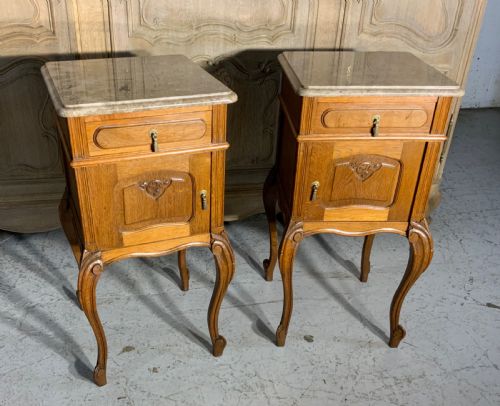
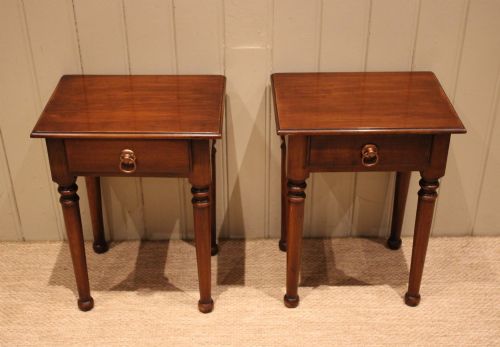
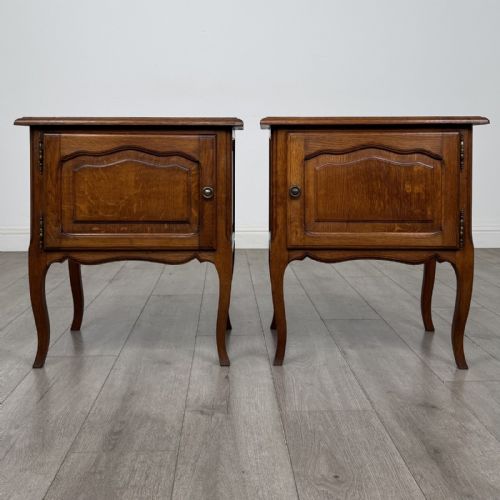
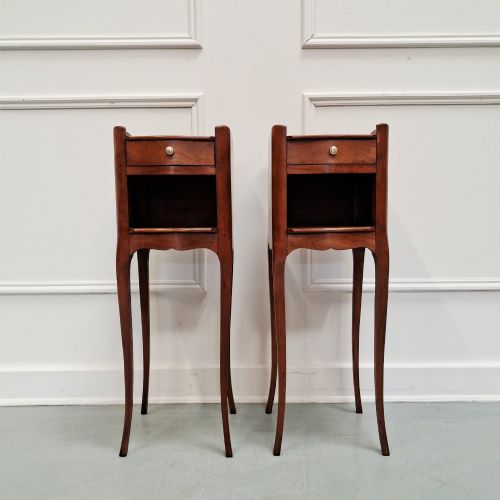
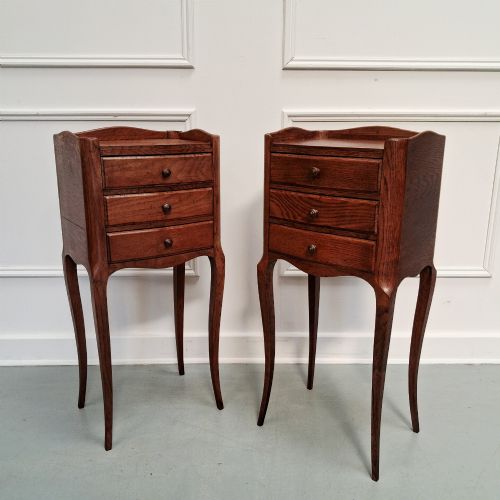
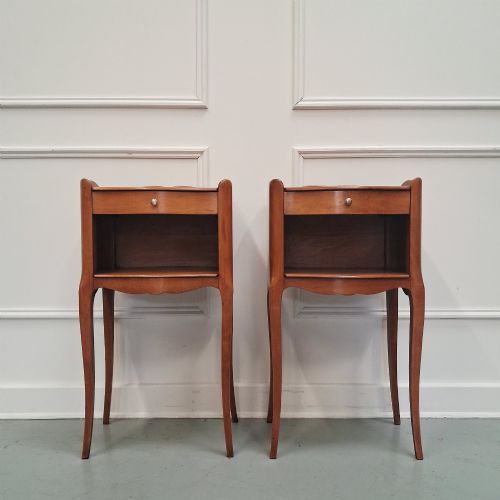
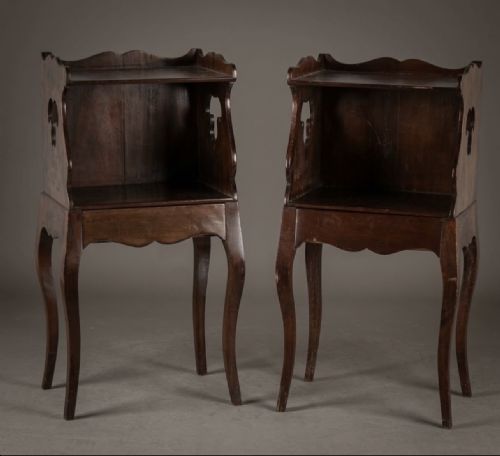
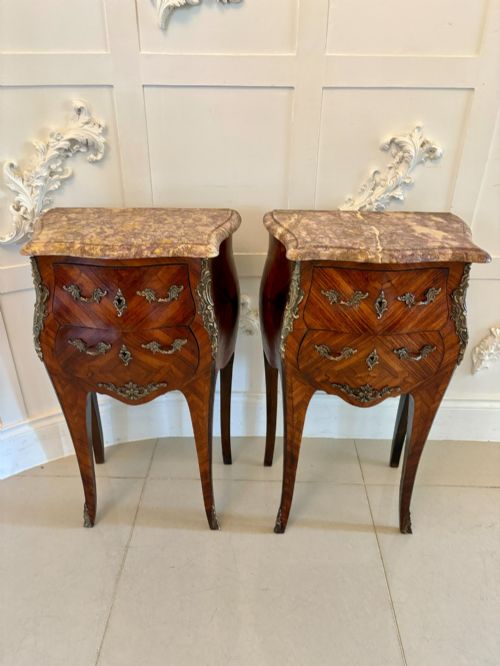
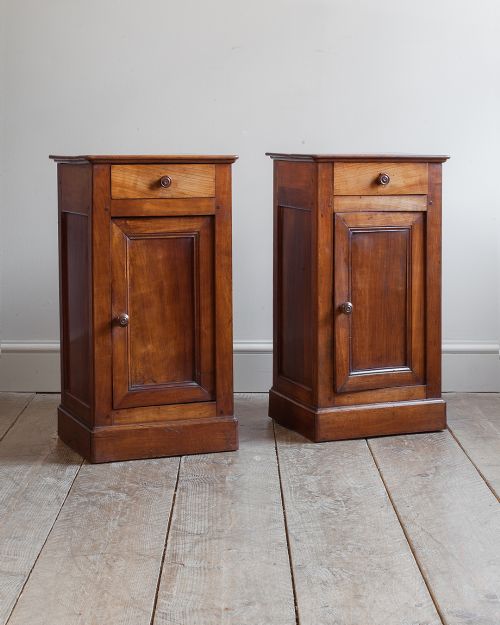
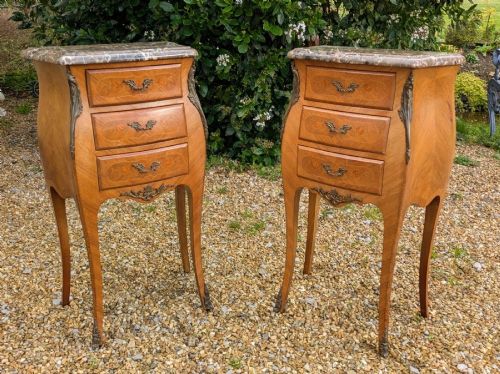
Forms range from open side tables and turned-leg etageres to enclosed bedside cabinets with multiple drawers or cupboards. French and Dutch designs dominate the selection, often reflecting local interpretations of Louis XV and rococo styles through simpler, sturdier execution.
Buyers encounter frequent pairs alongside single items, fashioned primarily for domestic use beside a bed or as small lamp tables in a sitting room. Their smaller scale makes them adaptable for placement in compact spaces while retaining significant storage utility.
How they were made
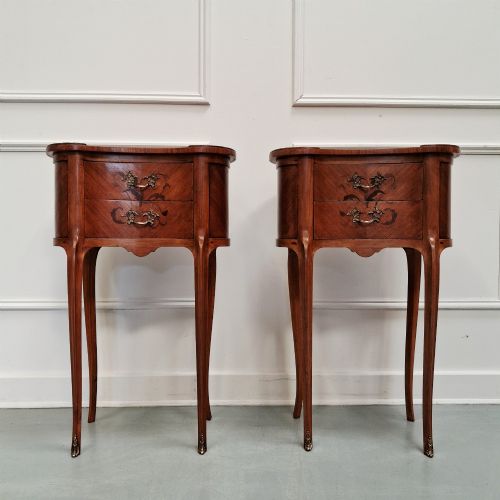
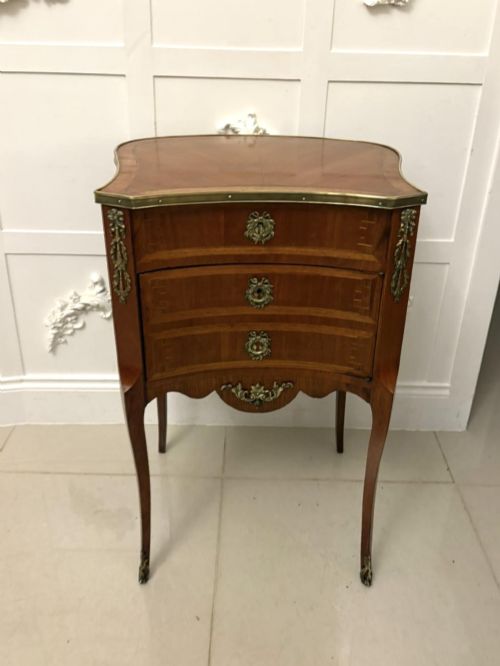
Cabinetmakers utilised a variety of regional timbers, predominantly cherry wood, oak, walnut, and kingwood, frequently applying decorative veneers, parquetry, and marquetry to visible surfaces. Hardwood construction ensured durability, while specialist variations incorporated fruitwood, satinwood, burr elm, and painted finishes.
Many cabinets incorporate fitted marble tops, including Belgian Sainte-Anne marble, alongside brass mounts and handles that accent the wooden structures. Construction methods combined traditional joinery with turned legs, carved detailing, and occasionally inlaid geometric patterns.
Provincial Nightstands Retail Price Guide 2026
Typical asking prices for provincial nightstands among the pieces listed under this phrase on Sellingantiques today, from the lower quarter to the upper quarter. They describe what is for sale here now, not the wider market.
Some provincial lockable lockers were humorously termed chevets, keeping midnight snacks safe from household mice.
What varies in quality
Quality rests upon the crispness of marquetry inlays, the selection of figured veneers such as kingwood or burr elm, and the harmonious integration of marble tops. Finer examples display meticulous attention to timber selection and balanced proportions across matching pairs.
The sophistication of carving, the weight of brass hardware, and the integrity of internal drawer construction distinguish standard regional utility pieces from finer decorative works produced in provincial French and Dutch workshops.
The Provincial Nightstands Glossary
- Chevet
- A French term for a bedside table or small cabinet. These pieces typically feature a combination of drawers and a small cupboard space.
- Marquetry
- The art of applying pieces of veneer to a structure to form decorative patterns and pictures. Craftsmen used contrasting timbers to create complex geometric or floral designs on cabinet doors and tops.
- Parquetry
- A geometric mosaic of wood pieces used for decorative floors and cabinet surfaces. This technique appears frequently on the top panels of twentieth-century bedside tables.
- Etagere
- A set of open shelves for displaying small objects or books. Turned wooden legs often support these tiered occasional tables.
- Sainte-Anne marble
- A specific dark grey or mottled limestone marble quarried in Belgium. It is frequently found fitted to the tops of European bedside cabinets.
Provincial Nightstands: Frequently Asked Questions
What is the difference between a bedside table and a cabinet?
Bedside tables generally offer open surfaces or lower shelves for accessible placement of evening items. Cabinets provide enclosed storage behind doors or within stacked drawers to keep surfaces tidy.
Enclosed cabinets appeared frequently in French provincial workshops to protect private items from dust. Both forms serve identical functions beside a bed depending on storage preferences.
How do I identify French provincial styles?
French provincial furniture adapts metropolitan court fashions, such as Louis XV curves, into simpler, sturdier regional interpretations. Cabinetmakers utilised local timbers like cherry and oak rather than exotic imports.
These pieces emphasise practical utility combined with modest decorative carving and cabriole legs. They offer regional character distinct from formal Parisian output.
Are marble tops original to these cabinets?
Marble tops frequently accompany French bedside cabinets from the late nineteenth and early twentieth centuries. They provided a durable, wipe-clean surface for water jugs and glassware.
Heavier stones such as Belgian Sainte-Anne marble were slotted directly into the wooden frame. Their presence enhances the utility and weight of the bedside piece.
How do I place a nightstand in a modern bedroom?
These compact wooden cabinets suit various bedside heights, pairing well with contemporary or traditional bed frames. Their neutral wood tones or painted finishes integrate easily into existing interior schemes.
Single tables work effectively as lamp stands in corners or hallways if a matched pair is unnecessary. Their varied periods allow for eclectic mixing within a room.