
Provincial Armchair
These provincial armchairs offer regional character through traditional timbers and painted surfaces.
Provincial Armchair
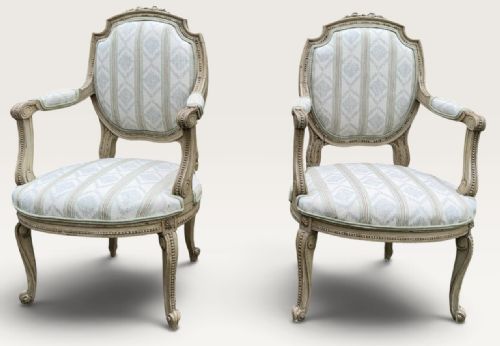
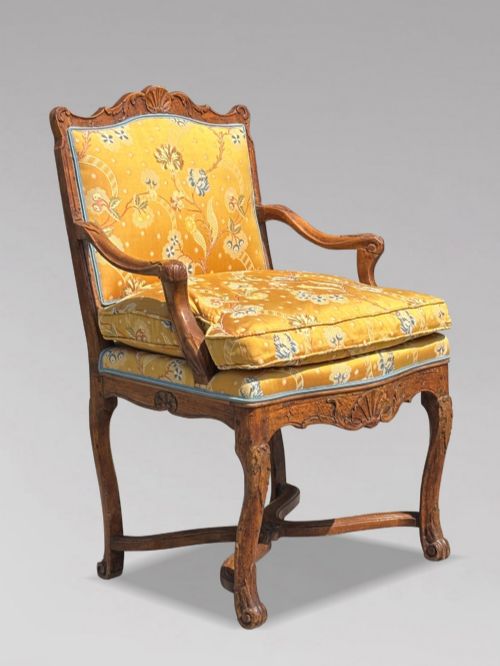
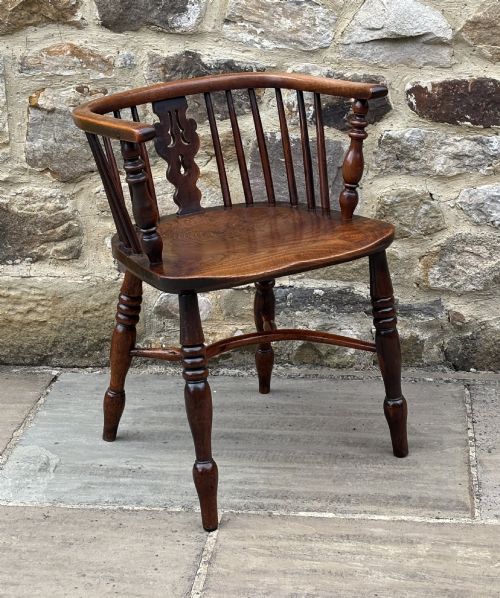
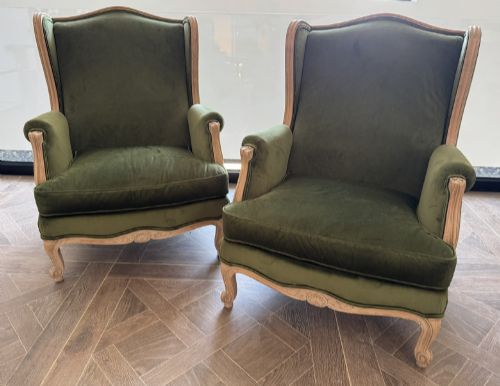
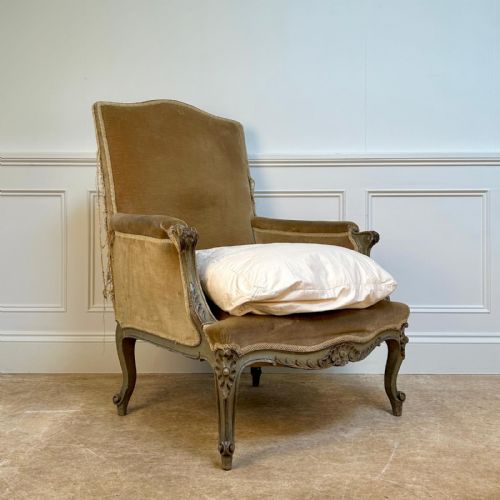
A provincial armchair brings country craftsmanship and regional design together, spanning eighteenth-century English country houses and nineteenth-century French chateaux. You are most likely to meet French examples in original paint or walnut, alongside English elm and beech windsor forms.
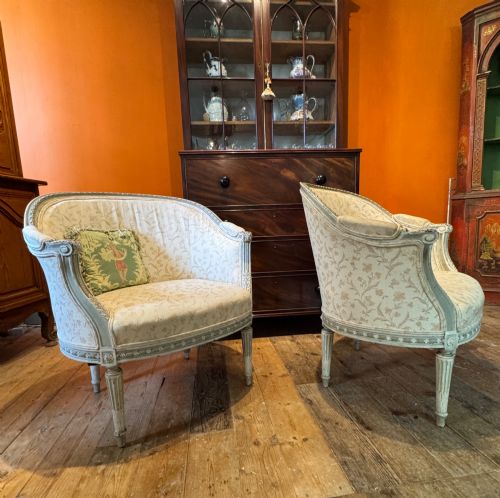
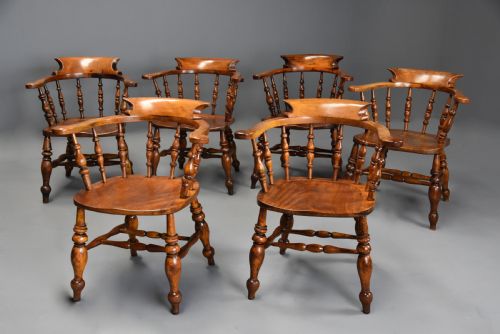
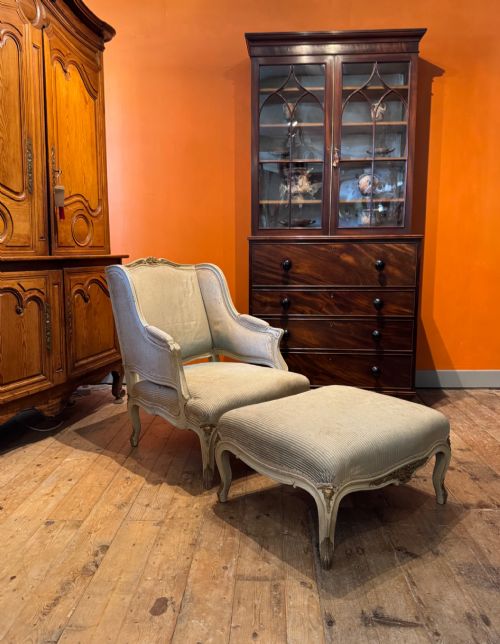
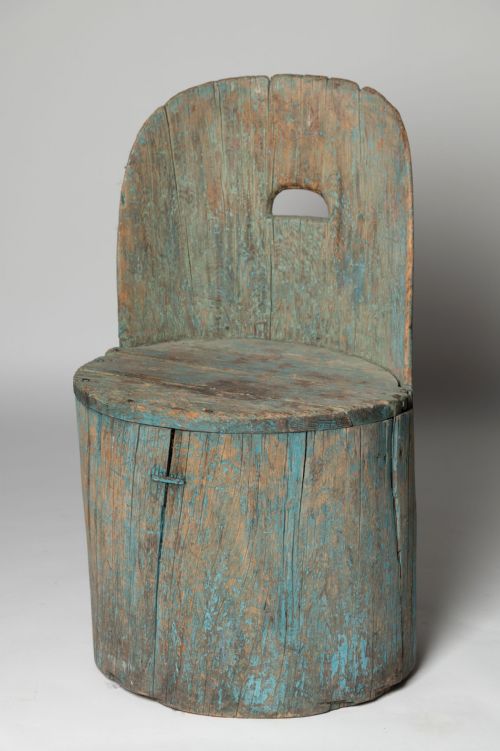
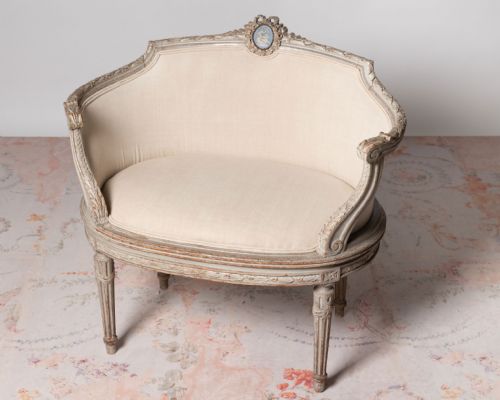
The selection includes specific regional variants like Swedish dugout chairs, Breton seating, and Nottinghamshire winsdors alongside larger bergere and fauteuil forms. Makers worked locally to satisfy domestic demands using available regional timbers.
How they were made
Carpenters constructed these frames from native hardwoods including oak, walnut, ash, elm, beech, and fruitwood. Selected timbers were often shaped by hand, steam-bent for curved backs, or joined using traditional pegged mortise and tenon joints.
Surface treatments range from exposed polished wood to original paint finishes, often layered over time. Upholstery relied on traditional textiles, needlework, silk, and fabric coverings secured over webbing and stuffing.
The inventory records French Provincial, Louis XV style, English Country, and Scandinavian Country design traditions.
What varies in quality
The hierarchy rests upon the integrity of the original timber frame and the survival of early surfaces. Untouched original paint finishes and patinated natural woods elevate an example above later alterations.
Structural honesty and regional detail define the better specimens. Clean joinery and balanced proportions distinguish accomplished local craftsmanship from routine workshop production.
The Provincial Armchair Glossary
- Bergere
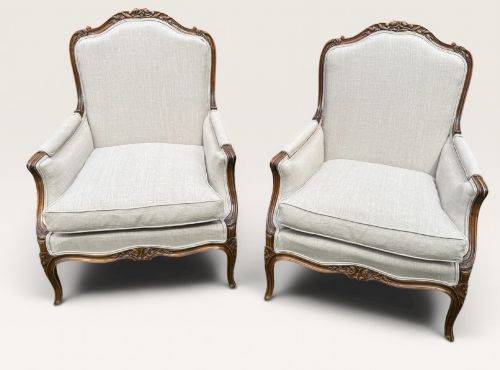
- An enclosed upholstered armchair with wooden framing around the sides and back. These seats typically feature cane work or fabric panels.
- Fauteuil
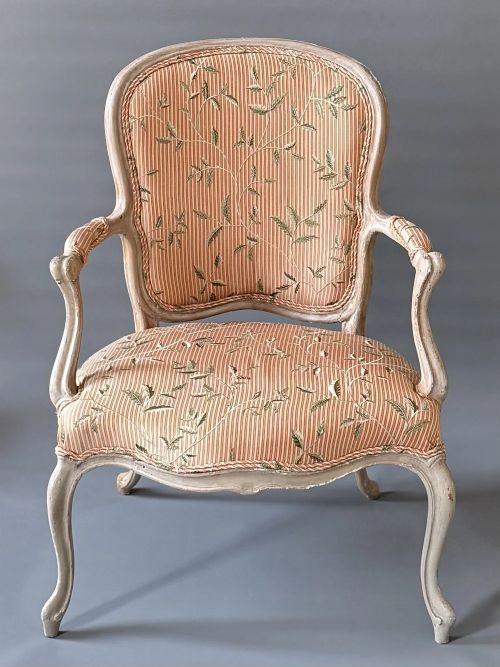
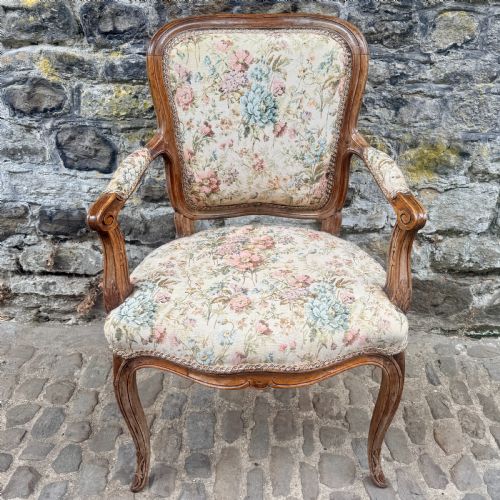
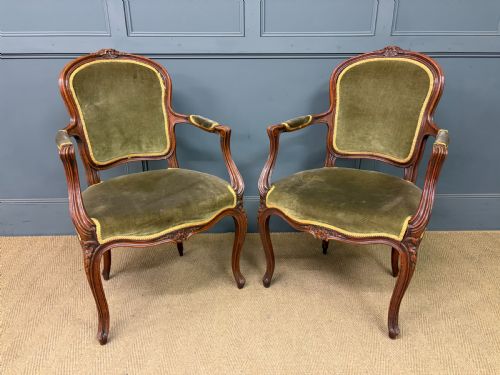
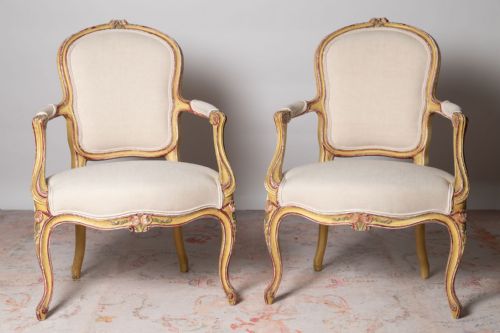
- An open-armed upholstered armchair originating in France with exposed wooden arms. The armrests usually feature padded elbow rests.
- Windsor
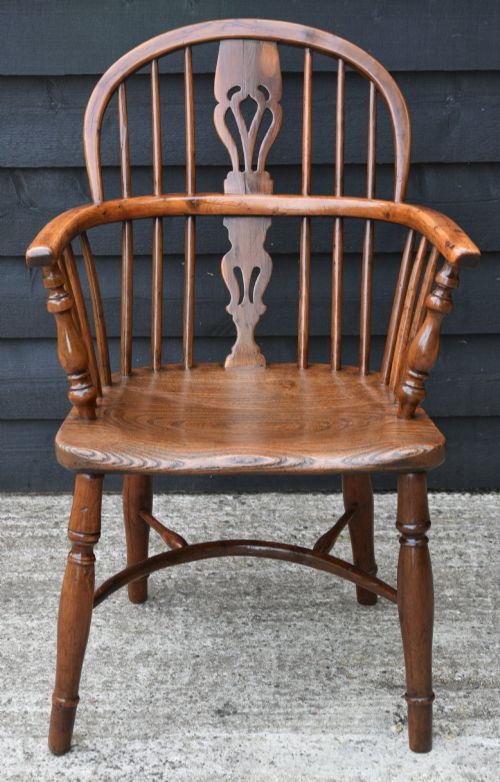
- A wooden chair built with a solid saddle-shaped seat into which the legs and back spindles are directly bored. These pieces often employ elm and beech.
- Duchesse brisee
- A chaise longue split into two or three pieces comprising an armchair and matching footstools. This design creates an extended daybed arrangement.
- Splat back
- A chair featuring a central vertical wooden slat down the middle of the backrest. This component is frequently shaped or pierced.
Provincial Armchair: Frequently Asked Questions
What is a provincial armchair?
A provincial armchair is a regionally made seat produced outside major urban centres by local cabinetmakers or chair bodgers. These pieces draw on prevailing metropolitan fashions while utilising native timbers and regional construction methods.
They reflect the domestic requirements of country houses, farmhouses, and provincial salons rather than royal courts. The results are sturdy, honest seats that prioritise local utility and character.
How do I identify French provincial styles?
French provincial armchairs often display carved walnut, oak, or fruitwood frames with curved cabriole legs and floral motifs. Many examples retain traces of original paint or feature caned bergere panels.
Stylistic cues trace back to Louis XV and Louis XVI designs, interpreted with slightly heavier proportions by regional artisans. Look for local variations in the carving and the choice of native woods.
Where were Windsor armchairs made?
Windsor armchairs were produced across various English counties, with specific regional hubs such as Nottinghamshire developing distinct local characteristics. Makers selected strong native timbers like elm for seats and ash or beech for bentwood components.
These chairs served primarily as practical seating in country homes, farmhouse kitchens, and Windsor workshops. Their stick-built construction allowed for robust everyday use over generations.
How should I care for original paint?
Original painted surfaces require gentle treatment using a dry microfiber cloth to remove dust without moisture. Avoid modern chemical cleaning agents or abrasive polishes that might strip fragile historic pigments.
Keep the chair away from direct sunlight and excessive humidity to prevent the underlying wood and paint layers from shrinking or flaking. Stable indoor conditions preserve the patinated finish.
Can I use these chairs daily?
Most provincial armchairs remain structurally sound for everyday use provided the frame joints are secure. Inspect the underlying joinery periodically to ensure the timber has not dried out or loosened over time.
Heavily upholstered versions or pieces with delicate cane panels may benefit from mindful sitting rather than heavy lounging. Proper weight distribution protects antique webbing and fragile wooden frames.