




Pressed Crystal Glasses
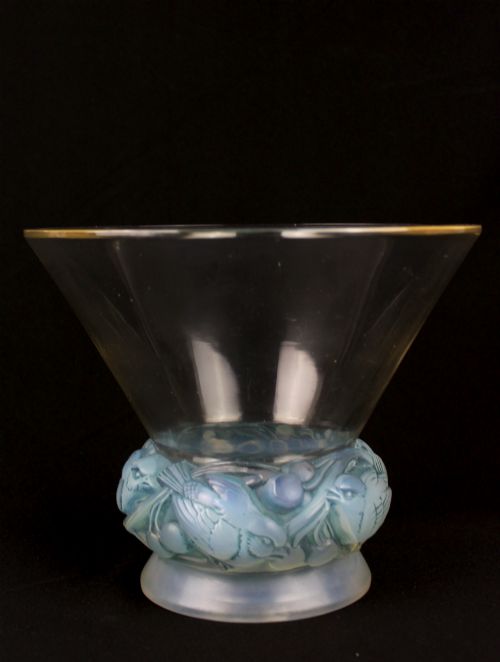
These pressed crystal glasses and associated vessels combine heavy moulding with delicate opalescent finishes to bring tactile charm to any display.
Pressed Crystal Glasses
When you search for pressed crystal glasses, you encounter sculptural glassware designed to catch the light through clever relief patterns and dense walls. The selection here leans heavily towards decorative French objects from the early decades of the twentieth century alongside Victorian pieces.
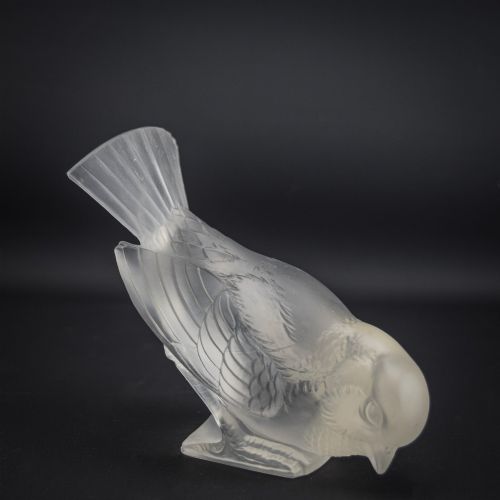
The forms span practical vessels and ornaments, including vases, scent bottles, punch bowls, candlesticks, and desk weights. Many items show the distinctive stylistic influence of Art Deco geometry or Victorian sentimentality.
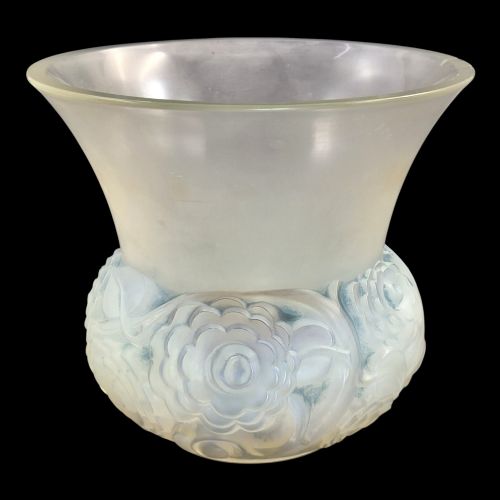
You are most likely to meet pieces originating from the 1920s and 1930s, often produced in clear, frosted, or opalescent glass. These objects range from robust tableware elements to intricate display vases bearing floral motifs.
How they were made
Makers utilised iron moulds to press molten glass into intricate shapes under high pressure, achieving sharp relief and consistent forms. This technique allowed workshops to produce complex decorative motifs much faster than free-blowing or hand-cutting permitted.
Many items combine moulding with subsequent processes such as acid-frosting, hand-polishing, or the application of coloured stains to highlight the raised surfaces. Opalescent effects were achieved through chemical additives in the molten batch that reacted to heat during the shaping process.
Pressed Crystal Glasses Retail Price Guide 2026
Typical asking prices for pressed crystal glasses among the pieces listed under this phrase on Sellingantiques today, from the lower quarter to the upper quarter. They describe what is for sale here now, not the wider market.
One listed punch bowl brings a festive touch to autumn gatherings by celebrating the Halloween pumpkin motif in heavy cut glass.
What varies in quality
The distinction between ordinary production and superior work lies in the crispness of the relief and the subtlety of the glass body. Finer pieces display sharp, clean details without soft edges or distortion from worn moulds.
Colouration and optical effects also separate the grades of work, particularly in opalescent examples where the milky blue shimmer should appear evenly distributed and luminous. The weight and balance of the object further indicate the care taken during the initial pressing.
René Lalique·Sabino French
The Pressed Crystal Glasses Glossary
- Opalescent Glass
- Glass that diffuses light to display a milky blue or amber glow, typically appearing at the edges or raised contours of a pressed piece.
- Moulded Glass
- Glass shaped by pressing molten material into a metal or wooden matrix, leaving a distinct seam line and a patterned exterior relief.
- Frosted Glass
- Glass treated by acid-etching or sandblasting to create a matte, translucent surface that diffuses light softly rather than reflecting it.
- Cut Glass
- Glass finished with wheel-cut facets rather than mould-pressed patterns, creating sharp linear geometric intersections across the surface.
- Clear Glass
- Transparent material lacking colourants, allowing uninterrupted passage of light through the walls of the vessel.
Pressed Crystal Glasses: Frequently Asked Questions
What are pressed crystal glasses?
Pressed crystal glasses and related vessels are decorative objects shaped by forcing molten material into metal moulds rather than blowing it by hand.
This technique creates heavy, tactile surfaces with raised patterns that catch light from multiple angles.
How do I identify Art Deco pieces?
Art Deco pieces typically feature stylised floral motifs, geometric symmetry, and frosted or opalescent finishes.
These designs emerged strongly in the 1920s and 1930s, replacing ornate Victorian curves with clean architectural lines.
How were these items used originally?
Many items served practical functions on dining tables, dressing tables, and writing desks, holding liquids, flowers, or perfumes.
Others functioned purely as decorative ornaments, such as paperweights and sculptural vases displayed in prominent household rooms.
How do I care for opalescent glass?
Opalescent glass requires gentle cleaning with lukewarm water and a mild soap, avoiding abrasive cloths or harsh chemical detergents.
Storing these objects away from direct sunlight helps preserve the delicate chemical reactions that create their characteristic glow.