



Potboard Server Table
A potboard server table is a sturdy timber storage base built for utility, offering a wide lower shelf for display.
Potboard Server Table
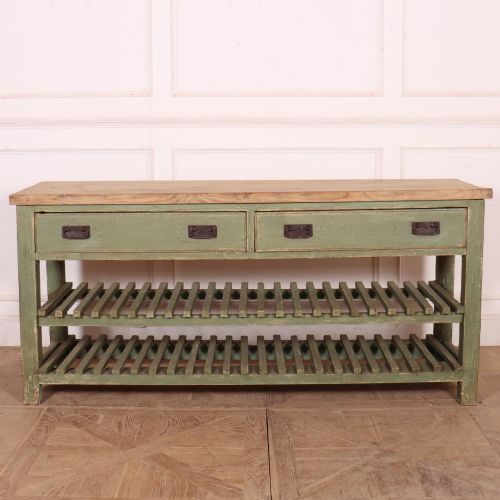
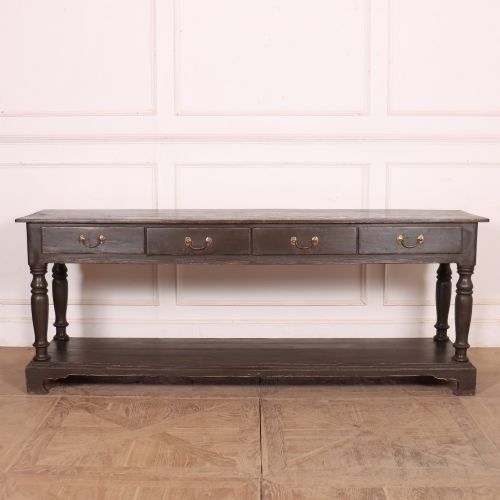
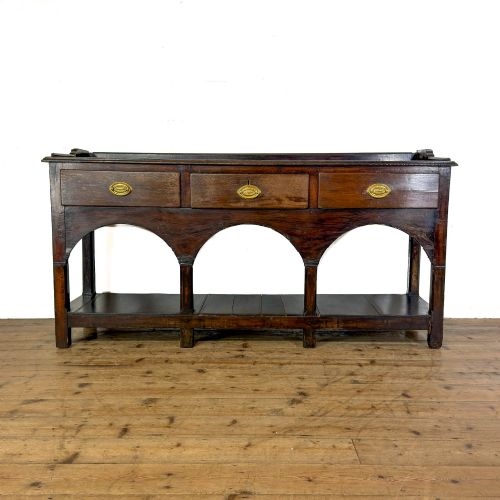
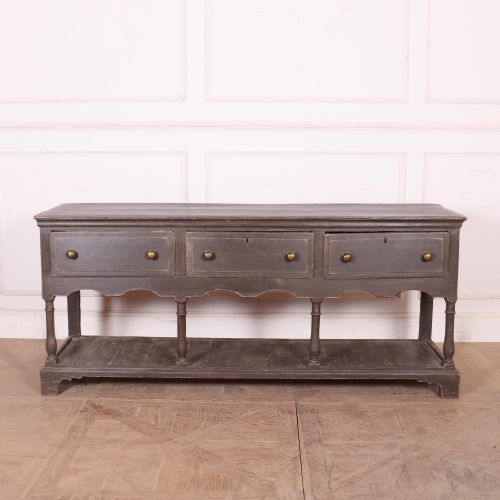
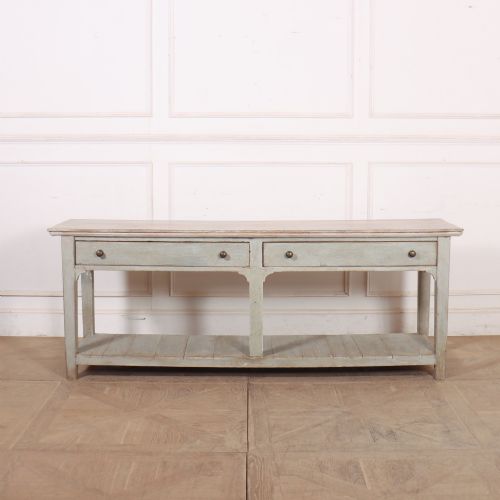
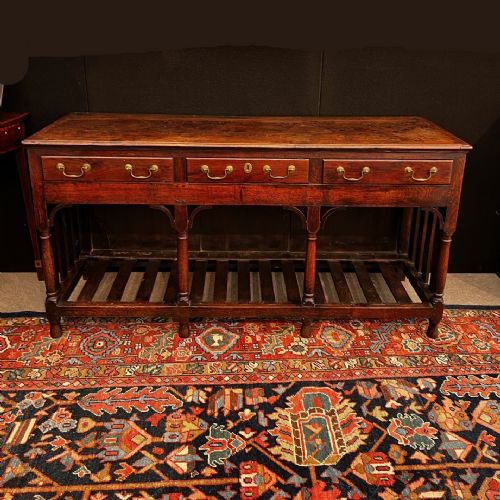
When you search for a potboard server table, you encounter low timber furniture designed for domestic storage and serving. These pieces function as kitchen or dining furniture with a flat top surface and a characteristic open lower shelf known as a potboard.
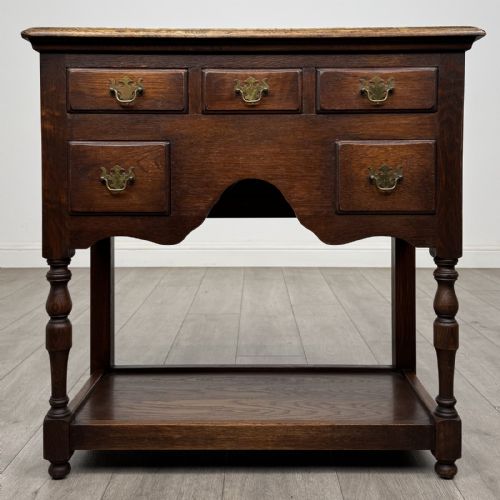
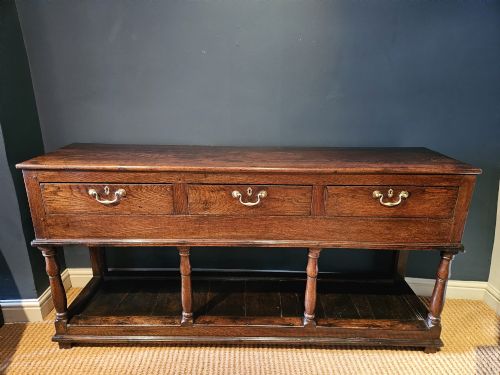
The version you are most likely to meet on this page is an oak dresser base or serving table dating from the eighteenth or nineteenth century. These items originate from English, Welsh, and Scottish rural workshops, constructed with heavy timber frames suited to daily use.
How they were made
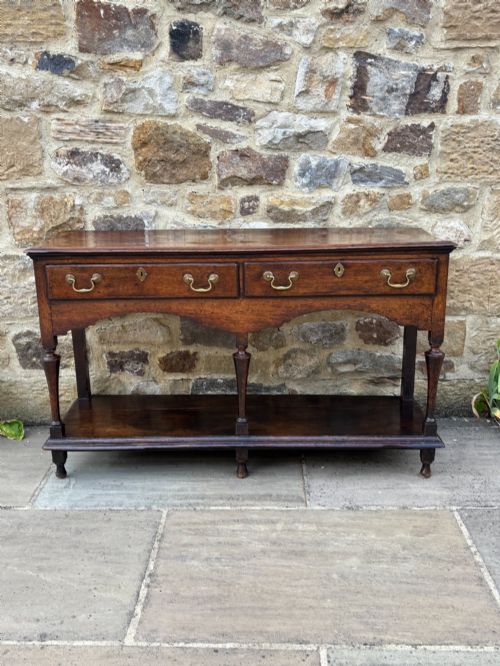
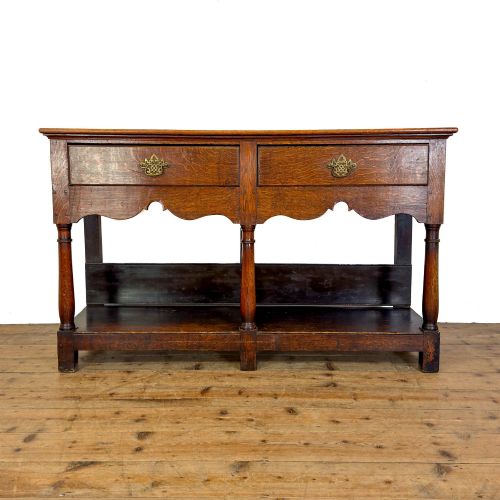
The primary material visible across these listings is solid oak, supplemented by pine, elm, and mahogany. Carpenters built the main frames and board shelves using thick timber planks joined to support heavy household items.
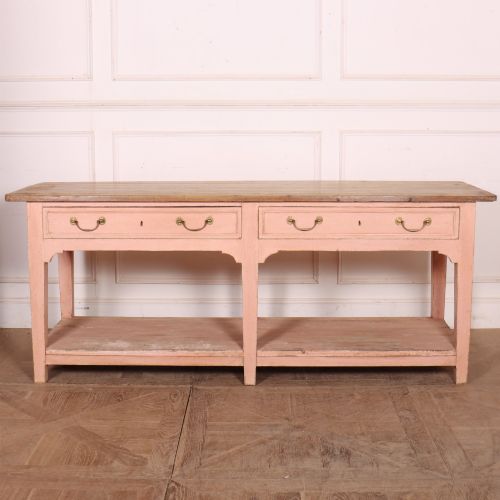
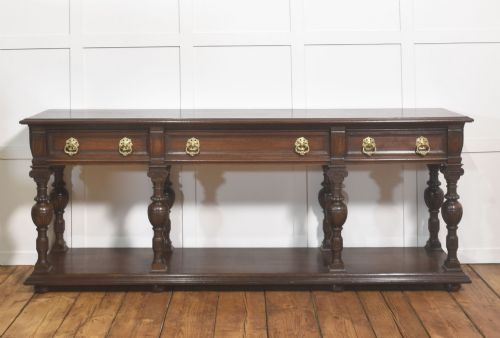
Surface treatments include traditional wax finishes alongside painted timber and bleached oak. Metal hardware such as brass handles appears on drawer fronts, while other examples rely on carved geometric detailing cut directly into the wood.
A few tables arrive with generations of kitchen flour wedged firmly in their ancient drawer corners.
What varies in quality
Quality in these low tables rests on the integrity of the timber selection and the proportions of the piece. Tables built from heavy oak boards with balanced drawer arrangements and integrated lower potboards represent the higher end of the range.
Construction methods also distinguish finer examples, particularly where joints are tightly fitted and mouldings or carvings are executed with precision. Pieces showing integrated patination across the timber surfaces carry greater visual coherence.
The Potboard Server Table Glossary
- Potboard
- The lower shelf of a dresser base or serving table, traditionally used for storing pots and pans. This open platform sits close to the floor between the lower legs.
- Dresser base
- A low kitchen or dining cabinet fitted with drawers across the upper section and storage space below. It serves as a work surface and sideboard combined.
- Serving table
- A long table utilised for plating food or presenting dishes in a dining room. These pieces omit the upper rack of a traditional dresser.
- Elm
- A tough, interlocking timber frequently used for secondary components or structural elements in country furniture. It resists splitting under pressure.
- Geometric carvings
- Linear patterns chiselled into the wooden panels and drawer fronts of seventeenth and eighteenth century furniture. This ornamentation reflects Jacobean and revival aesthetics.
Potboard Server Table: Frequently Asked Questions
What is a potboard server table used for?
These tables served as heavy duty work surfaces and storage units in domestic kitchens and dining rooms. The flat top accommodated food preparation and serving, while the lower shelf held heavy cookware.
Today, buyers place them in hallways, kitchens, and living spaces as sideboards or console tables. They provide practical surface area and open display space beneath.
How do I tell an 18th century table from a 19th century one?
Eighteenth century examples often display hand-cut joinery, pegged framing, and timber boards with deep patination developed over generations. The proportions tend to be robust and utilitarian, reflecting rural workshop practices of the period.
Nineteenth century versions and later revivals frequently incorporate machine-sawn elements or different drawer linings. Stylistic markers like Jacobean revival carvings also indicate later nineteenth or early twentieth century production.
Are all potboard tables made of oak?
Oak is the predominant timber found in these listings, utilised for its strength and availability in British country furniture. Carpenters relied on it for structural stability across centuries of domestic service.
Other materials do appear, including pine, elm, mahogany, and painted timber surfaces. French and regional variants often introduce local woods and distinct finishes.
Where were these tables originally made?
The pieces originate primarily from English, Welsh, and Scottish rural regions, where local joiners built furniture for country houses and farmhouses. Regional variations emerge in the drawer counts and timber choices.
French provincial and continental examples also appear among the selections, utilising regional fruitwoods and distinct leg forms such as trestle bases.