


Post War Portrait Painting
Post war portrait painting captures the shifting human countenance of the mid twentieth century through vigorous brushwork and psychological depth.
Post War Portrait Painting
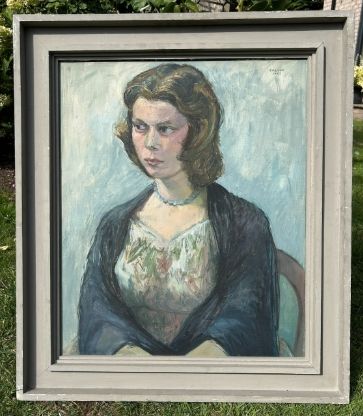
A post war portrait painting records the likenesses of sitters from the nineteen forties, nineteen fifties and nineteen sixties. These works span straightforward academic studies to bolder expressions of the human form.
Buyers will encounter oils on canvas and board alongside works depicting female and male sitters, studio models and notable figures. Mid-century modernism and post-war British realism define the aesthetic vocabulary of these pieces.
The selection ranges from intimate head and shoulder studies to large canvas interiors. Each canvas reflects the changing social attitudes and artistic ambitions of the post war decades.
Materials and methods
Artists painted primarily in oil paint upon stretched canvas or prepared board, layering pigments to build texture and depth. These traditional painting supports were often housed within period frames made of wood or giltwood.
Makers applied the medium with varying brush techniques, from smooth realist blending to visible, expressive strokes. The interplay of oil paint and canvas surface remains central to the physical longevity of these works.
Styles represented span mid-century modernism, avant garde new figuration, and post-war British realism.
Distinctions in quality
Quality rests upon the confidence of the brushwork and the artist's ability to convey the sitter's presence. Superior examples display assured handling of light, shadow and spatial arrangement within the composition.
The strength of the provenance, including artist reputation and exhibition history at institutions such as the Royal Academy, elevates certain works above standard decorative portraits.
Kenneth Cozens·Richards Rubin·John Osborn·John Gilroy
The Post War Portrait Painting Glossary
- Oil on canvas
- A painting method utilising pigments suspended in a drying oil applied to a woven fabric support stretched across a wooden frame. This combination allows for rich colour saturation and subtle blending.
- Avant Garde
- A style characterised by innovative and experimental approaches to traditional artistic subjects. These works challenge established academic conventions through bold colour and form.
- Mid-Century Modern
- A design and artistic movement spanning roughly the middle decades of the twentieth century. It embraces simplified forms and a departure from strict Victorian or Edwardian academic realism.
- Giltwood
- Wood that has been treated with a thin layer of gold leaf or metallic powder. It provides a reflective, ornamental border for many period paintings.
Post War Portrait Painting: Frequently Asked Questions
What periods do these paintings cover?
The selections primarily encompass the nineteen forties, nineteen fifties and nineteen sixties, reflecting post-war artistic developments.
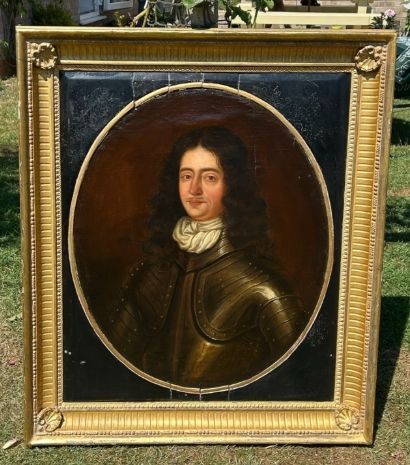
Occasionally, earlier historical works such as seventeenth-century baroque pieces also appear within the wider selection.
How were these portraits typically framed?
Many works retain their original wooden or giltwood frames which complement the mid-century aesthetic.
These surrounds protect the canvas edges and contribute to the overall presentation of the artwork.
Who are the typical sitters shown?
Subjects range from commissioned portraits of named individuals, such as baronets and society figures, to anonymous studio models.
Artists also painted expressive fictional or symbolic characters, such as the queen of spades.
How do I care for an oil painting?
Keep the canvas away from direct sunlight and dramatic fluctuations in temperature and humidity to prevent cracking.
Dust the surface gently with a soft, dry brush and avoid using liquid cleaners on the paint or frame.