




Portable Stationery Box
A portable stationery box is a compact desk designed to travel, keeping correspondence organised and secure on the move.
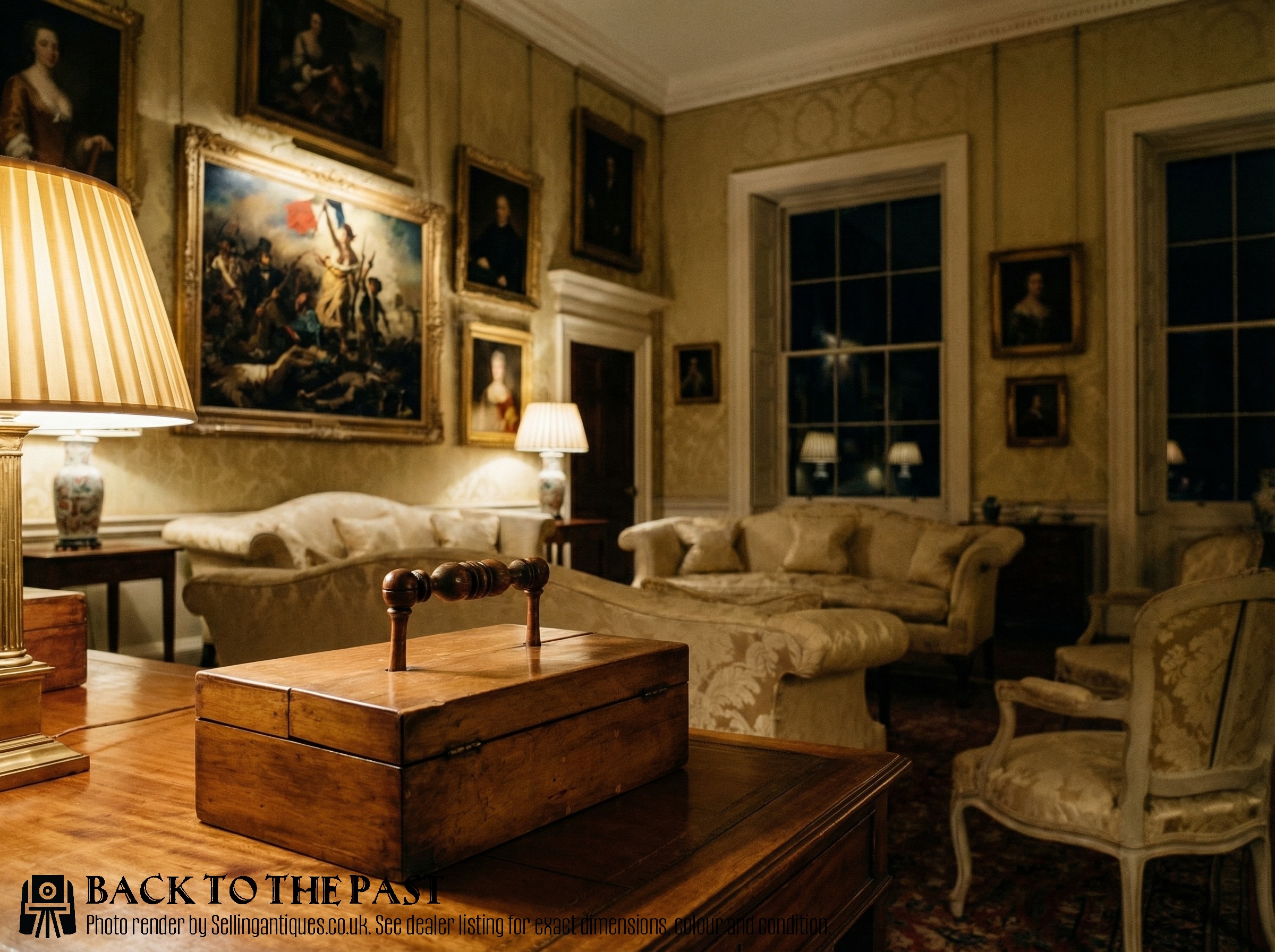
Portable Stationery Box
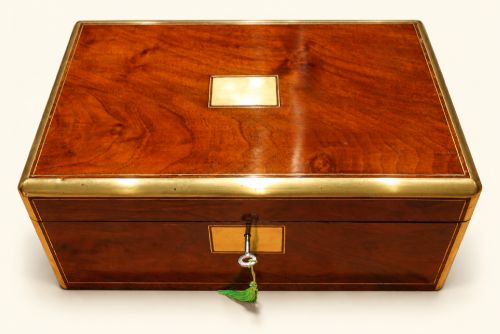
A portable stationery box typically appears as a writing slope, lap desk, or dedicated desk organiser suited for travel. These pieces emerge primarily from the Georgian and Victorian periods, reflecting an era when correspondence required dedicated mobile storage.
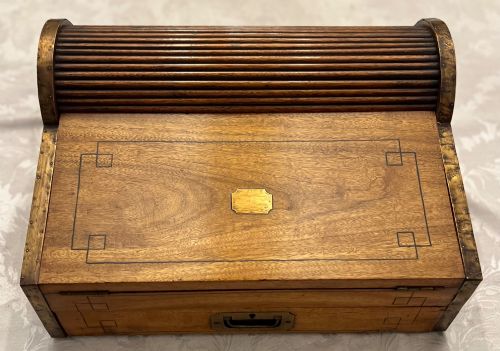
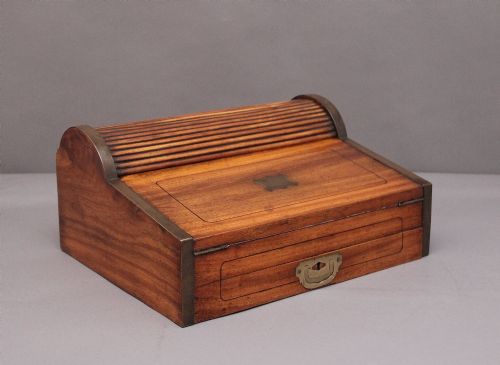
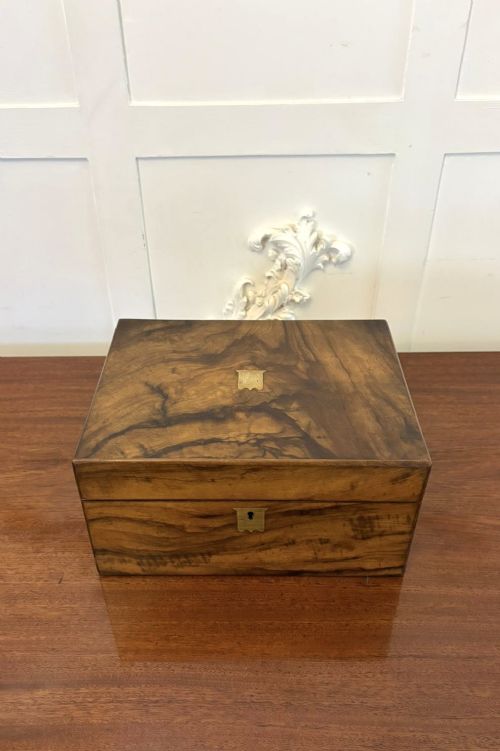
The pieces on this page span the nineteenth century, encompassing campaign items built for military travel alongside domestic Victorian boxes in figured timbers. Buyers encounter compact table-top formats designed to sit neatly upon a larger surface.
Origin styles range from standard British cabinet-making to Anglo-Indian production and colonial variants in camphor wood. Each form addresses the practical need to carry writing paper, ink, and pens without losing them in transit.
How they were made
Cabinet-makers constructed these boxes using dense hardwoods such as mahogany, rosewood, walnut, and coromandel, often selecting figured veneers for visible surfaces. Brass binding and inset carrying handles reinforced the corners for the rigours of travel.
Interiors frequently feature fitted compartments, secret drawers, and leather-lined writing surfaces designed to fold flat or angle towards the user. Locks by makers like Bramah secured the contents while on the road.
Portable Stationery Box Retail Price Guide 2026
Typical asking prices for portable stationery box among the pieces listed under this phrase on Sellingantiques today, from the lower quarter to the upper quarter. They describe what is for sale here now, not the wider market.
Secret drawers often require pressing a hidden wooden peg or removing an inkwell to spring open.
What varies in quality
Quality rests in the selection of timber veneers, such as burr walnut or satinwood, and the precision of internal joinery. Better examples integrate secret drawers and flush brass hardware seamlessly into the box carcass.
The inclusion of branded locks, fitted leather interiors, and robust campaign framing separates utilitarian boxes from finer presentation pieces intended for the drawing room.
Mappin & Webb·P&F Shafer·Fisher
The Portable Stationery Box Glossary
- Writing slope
- A box with a hinged sloping lid that opens to reveal a writing surface and internal storage compartments. This form served as a portable desk before the widespread use of fitted study furniture.
- Campaign box
- Furniture constructed with brass corners, strapwork, and recessed handles for transport by military officers on active service. These pieces prioritised durability and structural rigidity.
- Lap desk
- A smaller portable writing box designed to be used directly on the user's lap or upon a simple table. They often incorporate compartments for inkwells and nibs.
- Bramah lock
- A high-security barrel lock patented in the eighteenth century, frequently found on better quality nineteenth-century boxes. Counterfeiting these mechanisms proved exceptionally difficult for contemporaries.
- Secret drawers
- Concealed compartments accessed by removing false panels or triggering hidden springs within the stationery box. They provided secure storage for valuables and sensitive correspondence.
Portable Stationery Box: Frequently Asked Questions
What is a portable stationery box?
A portable stationery box is a timber case designed to transport writing paper, pens, and ink securely. They frequently double as writing slopes with folding desks.
These items allowed travellers and officers to maintain correspondence away from a fixed household study.
How were writing slopes used?
Users opened the hinged lid to reveal a slanted leather writing surface and internal partitions for stationery. Inkwells and stamp boxes rested safely inside during transit.
Secret drawers within the interior provided hidden storage for private letters and valuables.
What woods are most common?
Mahogany, rosewood, and walnut dominate the surviving pieces, often enhanced with figured veneers or burr patterns. Campaign versions occasionally utilise camphor wood for its aromatic and resilient properties.
Brass banding frequently reinforces the exterior corners to withstand heavy handling.
How do I date a box?
Georgian examples often display simple mahogany or rosewood surfaces with understated brass fittings. Victorian pieces tend towards heavier decoration, including parquetry, mother-of-pearl inlay, and coromandel veneers.
Lock types and internal stationery layouts also offer clues to the decade of manufacture.