

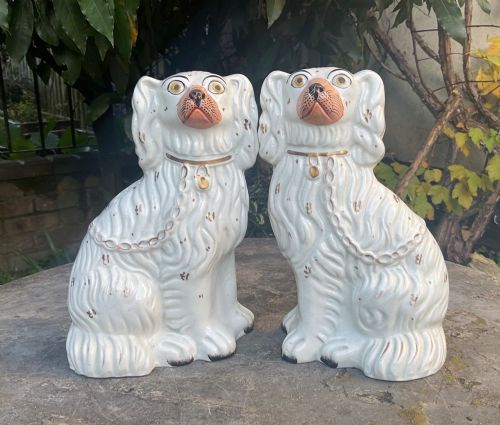


Porcelain Spaniel Mantel Ornaments
Porcelain spaniel mantel ornaments bring hearthside charm and symmetry to a room, cast in pairs to watch over the fireplace.
Porcelain Spaniel Mantel Ornaments
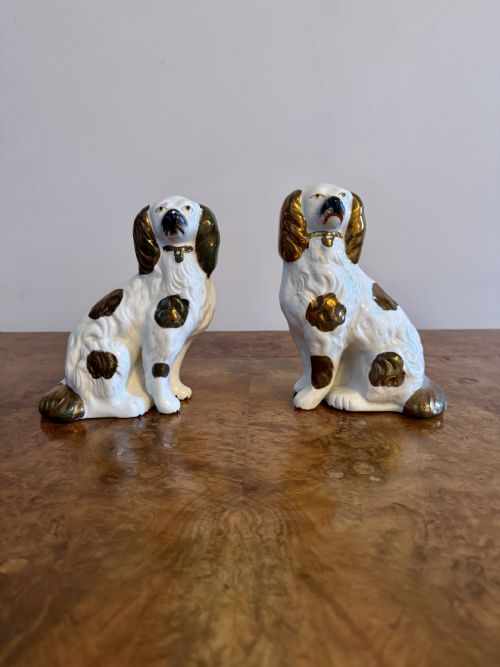
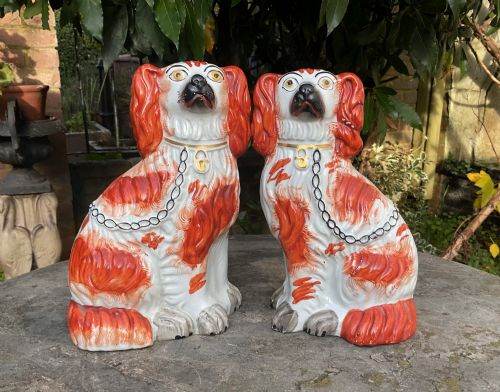
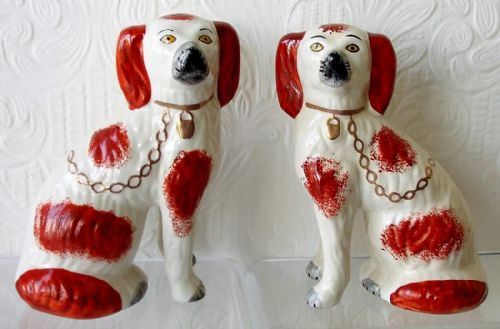
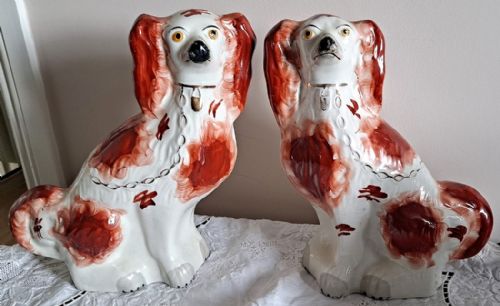
Porcelain spaniel mantel ornaments are ceramic figures modelled as pairs of seated dogs, traditionally placed on either end of a chimney piece. These decorative objects draw heavily from Victorian and Edwardian aesthetics, capturing the steadfast loyalty of the breed in domestic settings. When you search for porcelain spaniel mantel ornaments, you encounter Staffordshire pottery figures that embody English traditional mantelpiece display. The most common format on this page is the pair of seated dogs facing each other, designed to mirror one another across the hearth.
The objects span production from the nineteenth century into the twentieth century, reflecting shifting tastes in interior decoration. Victorian examples dominate the selection, often dated around eighteen sixty or associated with the broader nineteenth century. Later twentieth-century pieces, including mid-century iterations dated around nineteen forty, continue the traditional form with updated manufacturing methods. Buyers primarily find these figures styled as decorative ceramics, earthenware figurines, or pottery figures rather than true hard-paste porcelain.
Makers and regional potteries shape the variety found within these listings, ranging from unmarked Staffordshire works to documented factories. Specific listings include named works from twentieth-century firms alongside nineteenth-century Staffordshire traditions. Collectors meet both grand scale pairs and smaller seated dogs, providing options suited to different mantel proportions. The persistent appeal lies in their historical domestic role as comforting guardians of the hearth.
Materials and methods of manufacture
Makers shaped porcelain spaniel mantel ornaments using earthenware and ceramic bodies, formed in moulds to achieve the characteristic seated posture. Artisans applied lead glaze over the clay base to create a smooth, reflective surface that caught the flickering light of coal fires. This technique gave the figurines their glossy exterior and helped seal the porous earthenware beneath.
Porcelain Spaniel Mantel Ornaments Retail Price Guide 2026
Typical asking prices for porcelain spaniel mantel ornaments among the pieces listed under this phrase on Sellingantiques today, from the lower quarter to the upper quarter. They describe what is for sale here now, not the wider market.
Listings feature earthenware and ceramic bodies finished with lead glaze, gilt, and enamel paint across Victorian and Edwardian periods.
Distinctions in craftsmanship and condition
The application of glaze and metallic lustre also dictates the visual appeal of the piece. Uniform lead glaze without excessive crazing or pooling indicates better kiln control during manufacture. Well-preserved gilt highlights and clean enamel work without significant rubbing elevate the overall standard of the ornament.
Royal Doulton·Beswick
The Porcelain Spaniel Mantel Ornaments Glossary
- Comforter spaniels
- Staffordshire pottery dog figures traditionally placed on mantelpieces to guard the hearth. They take their name from the notion that the spaniels offered comfort and protection to the household.
- Earthenware
- Porous pottery fired at lower temperatures than porcelain. It serves as the primary ceramic body for the majority of these nineteenth-century figures.
- Lead glaze
- A glossy coating containing lead oxide applied to pottery before firing. It produces a smooth, glassy finish that enhances the brightness of the painted decoration underneath.
- Metallic lustre
- A ceramic finish created by applying metallic salts to the glazed surface and firing in a reduced-oxygen kiln. This technique produces a reflective, copper-like sheen seen on specific Staffordshire models.
Porcelain Spaniel Mantel Ornaments: Frequently Asked Questions
Why are porcelain spaniels always found in pairs?
Mantel ornaments were designed specifically for symmetry, placed at opposite ends of a fireplace to balance the mantelpiece. Facing each other, the pair created a composed, ordered look favoured in Victorian and Edwardian parlours.
This arrangement mirrored the architectural balance of the room, reflecting formal interior design conventions of the period.
How do I date an antique spaniel figure?
Dating relies on stylistic clues, glaze characteristics, and the weight of the ceramic body. Nineteenth-century Staffordshire pieces typically feature hand-painted details over earthenware, while twentieth-century examples show more uniform manufacturing.
Marked pieces or documented factory styles provide clearer chronological markers, though many traditional mantel dogs remain unmarked.
Where should I display these mantel ornaments?
They suit traditional mantelpieces, bookshelves, or console tables where their balanced pair can be viewed properly. Placing them away from direct heat sources protects the historic glaze and enamel paintwork from thermal stress.
Ensure they sit on a stable surface where their weight and height will not be compromised by household vibrations.
What is the difference between earthenware and porcelain?
Earthenware is a porous, opaque pottery fired at lower temperatures, whereas true porcelain is vitrified, dense, and translucent. Despite the common search term, most antique mantel dogs are constructed from earthenware with a lead glaze rather than actual porcelain.
This ceramic choice allowed nineteenth-century potteries to mould large figures affordably for the domestic market.