

Earthenware Hearth Ornaments
These earthenware hearth ornaments bring the comforting presence of nineteenth-century dogs, lions and figures to a mantelpiece.
Earthenware Hearth Ornaments
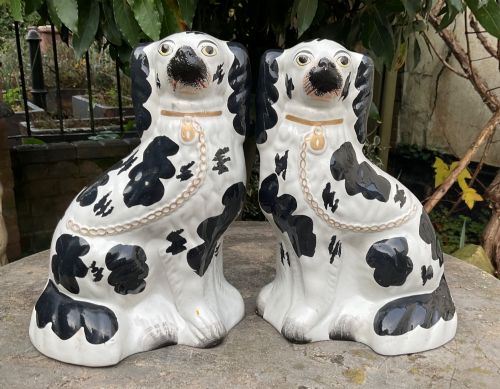
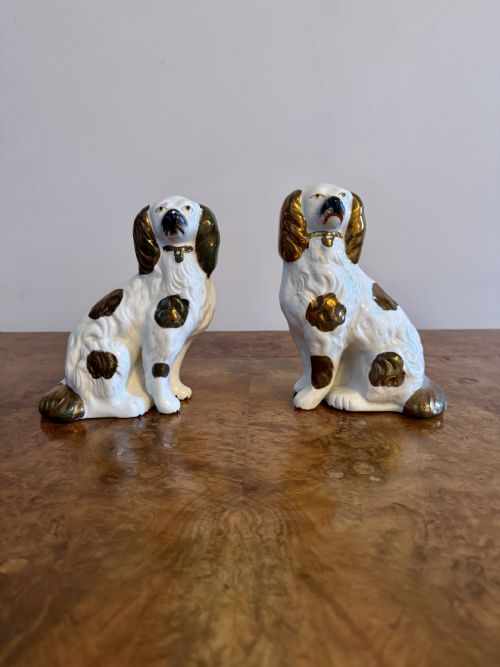
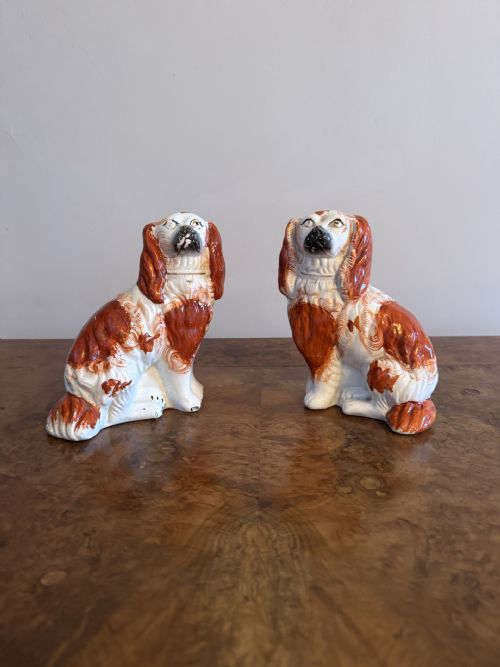
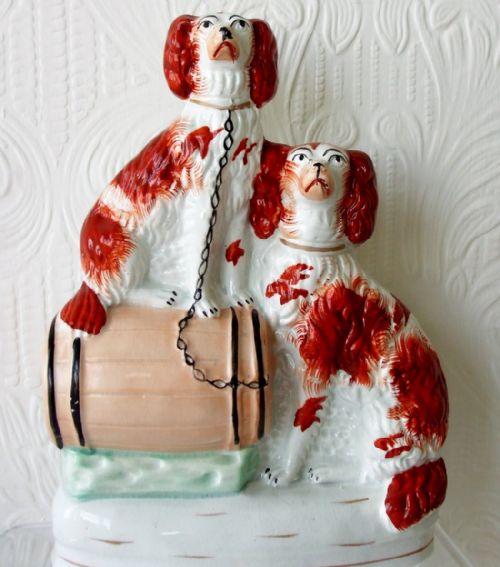
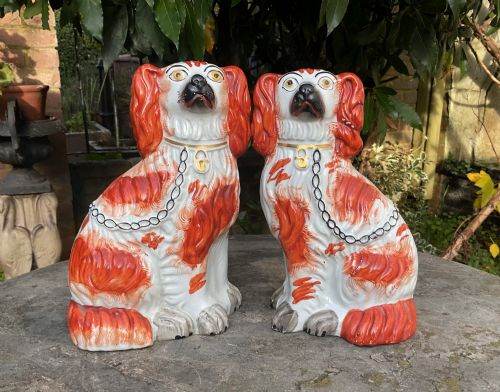
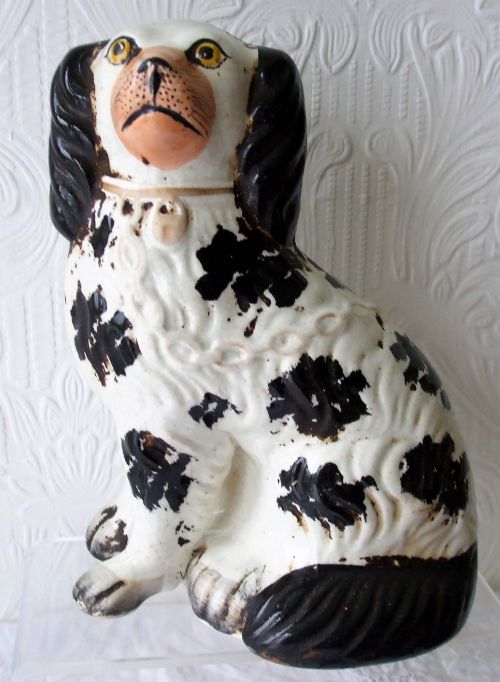
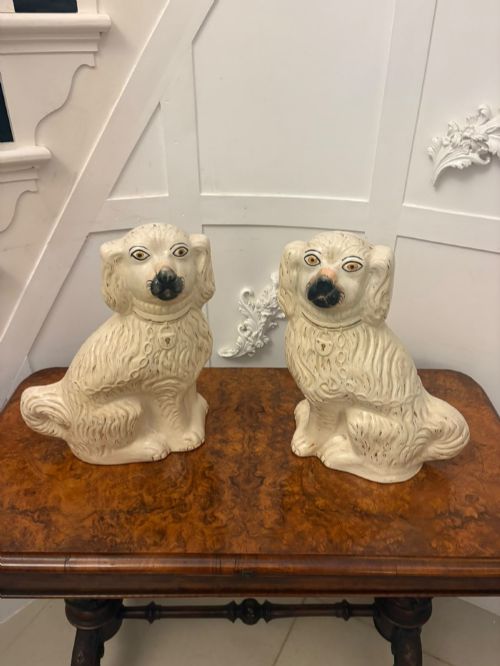
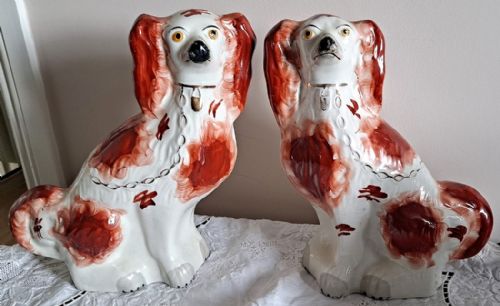
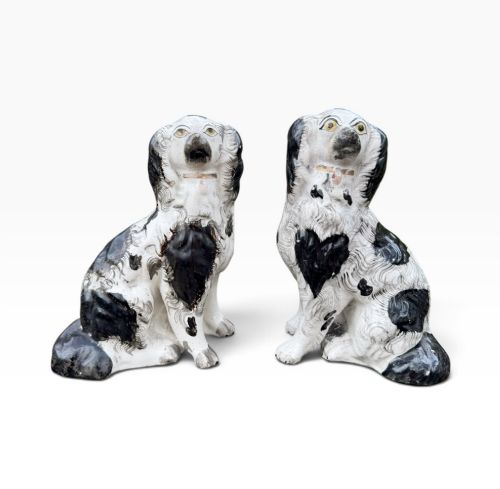
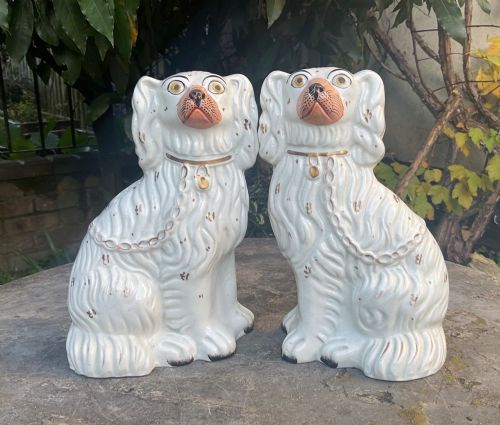
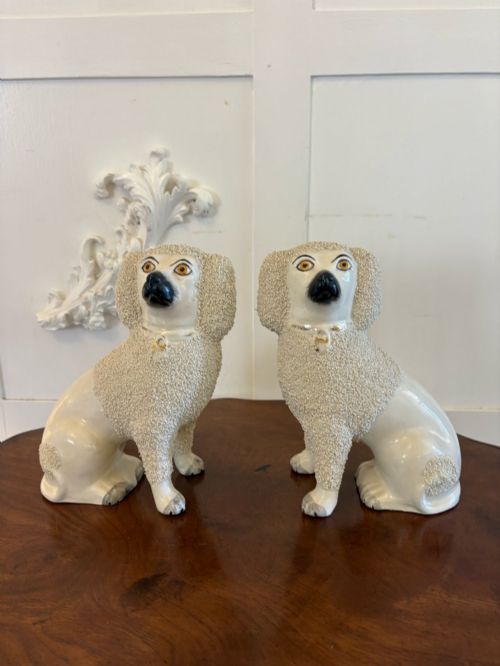
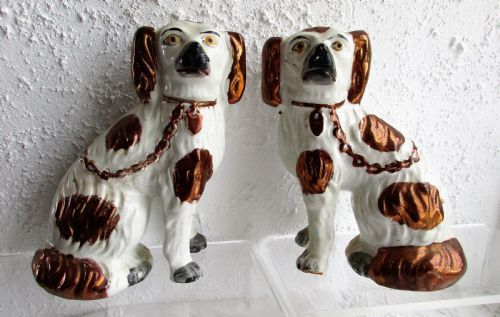
When you search for earthenware hearth ornaments, you find nineteenth-century ceramic figures designed to sit upon the mantelpiece. The most common version on this page is the pair of Staffordshire spaniels, often modelled as comforter dogs sitting straight and alert.
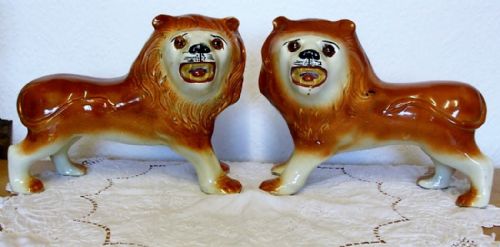
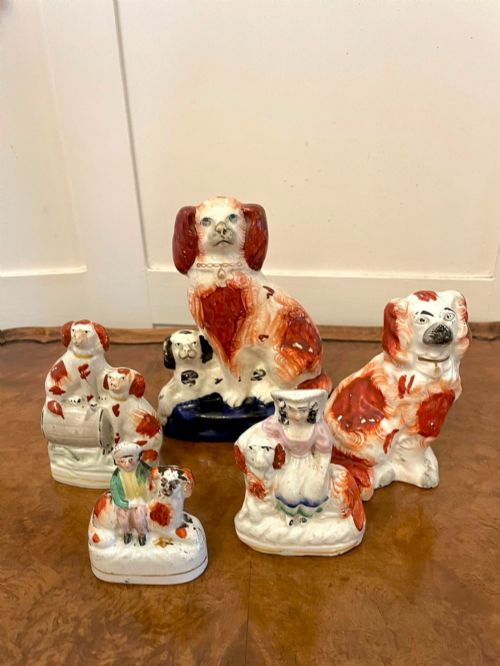
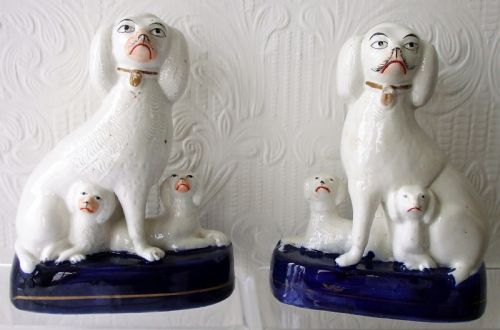
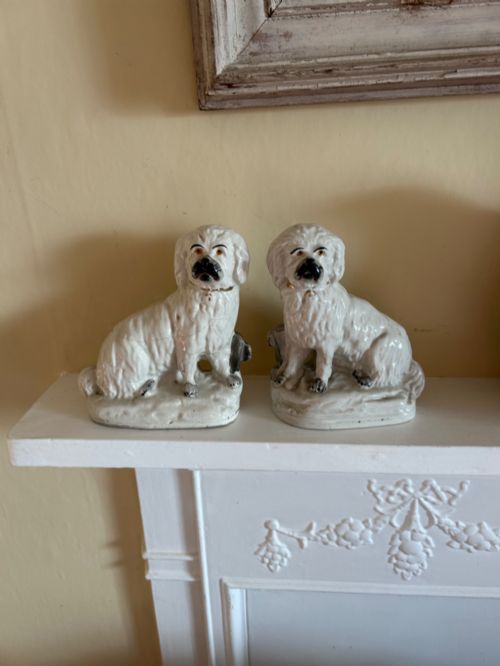
Beyond spaniels, the selection includes poodles with pups, Maltese terriers, lions, and flatback figures such as a Scottish Highlander on horseback. These pieces date from the Victorian era, spanning decades from eighteen-fifty through to nineteen-hundred.
Most items appear in pairs, intended to flank a fireplace grate or adorn a shelf with symmetrical charm. They represent English traditional potting output from the nineteenth century, capturing domestic animals and notable subjects in moulded clay.
How they were made
Potters shaped these figures from earthenware clay, utilising moulds to produce consistent forms for popular subjects like spaniels and poodles. Lead glaze provided a smooth protective coating over the ceramic body.
Earthenware Hearth Ornaments Retail Price Guide 2026
Typical asking prices for earthenware hearth ornaments among the pieces listed under this phrase on Sellingantiques today, from the lower quarter to the upper quarter. They describe what is for sale here now, not the wider market.
Poodles arrive with miniature pups clinging to their sides, proving that Victorian dog grooming was wonderfully ambitious.
What varies in quality
Painting execution marks the divide between standard production and superior craftsmanship. Careful hand painting on the enamel and precise application of gilt create expressive faces and clean separation of colour.
Beswick
The Earthenware Hearth Ornaments Glossary
- Earthenware
- Porous pottery fired at lower temperatures than stoneware or porcelain. It requires a glaze to become impermeable to liquids.
- Flatback
- A figure moulded with a finished front and a flat, unadorned back. This design allowed the ornament to sit flush against a wall or mantelpiece.
- Enamel
- Opaque glass-like paint applied over the fired glaze. Workers fired the piece a second time to fuse these pigments permanently to the surface.
- Gilt
- A thin layer of gold or gold-coloured material applied to collars, lockets, and highlights. It catches the light in a dimly lit room.
- Comforter spaniel
- A popular nineteenth-century hearth dog modelled after the King Charles spaniel. Victorian households placed pairs of these figures on either side of the fireplace.
Earthenware Hearth Ornaments: Frequently Asked Questions
What are earthenware hearth ornaments?
These pieces are nineteenth-century ceramic figures, predominantly dogs and animals, modelled to decorate domestic mantelpieces. Potters in England produced them in volume during the Victorian period.
They serve as decorative objects rather than functional items, capturing the domestic taste of the era.
Why do Staffordshire dogs come in pairs?
Makers designed these figures to sit symmetrically on either end of a fireplace hearth or shelf. Facing one another, they framed the domestic firegrate.
This paired arrangement remains the traditional way to display spaniels and poodles today.
How do I date a Victorian figure?
Dating relies on stylistic clues, modelling sharpness, and recorded periods within the nineteenth century. Victorian production shifted across decades from eighteen-fifty to nineteen-hundred.
Earlier examples often display finer hand painting and crisp clay moulds.
Where should I display these ornaments?
These figures find a natural home on mantelpieces, bookshelves, or side tables where their colours stand out. They suit traditional English interiors and eclectic room schemes alike.
Placing them away from heavy foot traffic protects their glazed and painted surfaces.