


Porcelain Rose Table Lamp
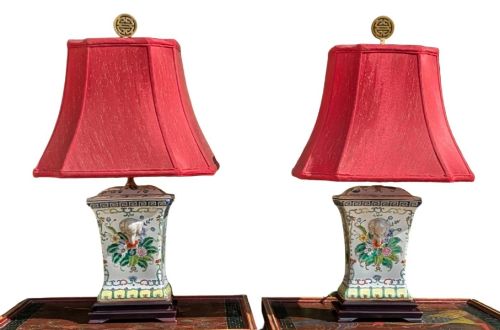
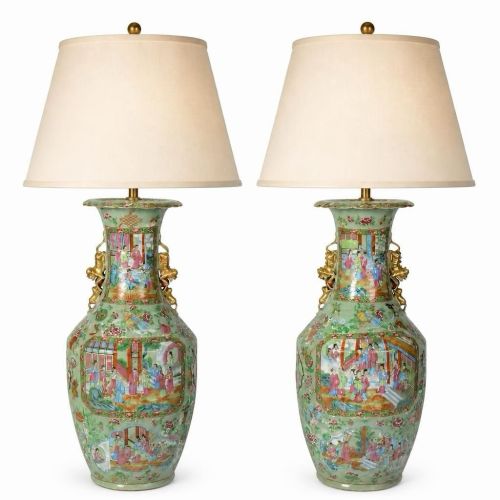
These porcelain rose table lamps combine hand-painted floral ceramic bodies with metal mounts, bringing distinct colour and illumination to a room.
Porcelain Rose Table Lamp
A porcelain rose table lamp is typically formed from converted nineteenth-century Chinese vases or ginger jars fitted for electricity. Many examples appearing here originate from Cantonese workshops or nineteenth-century Chinese export production, featuring characteristic panel paintings and floral motifs.
Buyers frequently encounter nineteenth-century pairs alongside individual twentieth-century adaptations. The ceramic bodies range from baluster vases to ginger jars, often mounted on metal bases or fitted with silk fabric shades.
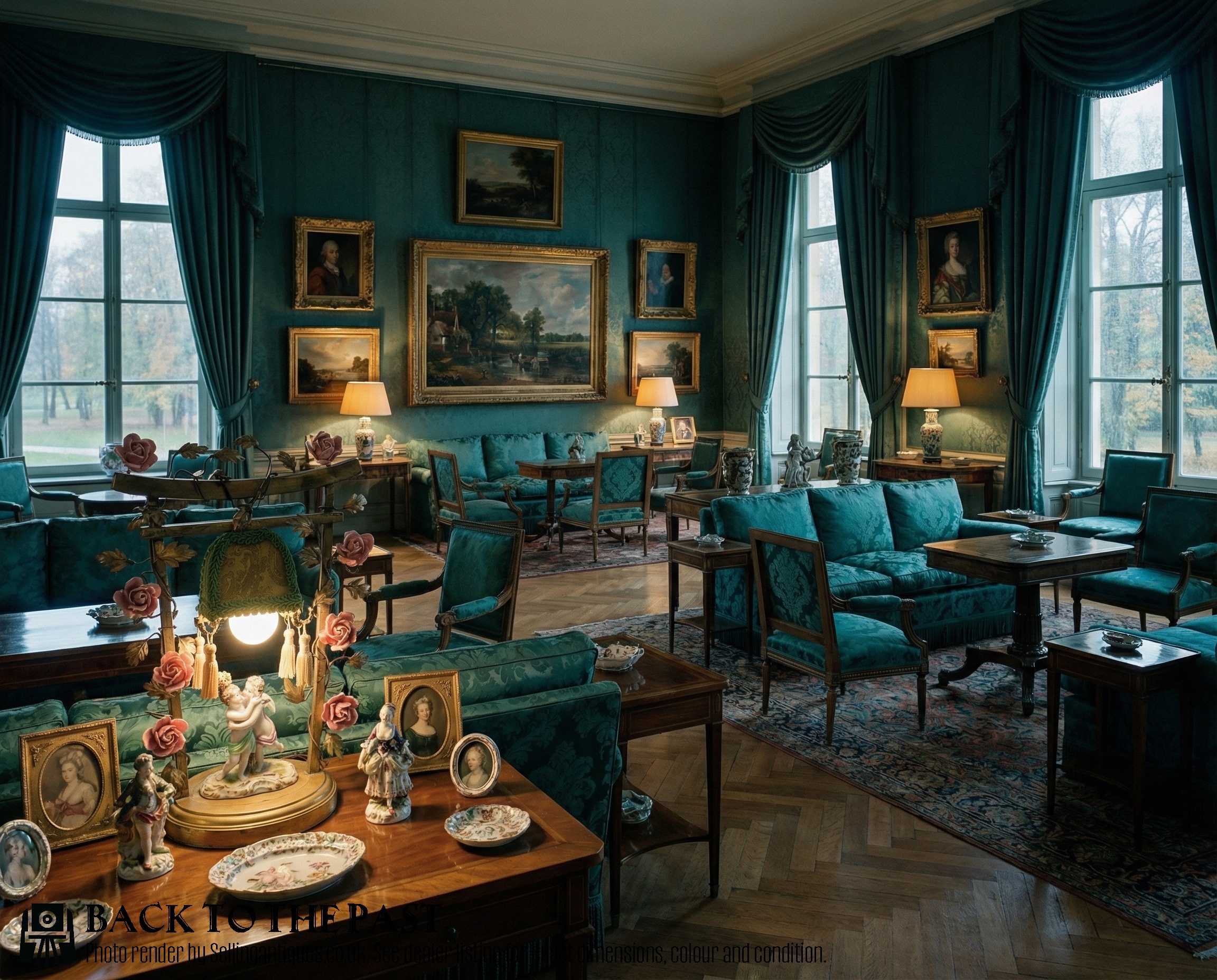
The selection also includes European porcelain interpretations influenced by eastern styles, notably French rococo revival designs and pieces attributed to nineteenth-century makers like Sitzendorf and Samson.
How they were made
Potters shaped the porcelain bodies on the wheel or in moulds before applying enamels by hand, creating the dense pink and green palettes seen on rose medallion and famille rose wares. Kiln-fired glazes sealed the painted scenes underneath a glossy protective finish.
Metalworkers added structural support using brass, ormolu, and gilt bronze mounts around the necks and bases of the ceramic vessels. These metal additions often secured the wiring components while elevating the overall height of the lamp.
Fabric shades in silk and standard textiles were subsequently paired with the ceramic bases to diffuse light across the painted surfaces.
Materials span porcelain, gilt bronze, ormolu, silk, and wood across various baluster and ginger jar forms.
What varies in quality
The precision and detail of the hand-painted enamels dictate the visual merit of each piece, distinguishing hurried factory output from carefully articulated figural and floral compositions. Famille rose and rose medallion panels with crisper linework and richer pigment depth command greater attention.
The integration of the metal mounts plays a significant role in the construction standard. Gilt bronze and ormolu that fit the contours of the porcelain snugly without obscuring the main decorative panels demonstrate superior craftsmanship compared to generic brass fittings.
Proportion between the ceramic vase and its overall mounting structure determines the visual balance of the assembled lamp, ensuring the heavy ceramic base remains stable beneath its shade.
Sitzendorf·Samson
The Porcelain Rose Table Lamp Glossary
- Famille Rose
- A palette of opaque enamel colours dominated by pink, introduced to Chinese ceramics during the Qing dynasty. The name derives from the distinctive rose-pink enamel used to render floral and figural subjects.
- Rose Medallion
- A specific style of Cantonese porcelain decoration divided into distinct panels filled with birds, butterflies, and figures interspersed with floral motifs. The central medallion typically anchors the complex geometric borders.
- Ormolu
- Finely ground high-carat gold applied to a bronze base, frequently utilised for decorative mounts on nineteenth-century lamps. This technique provided a bright, durable metallic finish.
- Baluster
- A vase shape with a rounded lower body that tapers toward a narrow neck, commonly utilised for lamp conversions. This profile offers stable proportions for table placement.
- Ginger Jar
- A high-shouldered ceramic vessel originally designed for storage, frequently adapted into the base of a table lamp. The rounded silhouette provides an ample canvas for painted enamel scenes.
Porcelain Rose Table Lamp: Frequently Asked Questions
Are these original antique vases?
Many lamps began their existence as nineteenth-century Chinese export vases or ginger jars before receiving electrical fittings at a later date. The ceramic bodies themselves retain their original period glazes and hand-painted details.
Makers such as Samson also produced nineteenth-century European interpretations of these eastern styles, which were subsequently converted into lamps.
What is rose medallion porcelain?
Rose medallion is a nineteenth-century Cantonese decoration style featuring panels of figures and birds set against dense floral backgrounds. The palette relies heavily on pink enamel alongside gilt accents.
These pieces were produced extensively for export and translate readily into decorative lighting.
How do I choose the right shade?
Selecting a shade depends on the scale of the porcelain base and the room's proportions. Silk and fabric shades in neutral tones complement the detailed enamel patterns without competing for attention.
Matching the shade drop to the height of the gilt bronze or brass mount helps maintain visual balance.
Can these lamps be rewired safely?
Most antique lamps have been updated with modern wiring to meet current electrical standards. A qualified electrician can inspect or replace older components while preserving the historic mounts and porcelain bodies.
Care should be taken during any rewiring to protect the original brass and ormolu fittings from damage.