
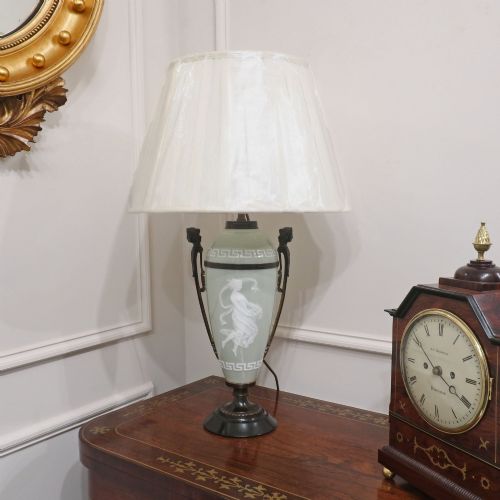
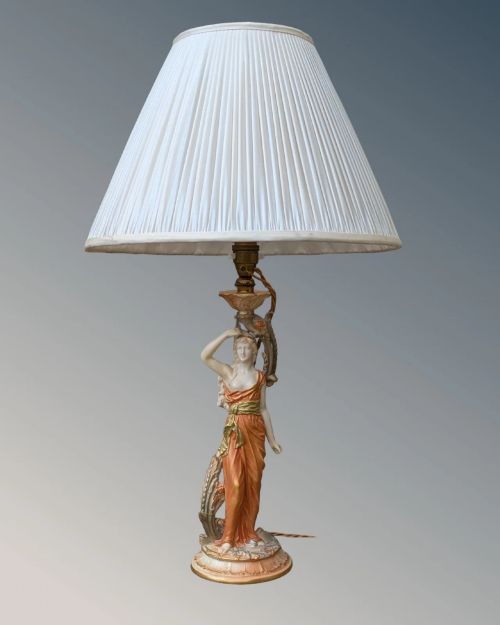


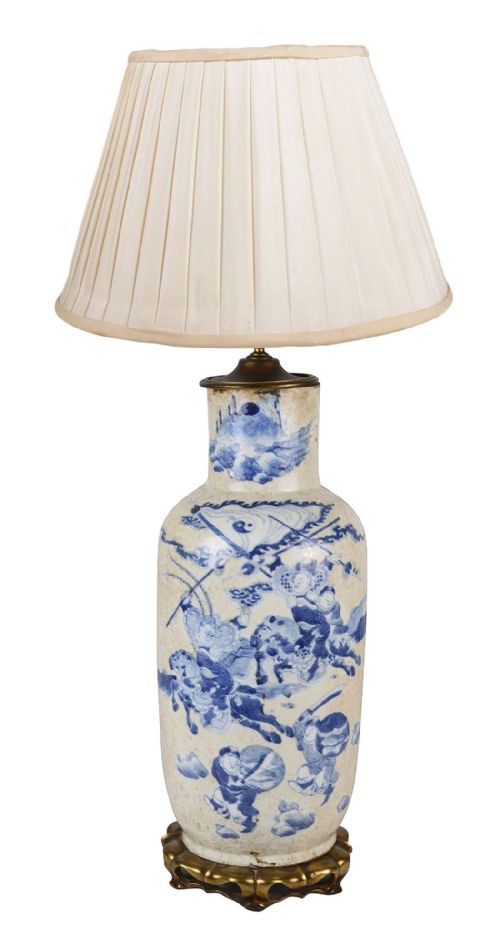

Porcelain Figure Desk Light
A porcelain figure desk light combines sculptural ceramic form with functional illumination, offering period character and warm ambient glow for a study or cabinet.
Porcelain Figure Desk Light
A porcelain figure desk light is a functional table lamp that incorporates a ceramic human, animal, or classical figure into its structural base. These pieces draw upon a rich lineage of historical styles ranging from the Victorian era to the early twentieth century.
The selections available here span diverse aesthetic traditions including French Neoclassical, Art Deco, Chinese Qing Dynasty, and Victorian Greek Revival. Buyers frequently encounter table lamps fashioned from converted nineteenth-century vases, German animal figures, and glazed figural studies.
Origins stretch across European manufactories and Chinese kilns, with pieces dated from the eighteen-eighties through to nineteen-twenty. They bridge the gap between decorative sculpture and practical desktop lighting.
How they were made
Makers shaped these lights using fine porcelain, clay, and terracotta, often mounting the ceramic bodies onto heavy bases of brass, bronze, or gilt bronze. Metal components provided the structural stability and wiring housing necessary to support the elevated weight of the ceramic elements.
Decoration relied upon specialised glazing techniques, including turquoise and blue-and-white finishes, alongside intricate pate sur pate applications. Many examples integrated delicate fabric or silk shades to soften the electrical illumination directed downwards through the assembly.
German ceramicists immortalised loyal Spitz dogs in porcelain, ensuring canine alertness persists long after the electricity is switched off.
What varies in quality
The standard of a porcelain figure desk light rests primarily upon the artistic execution of the ceramic model and the crispness of its surface detail. Finer pieces demonstrate superior hand-painted precision and sophisticated glazing that retain depth and clarity across the figural contours.
Mounting hardware and metalwork also differentiate grades of production, with heavy gilt bronze and chased brass mounts indicating a higher tier of manufacture than simpler plated alternatives. The integration between the original ceramic body and its later electrical conversion dictates the overall architectural harmony of the piece.
Royal Worcester·Karl Ens·Anton Buschelberger·Samuel Alcock
The Porcelain Figure Desk Light Glossary
- Pate sur pate
- A French ceramic technique where liquid clay is built up in successive layers onto a dark body to create a low relief cameo effect. This method produces translucent white designs that stand out against coloured porcelain backgrounds.
- Gilt bronze
- Copper alloy treated with a fine layer of gold to produce a durable, decorative metallic finish. It appears frequently on nineteenth-century lamp mounts and bases.
- Chinoiserie
- European artistic style reflecting Chinese decorative motifs and cultural themes, popular across decorative arts. It often manifests in blue and white porcelain lamp conversions.
- Famille verte
- A Chinese ceramic palette dominated by green enamels, developed during the Qing dynasty. This classification describes polychrome porcelain decorated with transparent green hues alongside other colours.
Porcelain Figure Desk Light: Frequently Asked Questions
Are these lamps safe for daily desk use?
Most antique lamps require professional rewiring and PAT testing to meet modern domestic electrical standards before regular operation.
Qualified restorers can update internal cords while preserving the original porcelain body and exterior metal components.
How do I identify the period of a lamp?
Dating relies upon stylistic markers, factory stamps, and the characteristics of the glaze and mounts. Victorian and Edwardian pieces often display distinct neoclassical or revivalist proportions.
Examining the base and fitting types provides further clues regarding the date of manufacture and subsequent conversion.
Can I replace the fabric shade safely?
Shades can be replaced using designs that complement the scale and period style of the porcelain figure. Matching the fitter type ensures the shade sits securely upon the lamp hardware.
Selecting silk or traditional fabrics maintains the historical aesthetic of the desk light.
What caused the conversion from vase to lamp?
Many nineteenth-century vases and decorative figures were adapted into table lamps during the twentieth century to serve domestic lighting needs. This practice preserved fragile ceramics by giving them a functional role in interior spaces.
Converters typically drilled the ceramic base to pass electrical wiring safely through the centre.