


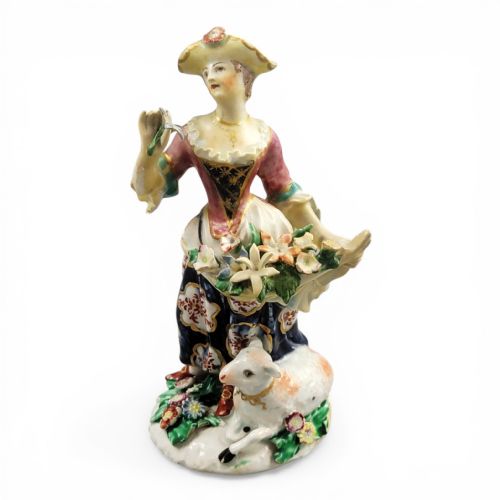


Porcelain Flower Basket
These porcelain flower basket pieces combine hand-painted floral artistry with sculptural ceramic forms, offering both decorative charm and historic craftsmanship.
Porcelain Flower Basket
When you search for porcelain flower basket items, you encounter a varied selection of antique decorative objects ranging from miniature vessels to large centrepieces. The pieces span multiple centuries and stylistic traditions, including English factories, continental European manufacturers, and Japanese Imari wares.
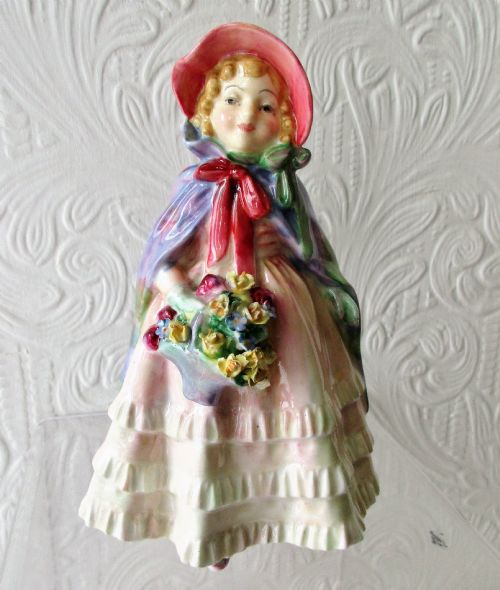
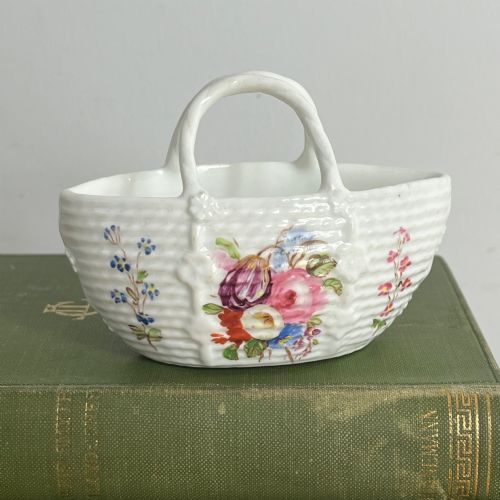
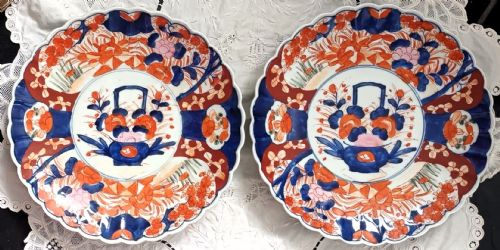
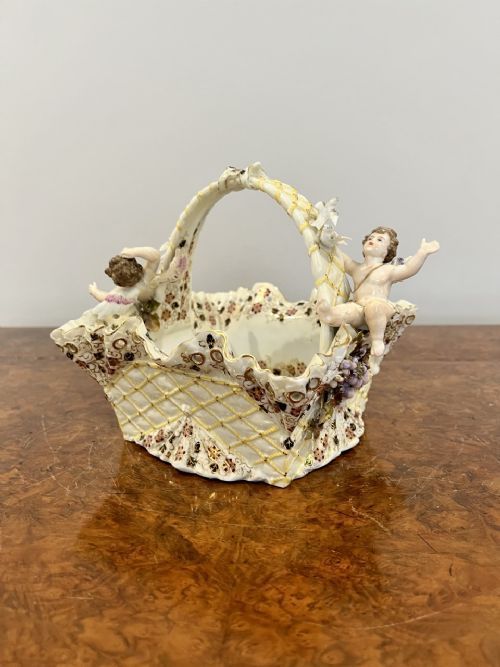
On this page, you are most likely to meet 19th-century English baskets adorned with applied floral work, alongside continental figures and Japanese export dishes. Forms include handled baskets, centrepieces, and figurative ceramic groups holding flowers or baskets.
The objects serve primarily as decorative ceramics, designed originally to ornament tables or mantelpieces in period interiors. Their enduring appeal lies in the intricate modelling of petals and leaves combined with hand-painted enamels and gilding.
Materials and production techniques
The pieces employ hard-paste porcelain, soft-paste porcelain, and earthenware, shaped through moulding or hand-modelling techniques. Makers utilised ceramic body formulas specific to their kilns, whether in Staffordshire, Worcester, Meissen, or Japan.
Decoration relies on enamel painting, gold leaf gilding, and applied ceramic flowers formed petal by petal. Firing processes required careful kiln management to preserve fine details in openwork basketweave patterns and delicate sculptural figures.
Porcelain Flower Basket Retail Price Guide 2026
Typical asking prices for porcelain flower basket among the pieces listed under this phrase on Sellingantiques today, from the lower quarter to the upper quarter. They describe what is for sale here now, not the wider market.
Early ceramicists occasionally hid tiny porcelain ladybirds among the applied flower petals to surprise observant viewers.
Assessing quality in antique ceramics
Quality in these ceramic pieces rests on the crispness of the modelling and the skill of the hand-painting. Applied floral encrustations show greater definition and fewer losses in superior examples, where each leaf and petal is individually shaped.
The distinction between standard production and top-tier work also appears in the handling of enamels and the precision of gilding. Factories like Worcester, Meissen, and Rockingham achieved finer glazes and more balanced compositions than lesser-known regional workshops.
Flight Barr And Barr·Rockingham Porcelain·Dr Wall Worcester·Meissen Porcelain·Bow Porcelain·C G Schierholz And Sohn·Royal Worcester·Royal Dux·Derby Porcelain·New Hall Porcelain
The Porcelain Flower Basket Glossary
- Soft-paste porcelain
- An early ceramic composition fired at lower temperatures than hard-paste porcelain, resulting in a warmer, slightly softer glaze appearance. It was widely used by 18th-century English factories before true porcelain formulas were mastered locally.
- Hard-paste porcelain
- A durable ceramic material containing kaolin and petuntse, fired at high temperatures to produce a vitreous body. This body resists scratching and forms the basis of many continental European and Asian items.
- Enamel
- Coloured glass paste applied to the ceramic surface and fused in a muffle kiln. It provides the vibrant reds, blues, and greens seen on hand-painted floral motifs.
- Gold leaf
- Thinly beaten gold applied to ceramic rims and handles for ornamentation. It reflects light and highlights the structural lines of baskets and centrepieces.
- Imari
- A Japanese export porcelain style characterised by underglaze blue and iron red, complemented by gold. These pieces were copied and collected avidly across Europe during the 18th and 19th centuries.
Porcelain Flower Basket: Frequently Asked Questions
What are porcelain flower baskets?
These objects are decorative ceramic items modelled in the shape of baskets, often filled with applied porcelain flowers or painted with floral motifs.
They were produced by European and Asian factories as ornamental pieces for grand interiors and dining tables.
How were they used historically?
Owners placed them on dining tables as centrepieces or displayed them on mantelpieces and cabinets to show wealth and taste.
Some smaller forms functioned as miniature containers or decorative dishes for display rather than utility.
How do I care for antique porcelain?
Keep items out of direct sunlight to prevent enamel fading, and dust them gently with a soft dry brush.
Avoid washing applied flower pieces in water, as moisture can weaken old adhesives or trapped dirt within delicate petal crevices.
How do I identify the period?
Examine the base for factory marks, paste consistency, and glaze characteristics that correspond to known operating dates of kilns.
Stylistic cues such as Regency shapes or Victorian Rococo Revival ornamentation also help narrow down the decade of production.