


Porcelain Dog Ornament
A porcelain dog ornament brings domestic warmth to a mantelpiece, capturing centuries of ceramic artistry in the form of spaniels, poodles, and hunting hounds.
Porcelain Dog Ornament
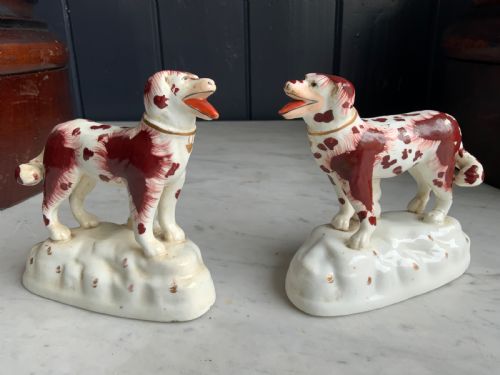
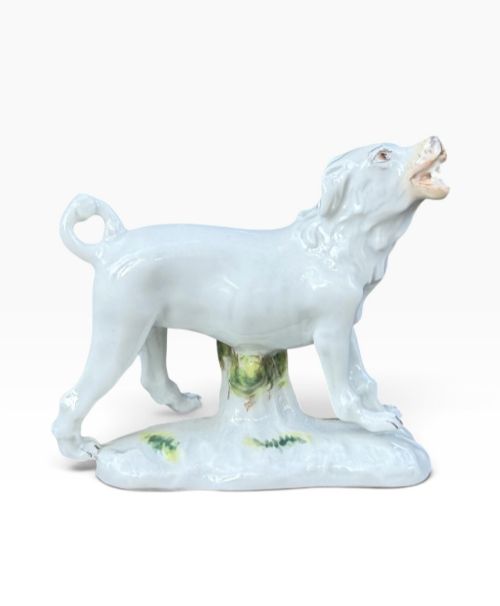
A porcelain dog ornament spans multiple centuries of ceramic history, with the Victorian Staffordshire spaniel standing as the most frequent discovery on this page. These figures range from mantel pairs and miniature poodles to detailed hunting hounds and sculptural groups.
The selection extends beyond British pottery to continental European factories and Asian ceramic traditions, including Japanese models and German porcelain pieces. Buyers encounter both single shelf sculptures and paired ornaments designed to sit at either side of a fireplace.
Forms vary from seated comforter spaniels with gilt collars to playful puppies, greyhounds acting as quill holders, and figures accompanied by human handlers or musicians.
Materials and Construction
Potters shaped these figures using earthenware, Parian ware, and fine porcelain, applying glazes and enamel paint to bring surface detail to life. Many examples feature delicate hand-painting combined with gold leaf or gilt highlights upon the collars and bases.
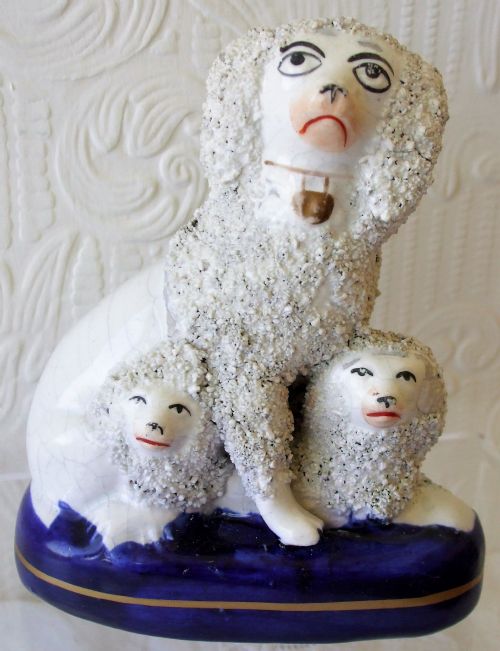
Continental and English factories employed press moulding and slip casting techniques to form the dogs, often adding textured clay elements like fur encrusting or blue cushions. Kiln firing fixed the underglaze colours before artisans added overglaze enamels and metallic gilding.
Materials represented across the inventory include glazed ceramic, earthenware, Parian bisque, enamel, and applied gold leaf.
Distinguishing Quality in Ceramic Canines
The distinction between standard production and superior work lies in the crispness of the moulding and the sensitivity of the hand-painting. Softer facial expressions, carefully delineated eyes, and cleanly applied enamel without bleeding separate finer studio output from mass output.
Preservation of the original gilt highlights and the absence of heavy restoration dictate the desirability of a piece. Finer examples retain their original glaze lustre and crisp surface textures, particularly on heavily detailed fur or encrusted bases.
Thomas Parr·Wedgwood and Co Ltd·Royal Dux·Meissen·Rosenthal
The Porcelain Dog Ornament Glossary
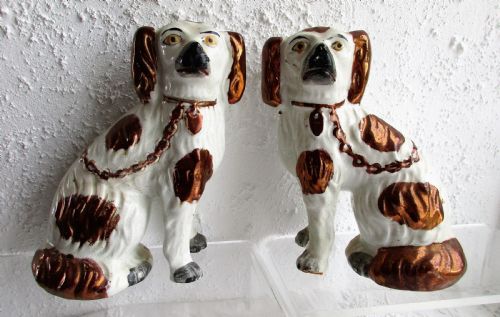
- Comforter spaniel
- A type of Staffordshire pottery dog traditionally placed on Victorian parlour mantelpieces to watch over the hearth. These pairs face inward toward one another.
- Parian
- A fine white unglazed porcelain resembling marble, developed in the nineteenth century and used for classical sculpture and animal figures. It captures intricate muscle and fur detail without surface glaze.
- Encrusting
- A decorative technique where small pieces of clay, often resembling flowers or moss, are applied by hand to the base or surroundings of a figure. This adds rich texture to the finished ceramic.
- Biscuit
- Fired unglazed ceramic ware, also known as bisque. It provides a matte, porous surface texture often seen on nineteenth-century poodles and sculptural groups.
- Shishi
- A traditional Japanese guardian lion or dog sculpted in ceramic. These powerful figures carry distinct cultural symbolism differing from European pet portrayals.
Porcelain Dog Ornament: Frequently Asked Questions
Were these dogs always made in pairs?
Many nineteenth-century Staffordshire and continental figures were produced as symmetrical pairs to adorn the left and right sides of a fireplace or shelf. This mirrored arrangement was a staple of Victorian interior display.
Single figures and smaller groups depicting puppies, huntsmen, or musicians were also common, created as standalone decorative sculptures rather than mantelpiece bookends.
What is the difference between porcelain and earthenware?
Porcelain is a dense, vitrified ceramic fired at very high temperatures, resulting in a white body that can sometimes appear translucent. Earthenware is a coarser, porous pottery body that requires a glaze to become watertight.
Many classic mantel dogs are actually earthenware finished with a tin or lead glaze, whereas finer figurines from European factories utilise true porcelain or Parian ware.
How should I clean ceramic dog ornaments?
Dusting with a soft, dry brush prevents the accumulation of dirt in the textured fur and crevices of glazed or bisque surfaces. Avoid submerging antique pieces in water, especially those with overglaze enamel or gold leaf that might flake.
If washing is necessary, use a damp cloth with mild soap on glazed areas only, and dry the piece immediately with a soft towel.