

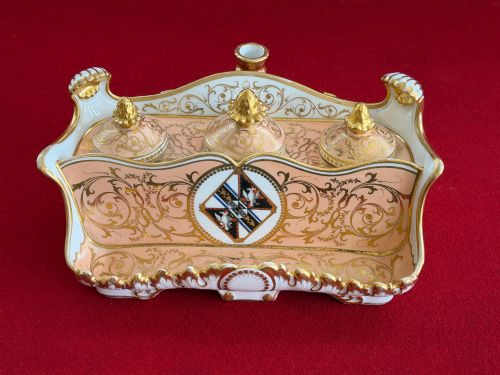

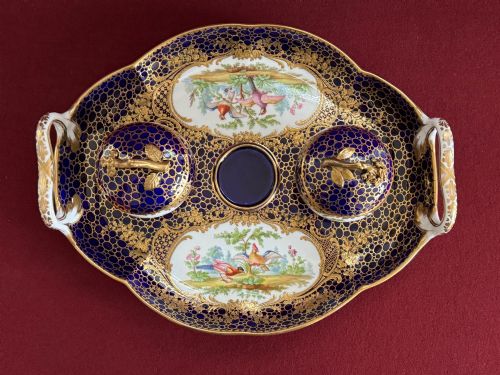
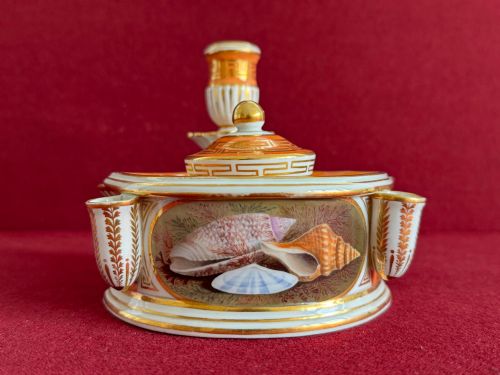
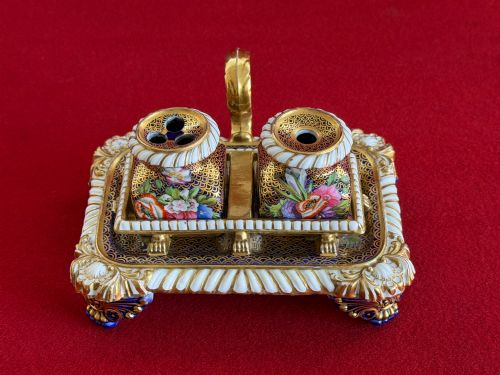


Porcelain Desk Stand
These porcelain desk stands are practical writing accessories from the Georgian, Victorian, and Edwardian eras, fashioned to hold ink and quills with elegance.
Porcelain Desk Stand
The objects served as functional writing furniture for desks and libraries, combining ceramic bodies with mounted brass, enamel, and gold leaf. Many pieces incorporate matched inkwells or pen rests into a single fitted base.
Makers such as Minton, Flight & Barr Worcester, and Spode produced notable examples, while continental and Dutch Delft workshops contributed regional variations. Pieces span from the early nineteenth century through to Edwardian interpretations.
Materials and construction
Makers shaped porcelain, earthenware, and ceramic bodies, often applying intricate glazes and hand-painted panels. Selected pieces feature Sèvres style decoration or Chinoiserie motifs executed in blue and gold.
Metal mounts in brass, gold leaf, and gilt ormolu frequently secure or support the ceramic elements, as seen in nineteenth-century French and continental designs. Burr walnut and wood bases also provide structured foundations for painted porcelain plaques and glass domes.
Porcelain Desk Stand Retail Price Guide 2026
Typical asking prices for porcelain desk stand among the pieces listed under this phrase on Sellingantiques today, from the lower quarter to the upper quarter. They describe what is for sale here now, not the wider market.
Listings feature porcelain, earthenware, brass, and burr walnut across Victorian, Georgian, and Regency periods.
Assessing quality and execution
Quality rests in the precision of the hand-painting, the crispness of the porcelain or ceramic moulding, and the integration of metal mounts like brass or ormolu. Finer works display meticulous detail in figurative pieces such as Staffordshire greyhounds and structured patterns like those from Spode or Minton.
The ambition of the form dictates distinction, separating simple ceramic inkwells from grand three-piece French desk sets and multi-component inkstands. Complete sets with matching quill holders and intact painted plaques command greater regard.
Minton·Flight and Barr Worcester·Spode
The Porcelain Desk Stand Glossary
- Inkstand
- A fitted tray or stand holding inkwells, sanders, and pen holders for a writing desk. These pieces organise essential writing materials in a single portable or stationary unit.
- Quill Holder
- A support or ceramic figure designed to keep feather quills or pens upright and ready for use. They often take the shape of animals or decorative pedestals.
- Ormolu
- Gilt bronze mounted onto decorative objects and desk accessories, popular in French nineteenth-century pieces. It provides a bright metallic contrast to porcelain bodies.
- Delft
- Tin-glazed earthenware originating from Dutch workshops, known for distinctive blue and white decoration. These pieces bring a rustic Continental aesthetic to writing equipment.
Porcelain Desk Stand: Frequently Asked Questions
What is a porcelain desk stand?
A porcelain desk stand is a desk accessory designed to hold ink and writing implements during the Georgian and Victorian eras. These items combine ceramic vessels with fitted trays and metal mounts.
They served as functional ornaments for writing tables and libraries, housing inkwells and quill holders together.
How do I date an inkstand?
Dating relies on stylistic markers, factory marks, and the combination of materials like brass, burr walnut, and hand-painted porcelain. Georgian and Regency pieces often show neoclassical influences, while Victorian examples embrace varied revivals.
Examining the glaze, ceramic body, and mount construction helps place the piece within the nineteenth century.
Where were these desk stands made?
Production centres included English factories such as Worcester, Spode, and Minton, alongside continental workshops in France and the Netherlands. Staffordshire potteries also produced figural inkwells.
Each region employed distinct ceramic bodies, glazes, and decorative styles ranging from Dutch Delft to French Second Empire designs.
How do I care for antique porcelain?
Clean antique porcelain gently with a soft, dry cloth to remove dust without disturbing painted surfaces or gold leaf. Avoid harsh chemical cleaners and excessive moisture, particularly around brass mounts and wooden bases.
Display the desk stand away from direct sunlight and dramatic temperature fluctuations to protect the glaze and ceramic body.