

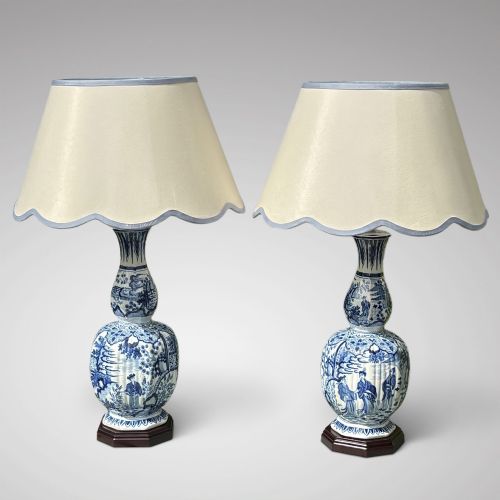


Porcelain Accent Lamp
Porcelain accent lamps bring intimate light and ceramic texture to a room, spanning Edwardian styles and earlier French and Asian designs.
Porcelain Accent Lamp
A porcelain accent lamp takes a ceramic or porcelain vessel - often a historic vase or figure - and fits it for electrical illumination. You will frequently find these pieces mounted on brass or gilt bronze bases, designed to sit on side tables or desks.
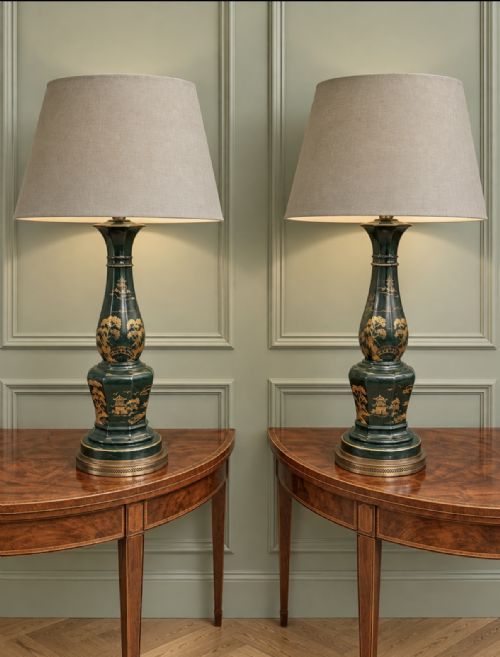
The selections span various global traditions and periods, from early twentieth century pieces to nineteenth century examples. Styles range from Chinoiserie and Japanese Satsuma to French Louis XVI Neoclassical and Dutch Delftware.
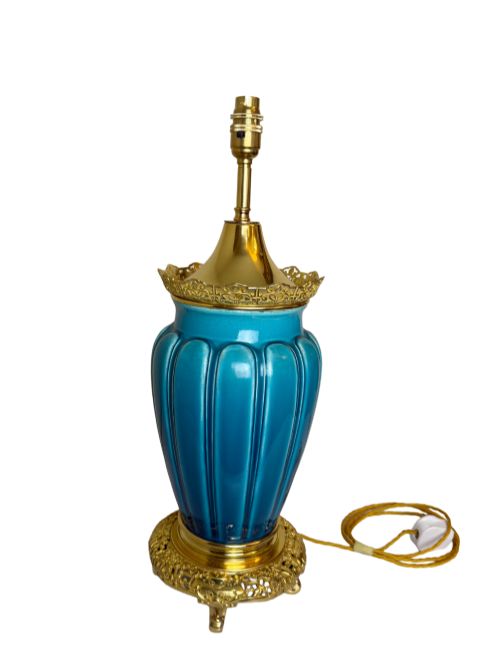
Many items repurpose earlier vessels, such as nineteenth century turquoise French vases or Chinese baluster vases, adapting them into functional lighting while retaining their original decorative character.
Materials and construction
The primary bodies are formed from ceramic, earthenware, and hard-paste porcelain, often finished with detailed glazes in blue and white, turquoise, or green. These ceramic bodies are frequently paired with metal components such as brass, gilt bronze, and ormolu to provide structural support and decorative mounts.
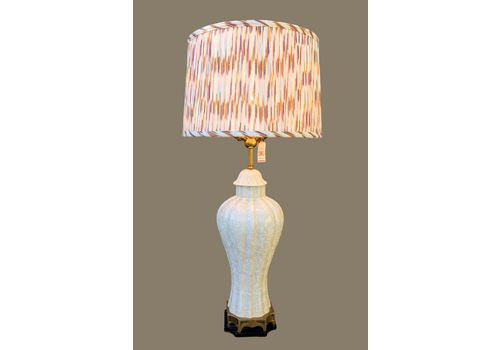
Many examples incorporate mixed media elements, pairing porcelain with marble bases, wooden components, and paired fabric or silk shades. Metal fittings and mounts are secured to the ceramic vessels, occasionally involving the conversion of antique vases into electrified table lamps.
Porcelain Accent Lamp Retail Price Guide 2026
Typical asking prices for porcelain accent lamp among the pieces listed under this phrase on Sellingantiques today, from the lower quarter to the upper quarter. They describe what is for sale here now, not the wider market.
Hooting softly from the nineteenth century, German porcelain owl lamps prove that illumination and ornithology make excellent companions on a desk.
Assessing quality in execution
Quality rests in the fidelity of the porcelain body, the depth of the glaze, and the precision of the metal mounts. Finer pieces display crisp hand-painted details, rich polychrome or monochrome glazing, and heavy cast metal fittings rather than lightweight substitutes.
The sophistication of the pairing between ceramic vessel and metal base also dictates distinction. Superior examples integrate the lamp hardware sympathetically with the original vase or figure, preserving the integrity of the historic object.
Royal Worcester·Ernst Bohne and Sohn·Sevres
The Porcelain Accent Lamp Glossary
- Ormolu
- Gilt bronze mounts used for decorative trimming and bases on European porcelain lamps. This technique involves applying finely ground high-carat gold to a bronze base.
- Chinoiserie
- European decorative style reflecting Chinese artistic influences, commonly seen in patterns and motifs on ceramic lamp bodies. It interprets East Asian aesthetics through a distinct Western lens.
- Satsuma
- Japanese earthenware pottery featuring a crackle glaze and detailed polychrome enamel painting. These pieces are frequently converted into decorative lighting.
- Baluster
- A vase or lamp body shape characterised by a rounded lower portion tapering to a narrow neck. This classic form provides a stable and visually balanced profile for table lighting.
- Flambe
- A rich, variegated ceramic glaze created by metallic oxides fired in a reduction kiln. The technique produces deep, streaked colour variations across the porcelain surface.
Porcelain Accent Lamp: Frequently Asked Questions
What is a porcelain accent lamp?
A porcelain accent lamp is a small lighting fixture built around a ceramic or porcelain vessel, often utilising historic vases or figures as the main body. These pieces add focused light and decorative ceramic texture to interior spaces.
They appear in various forms, from Chinese baluster vases to French Rococo revival designs, usually paired with silk or fabric shades.
How do you date an antique lamp?
Dating relies on examining the characteristics of the ceramic body, the style of the metal mounts, and any maker marks present on the porcelain. Stylistic indicators like Edwardian tastes or Louis XVI Neoclassical details help narrow the period.
Component construction, such as the type of brass or gilt bronze trim used for the base, also provides clues to the manufacturing era.
Were these lamps originally made for electricity?
Many examples began life as decorative vases or jars before being converted into lamps at a later date. Historic vessels, including nineteenth century French and Chinese vases, were adapted to hold electrical components.
Other pieces were manufactured specifically as lighting fixtures during the Edwardian period or the early twentieth century.
How do I style a porcelain lamp?
These lamps function well on side tables, desks, or credenzas where their ceramic glazes and metal mounts can be appreciated up close. They introduce colour and historic character to both traditional and eclectic interiors.
Consider pairing the lamp with neutral surroundings to highlight the specific glaze, whether turquoise, blue and white, or green Chinoiserie.