


Polychrome Wooden Folk Art
Polychrome wooden folk art brings together hand-carved forms and bright surface paint from diverse international traditions.
Polychrome Wooden Folk Art
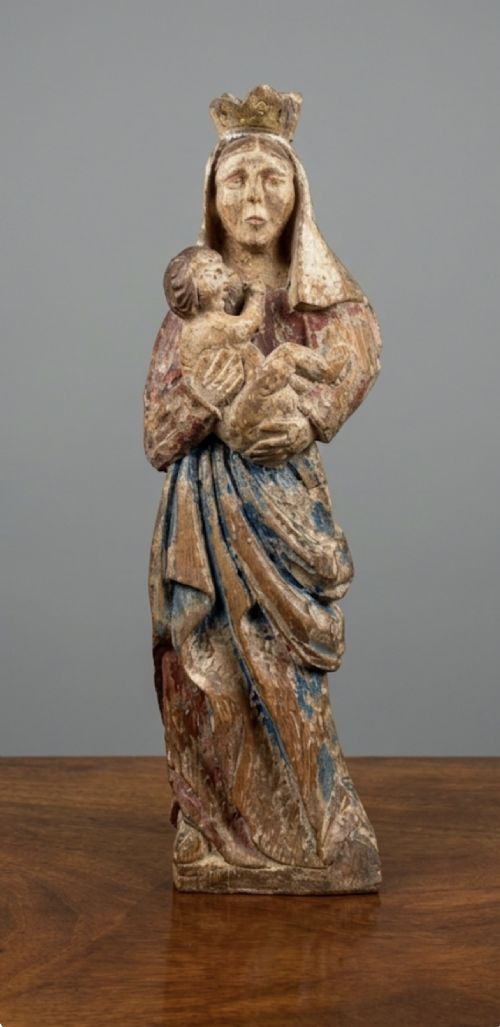
When you search for polychrome wooden folk art, you encounter a wide selection of hand-carved objects originating from various international traditions. These pieces span from the seventeenth century through to the mid-twentieth century, encompassing items made across Europe, Asia, and the Americas.
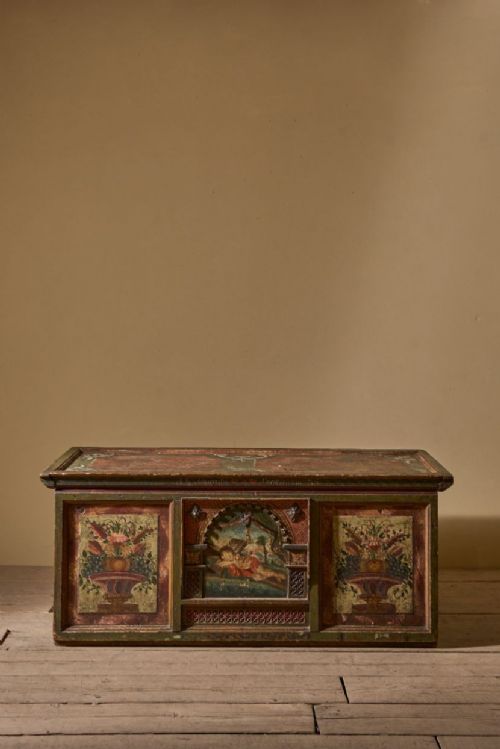
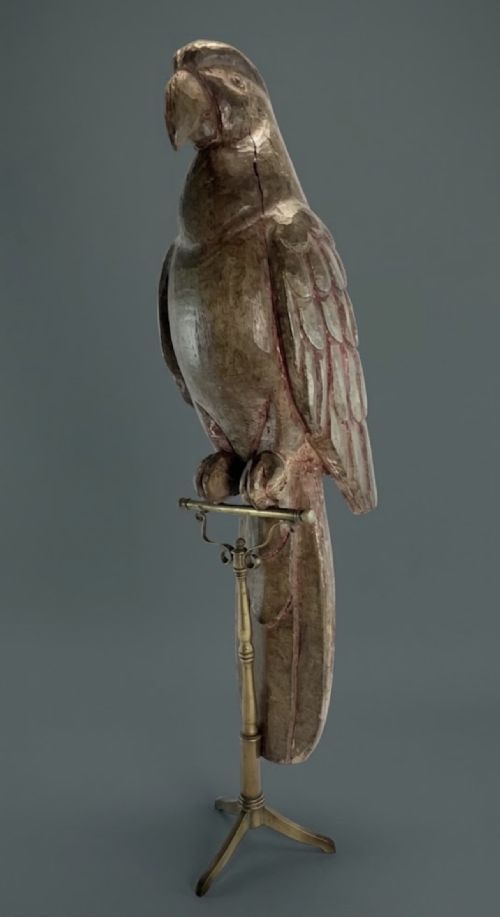
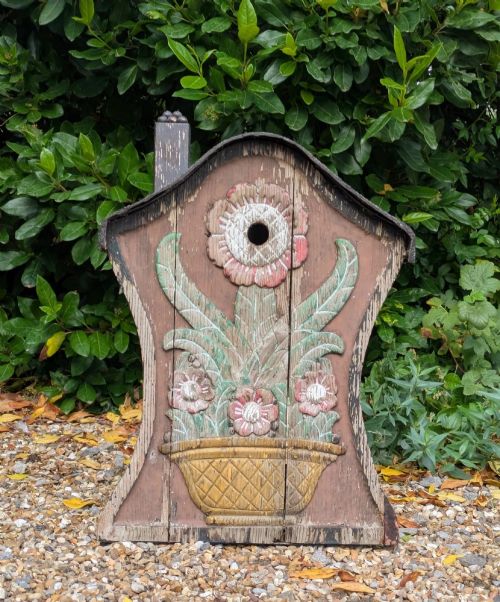
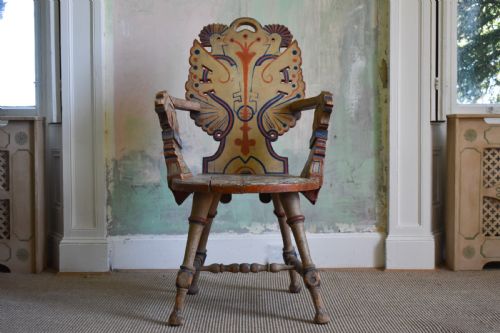
The objects take many forms, ranging from utilitarian items like marriage trunks, cupboards, and armchairs to decorative sculptures, religious figures, and fairground panels. You are most likely to meet nineteenth-century sculptures and painted chests on this page, reflecting the heavier survival rate of items from that era.
Regional styles dictate much of what you see, with Scandinavian country pieces, American trade figures, Alpine marriage chests, and Asian temple deities all appearing within the selection. Each piece bears the distinct mark of its local vernacular tradition, executed by makers working outside the formal academies.
How they were made
Makers shaped these items from solid woods such as pine using hand-carving techniques, often applying a layer of gesso as a ground before adding pigment. The reliance on simple hand tools gives each carving its characteristic irregular surface and direct, unpretentious form.
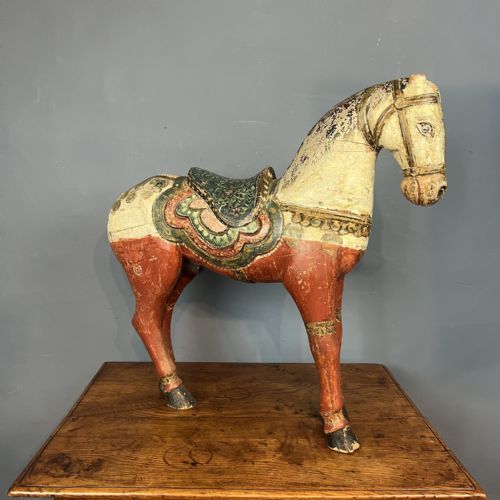
Surfaces received decoration in polychrome paint, sometimes supplemented by wax-decoration, metal elements like brass, or iron fixings. The layers of paint applied by makers protect the timber underneath while delivering the vibrant colour palette that defines the category.
The listings show nineteenth-century items as the most common period, accompanied by eighteenth-century and early twentieth-century examples in wood, paint, and iron.
What varies in quality
Quality rests heavily on the vigour of the carving and the integrity of the painted surface. Pieces with strong sculptural presence and untouched original paint finishes stand apart from those with later repainting or softened details.
The skill of the individual maker determines the success of the form, whether in the anatomy of an animal figure or the proportion of a marriage chest. Expressive character and strong regional identity elevate a piece far above standard utilitarian production.
H.S Andy Anderson
The Polychrome Wooden Folk Art Glossary
- Polychrome
- Painted or decorated in several colours. This surface treatment is fundamental to the category.
- Gesso
- A plaster mixture used as a smooth base for painting on wood. It provides an adherent surface for the applied pigments.
- Whirligig
- A wind-powered folk art toy with moving parts. These kinetic objects rely on the wind to animate carved figures.
- Lovespoon
- A carved wooden spoon given as a token of romantic affection. Welsh examples often feature intricate decorative motifs.
- Santos
- A carved figure representing a saint or religious figure. These processional and devotional objects often retain their original painted surfaces.
Polychrome Wooden Folk Art: Frequently Asked Questions
How are these pieces dated?
Dating relies on stylistic markers, construction methods, and the natural ageing of the wood and paint layers. Surviving documentation, initials, and dated inscriptions also help establish the period of origin.
Contextual clues such as hardware types and regional painting traditions further assist in narrowing down the decade or century in which a piece was made.
What is a fairground panel?
Fairground panels are large decorative boards painted with figures or scenes used to adorn amusement rides and attractions. Makers designed them to catch the eye of visitors with bold colours and dynamic subjects.
These panels functioned in high-traffic public environments, which accounts for the robust wooden construction and thick layers of protective paint found on surviving examples.
Are these objects restored?
Many pieces show signs of historic use, weathering, and minor conservation work appropriate to their age and function. Original surfaces are preserved wherever possible to maintain the integrity of the object.
Buyers often examine the paint layers closely to distinguish between original pigment, patinated wear, and later overpainting.
How do I live with folk art?
Folk art objects fit easily into contemporary interiors by adding texture, history, and a strong focal point to a room. Their handmade quality bridges the gap between formal antiques and modern minimalist spaces.
Placing items away from direct sunlight and maintaining stable indoor humidity protects the wooden substrates and fragile painted surfaces from deterioration.