



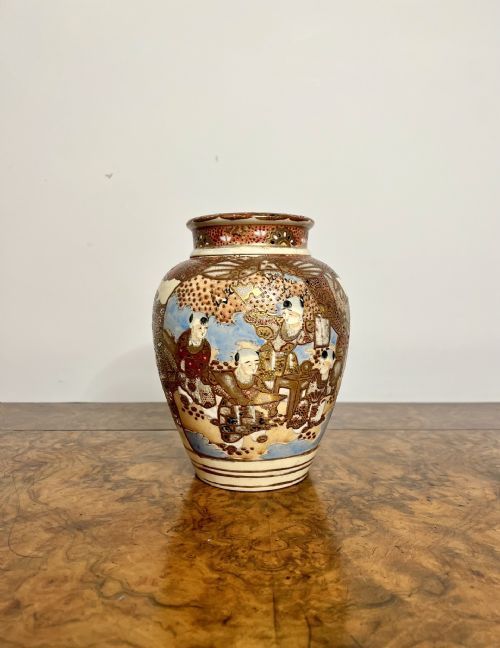


Polychrome Ginger Jar
A polychrome ginger jar brings vibrant colour and layered pattern into a room through rich glazes and hand-painted scenes.
Polychrome Ginger Jar
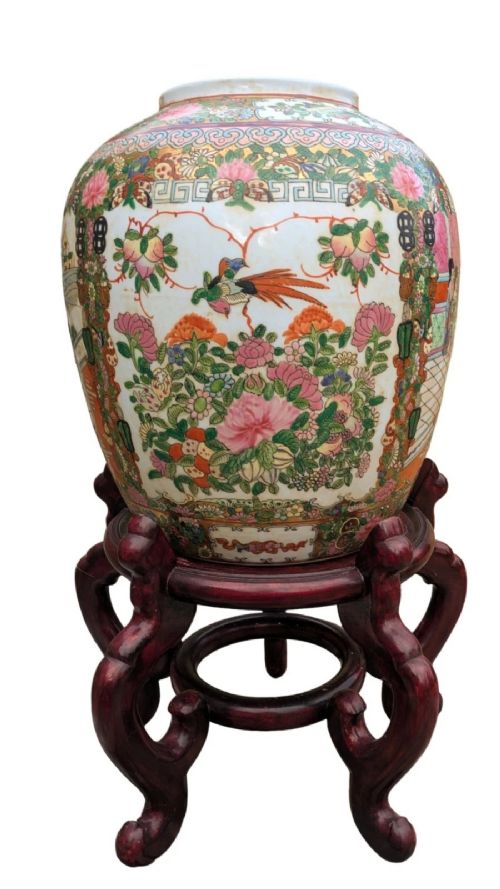
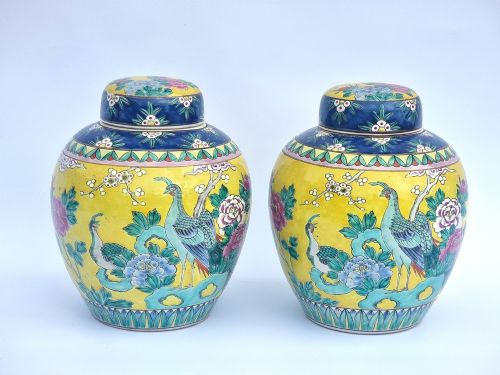
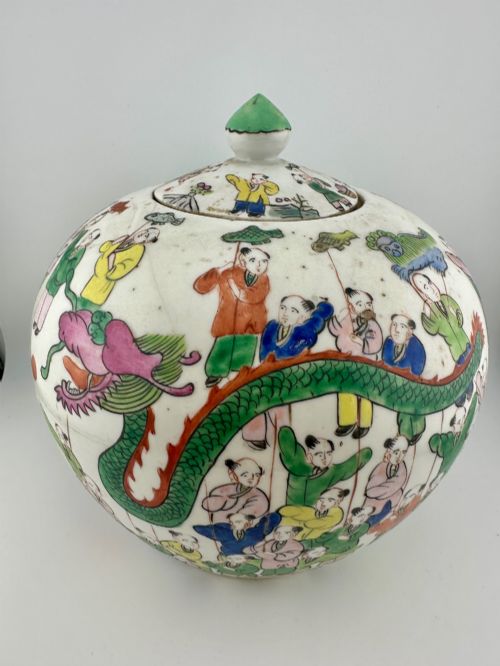
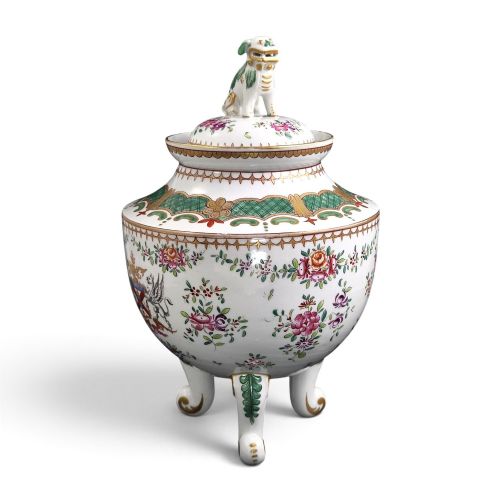
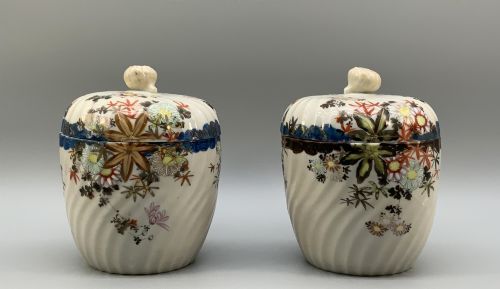
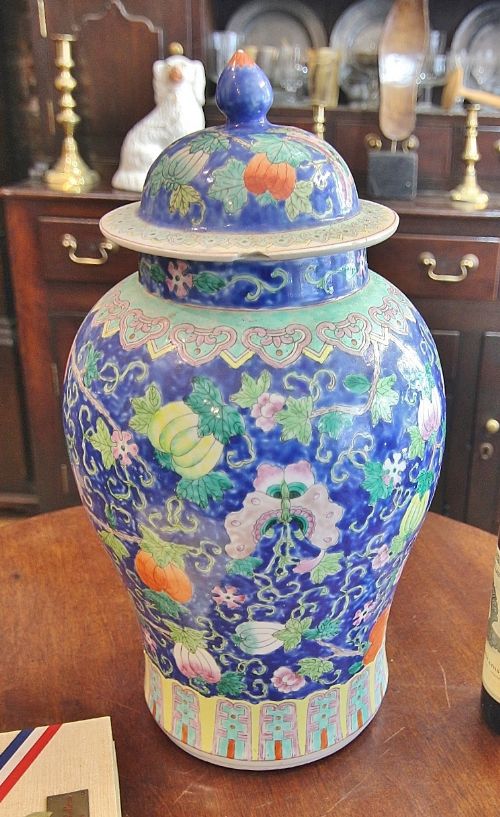
A polychrome ginger jar is a covered vessel originating from traditions across China, Japan and Europe, designed originally to store spices before evolving purely as decorative items. When searching for a polychrome ginger jar, buyers encounter forms ranging from massive lidded urns to delicate porcelain pots, often fitted with tight covers.
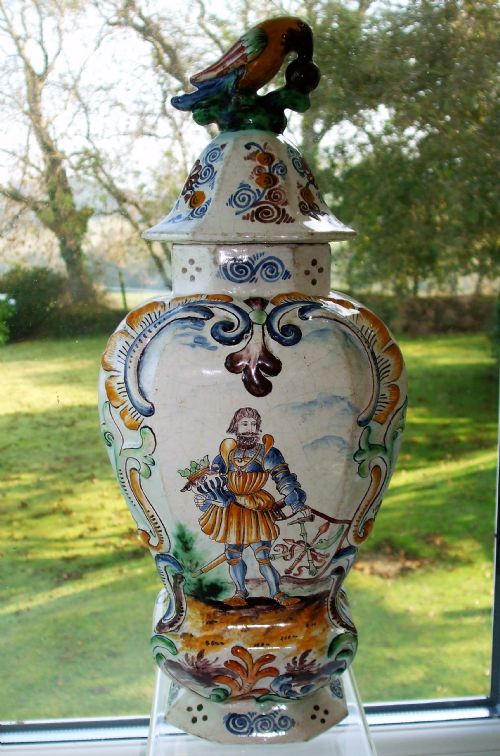
The selections span several centuries, with pieces originating from Chinese dynasties, Japanese kilns including Arita, Satsuma and Kutani, alongside European interpretations like Dutch Delftware and Samson porcelain. Many examples take the form of ginger jars or lidded vases, while others have been adapted into table lamps over time.
How they were made
Potters shaped these vessels from porcelain, earthenware, stoneware or ironstone, throwing the clay on a wheel or forming it within moulds before firing. Artisans then applied intricate brushwork using enamel, underglaze pigments and gold leaf to build up complex figurative, floral or abstract designs.
Glazing played a crucial role in sealing the ceramic body, often incorporating rich polychrome palettes such as the pinks and greens of famille rose or the deep iron reds and blues of Imari. Additional decorative techniques included gilding and metal cloisonne wirework to segment the colourful enamel fields.
Polychrome Ginger Jar Retail Price Guide 2026
Typical asking prices for polychrome ginger jar among the pieces listed under this phrase on Sellingantiques today, from the lower quarter to the upper quarter. They describe what is for sale here now, not the wider market.
Materials represented across the inventory include earthenware, stoneware, porcelain, brass, and cloisonne alongside traditional gold leaf gilding.
What varies in quality
Quality rests upon the precision of the hand-painted brushwork and the depth of the polychrome palette, where finely rendered details distinguish masterworks from simpler production pieces. The clarity and vibrancy of the glaze, alongside the crisp definition of the ceramic form, indicate the skill of the kiln and the artist.
The preservation of the original cover and the integrity of any gilding or enamel work significantly influence the standing of a piece. Finer examples display harmonious proportions and controlled firing results without distortion or cloudiness in the glaze.
Mason s Ironstone·Samson Paris·Yamashu
The Polychrome Ginger Jar Glossary
- Polychrome
- Decorated in multiple colours, usually applied through enamel or painted glaze techniques. This multicoloured approach defines the visual character of these jars.
- Famille Rose
- A major Chinese ceramic palette introduced in the Qing dynasty, characterised by opaque pink enamels. It allowed artists to render delicate floral and human motifs.
- Imari
- A style of Japanese porcelain featuring a distinct palette of underglaze blue, iron red, and gold. These wares were heavily exported to Europe from the Edo period onwards.
- Arita
- A Japanese town and production centre renowned for pioneering porcelain manufacture. Arita wares often display refined blue and white or polychrome floral designs.
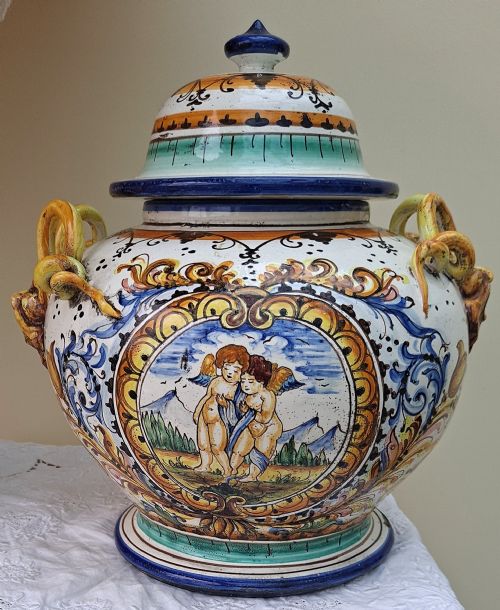
- Maiolica
- Italian tin-glazed earthenware decorated with bright colours. These pieces often depict historical or mythological scenes in rich polychrome pigments.
Polychrome Ginger Jar: Frequently Asked Questions
What were ginger jars used for?
Ginger jars were originally manufactured in China to store and transport spices, salt, and oils. Over time, their practical function shifted towards purely decorative display in homes.
As European demand grew, these lidded vessels became status symbols for wealthy interiors. Today, they serve as ornamental centrepieces or decorative containers on mantelpieces and side tables.
How do I identify a Japanese Satsuma jar?
Satsuma wares typically feature an earthenware body covered with a finely crackled ivory glaze. They are heavily decorated with intricate polychrome enamel designs and gold leaf.
Many pieces originating from Kyoto and other regions include artist signatures or studio marks on the base. The texture of the raised enamel work gives these jars a distinctive tactile quality.
What is the difference between Imari and Kutani?
Imari porcelain originates from the Arita area and relies on a strong palette of cobalt blue, iron red, and extensive gilding. The patterns are usually structured and geometric with floral elements.
Kutani wares, by contrast, often showcase bolder pictorial scenes dominated by greens, yellows, purples, and reds. Kutani pieces from the nineteenth century tend to emphasise dense narrative compositions.
Can I use ginger jars as lamps?
Many historical ginger jars have been converted into table lamps to suit modern interior lighting requirements. This adaptation often involved drilling the base or mounting the vessel with electrical fittings.
Unconverted jars with matching covers remain sought after by collectors who prefer the original untouched form. Both lamp conversions and lidded jars offer ways to incorporate antique ceramics into living spaces.