





Polychrome Enamel Medallion
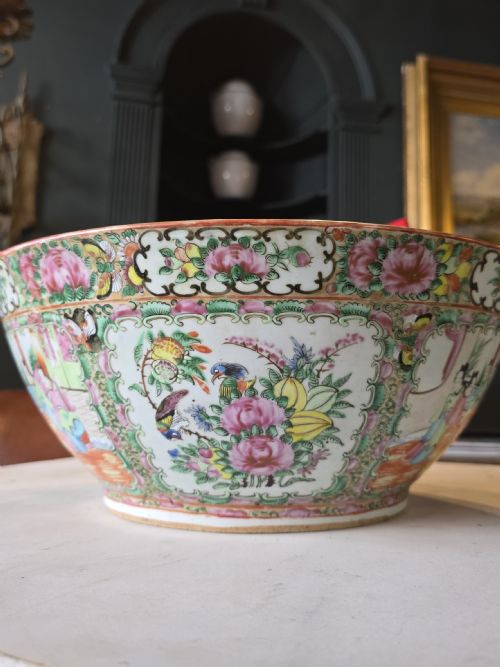
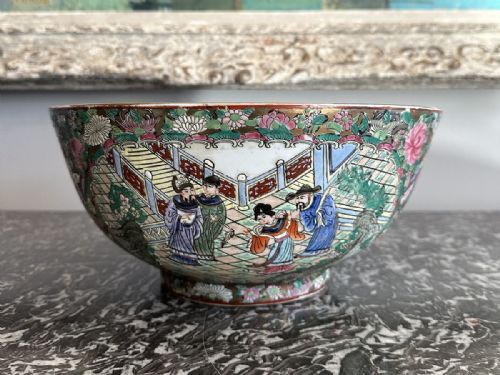
These pieces known as a polychrome enamel medallion bring bright hand-painted panels and rich gilt decoration into any room.
Polychrome Enamel Medallion
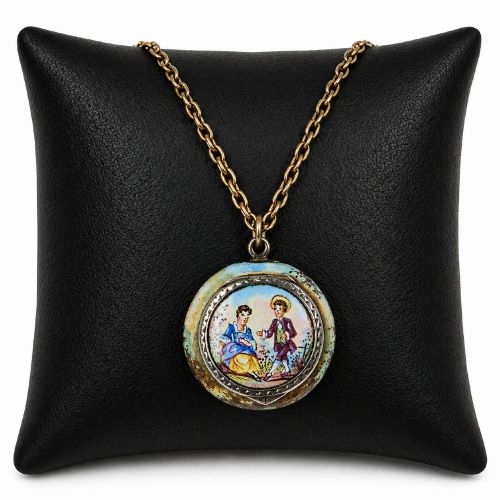
A polychrome enamel medallion typically appears on porcelain vessels, copper plaques, and jewellery from the eighteenth, nineteenth, and early twentieth centuries. The form spans large punch bowls, baluster vases, garden seats, wall plaques, and small lockets.
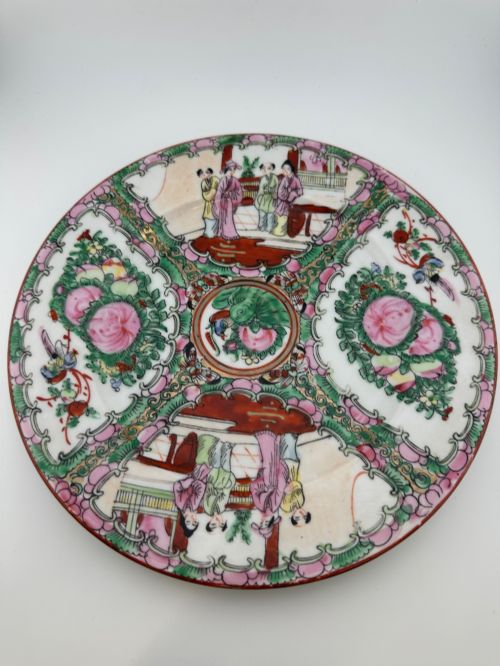
Chinese Export and Cantonese wares dominate the selection, featuring characteristic rose medallion designs alongside famille rose and famille verte palettes. Pieces also originate from nineteenth-century Vienna and eighteenth-century South Staffordshire workshops.
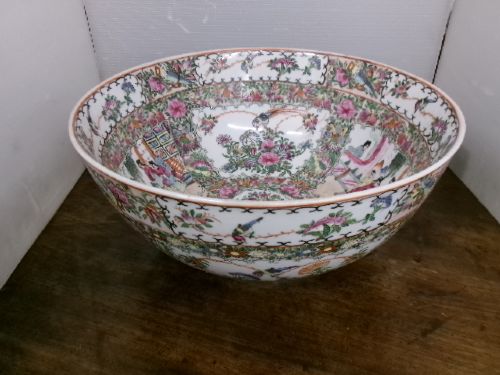
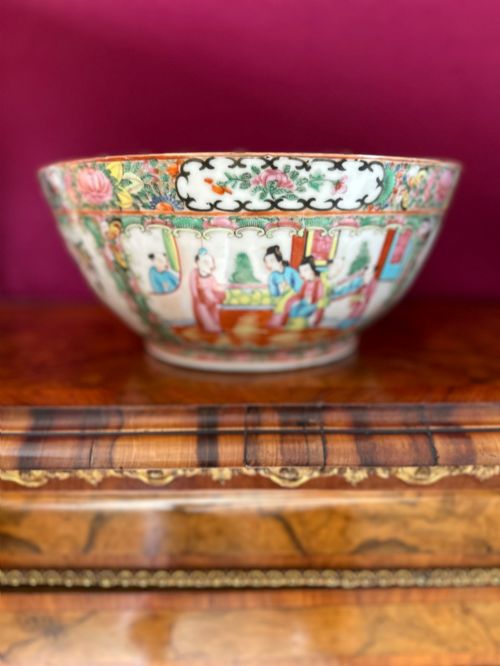
The most frequent examples on this page are nineteenth-century Chinese porcelain bowls and vases decorated with segmented enamel panels. These objects combine figural scenes and floral motifs in dense, colourful arrangements.
Materials and construction methods
The foundation materials rely on porcelain, copper, and brass, shaped into vessels, trays, and plaques before decoration begins. Artisans apply overglaze enamels in multiple colours to create the detailed pictorial surfaces.
Gold leaf and extensive gilding highlight the borders and divide the individual medallion panels on the best surfaces. Firing fixes the enamel pigments to the porcelain body or metal base, producing a hard and glossy finish.
Some nineteenth-century pen boxes hide compartments that once kept inkwells secure beneath their painted lids.
Evaluating craftsmanship and detail
Quality rests upon the precision of the hand painting within each panel and the crispness of the surrounding gilt work. Superior examples display finely rendered figures and botanical details that remain clean and distinct across large surfaces.
The depth of the colour palette and the complexity of the compartmentalised designs separate standard production from exceptional pieces. Heavier porcelain bodies and well-preserved gilding also elevate the standing of a vessel or plaque.
The Polychrome Enamel Medallion Glossary
- Polychrome
- Decorated in several colours. This term describes ceramics and enamels utilising a varied palette of pigments.
- Medallion
- An oval or circular enclosure. On these wares, medallions frame painted scenes of figures or flowers against a patterned background.
- Famille Rose
- A shade of pink introduced in the eighteenth century. The palette defines much of the Chinese export porcelain on this page.
- Overglaze enamel
- Pigments applied over the fired glaze. A subsequent lower-temperature firing bonds the colours to the surface.
- Gilding
- The application of gold leaf or powder. This technique adds metallic brilliance to rims, panels, and borders.
Polychrome Enamel Medallion: Frequently Asked Questions
What is a rose medallion bowl?
A rose medallion bowl is a Chinese export porcelain vessel decorated with repeating panels or medallions filled with figures, birds, and flowers.
These panels are set against a dense background of green foliage and pink roses, accented with heavy gilding.
How are South Staffordshire enamel plaques different?
South Staffordshire plaques are formed from enamel on a copper base rather than traditional ceramic bodies.
They originate from eighteenth-century English workshops and typically feature hand-painted European landscapes or portraits.
How do I care for antique enamel and porcelain?
Keep these items away from direct sunlight to preserve the vibrant overglaze enamel colours over time.
Dust them gently with a soft, dry cloth and avoid using chemical cleaning agents on the fragile gilt surfaces.
Are these pieces marked with dates?
Some Chinese items carry reign marks on the base, though these often honour earlier dynasties rather than indicating the exact year of production.
Stylistic evidence and materials usually provide the most reliable guide to a piece's nineteenth or early twentieth-century origin.