

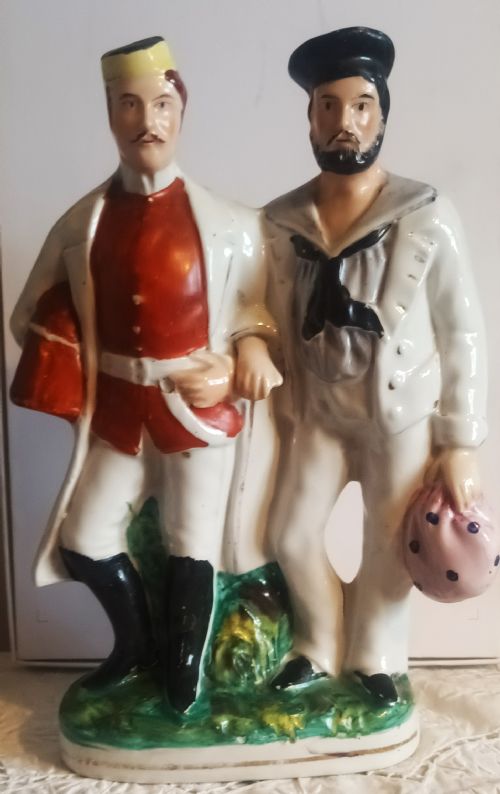


Polychrome Ceramic Flatback Figure
A polychrome ceramic flatback figure brings the characters and politics of the nineteenth century straight onto the mantelpiece.
Polychrome Ceramic Flatback Figure
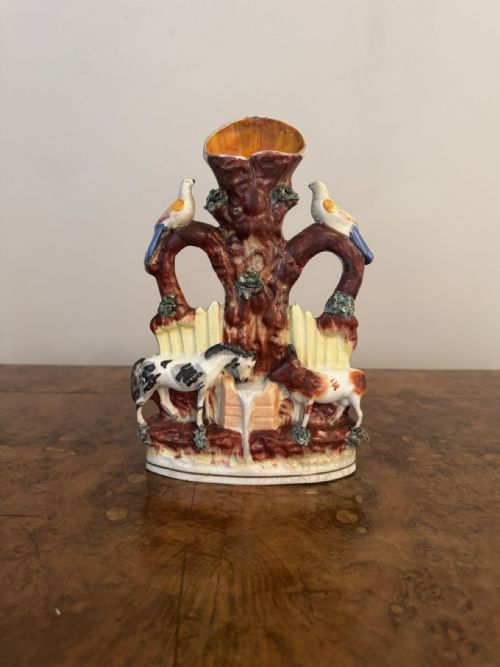
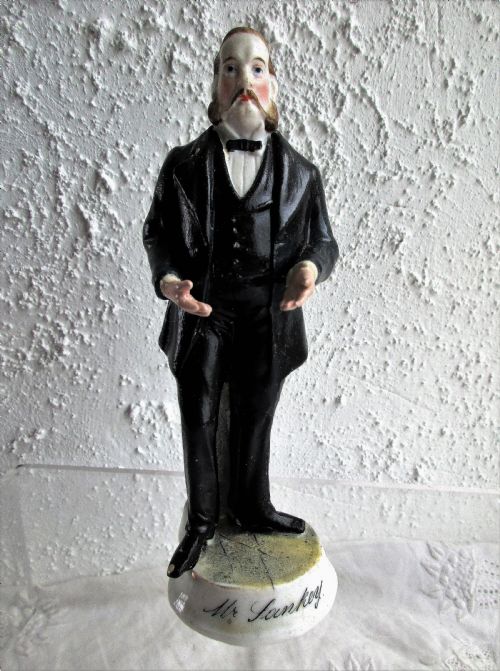
A polychrome ceramic flatback figure represents the prominent personalities, theatrical performers and everyday characters that captured public imagination during the Victorian era. These decorative objects were made to sit flush against a wall on shelves or mantelpieces, meaning they are fully modelled at the front and flat or unglazed at the back.
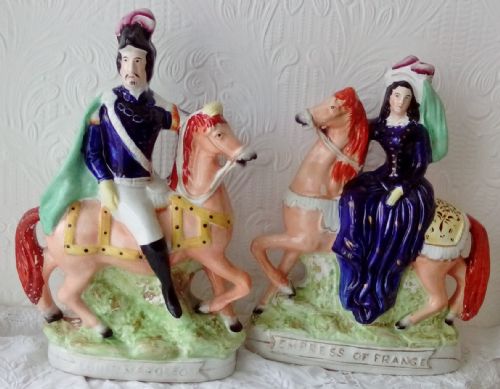
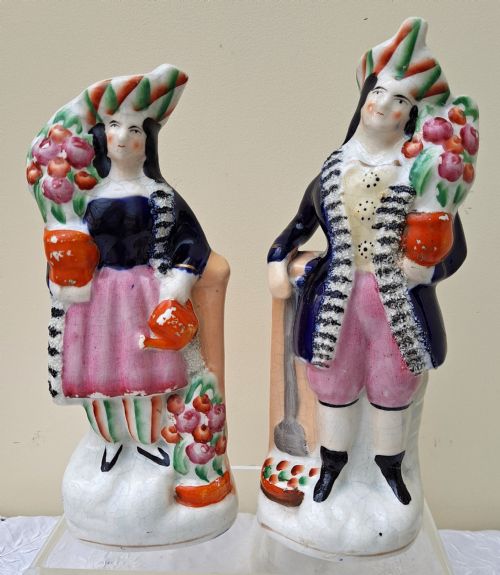
Most examples originate from nineteenth century Staffordshire potteries, taking the form of single figurines, matched pairs, spill vases or elaborate portrait groups. Subjects range from military heroes and royalty such as Napoleon III and the Prince of Wales to literary figures and rural workers like Scottish Highlanders and gardeners.
Materials and methods
Potters built these pieces from earthenware clay, shaping them either by pressing the clay into mould halves or through slip casting before joining the sections together. The flat back allowed the hollow pieces to dry and fire evenly without warping in the kiln.
Makers applied enamel paint and lead glaze over the fired ceramic body to achieve the characteristic polychrome surface. Some details received touches of gold leaf to highlight military regalia or royal garments before the final low temperature refiring.
Prancing Crimean War generals and smugglers share shelf space with cheeky Victorian Turks and harvesters.
Judging the execution
Colour application also separates the output, with finer figures displaying careful enamel painting that stays neatly within the incised boundaries. The richness of the glaze and the thoughtful placement of gold leaf distinguish the ambitious studio works from routine mantelpiece ornaments.
The Polychrome Ceramic Flatback Figure Glossary
- Flatback
- A ceramic figure designed with an unglazed or flat rear surface meant to be placed directly against a wall. This construction method saved clay and prevented distortion during kiln firing.
- Spill vase
- A hollow cylindrical holder integrated into the ceramic figure designed to hold wooden spills for lighting pipes or candles. These utilitarian vessels often feature rustic or theatrical group scenes.
- Lead glaze
- A transparent glassy coating containing lead oxide applied to earthenware to give a shiny finish and waterproof the ceramic body. It enhances the depth of the underlying enamel colours.
Polychrome Ceramic Flatback Figure: Frequently Asked Questions
What are flatback figures?
These nineteenth century ceramic ornaments depict historical figures, literary characters and everyday people made for the Victorian home. They were produced in large quantities by Staffordshire potteries.
The defining characteristic is the flat, unadorned reverse side, which allowed the pottery to sit securely against a wall on narrow mantelpieces and shelves.
How were they displayed?
Victorian households arranged these figures on mantelpieces, chiffoniers and tabletops, often pairing them symmetrically or grouping them by historical themes. Portrait figures of generals and royals sat alongside theatrical stars and rustic couples.
Some variants incorporated spill vases or watch holders, combining ornamental appeal with practical functions for the parlour.
How do I date these figures?
Dating relies on identifying the subject matter, costume details and the manufacturing characteristics associated with the nineteenth century. Historical events and royal portraits provide specific terminus post quem dates for when the pieces could first be made.
Stylistic shifts from robust 1850s modelling to more ornate Victorian compositions help narrow the period of production.
Are all flatbacks from Staffordshire?
The vast majority of these ceramic pieces originate from the numerous independent potteries operating in the Staffordshire region during the Victorian era. This district dominated the domestic market for affordable decorative ceramics.
While Staffordshire is the primary source, similar earthenware techniques were utilised across Britain to produce popular portrait and novelty figures.