
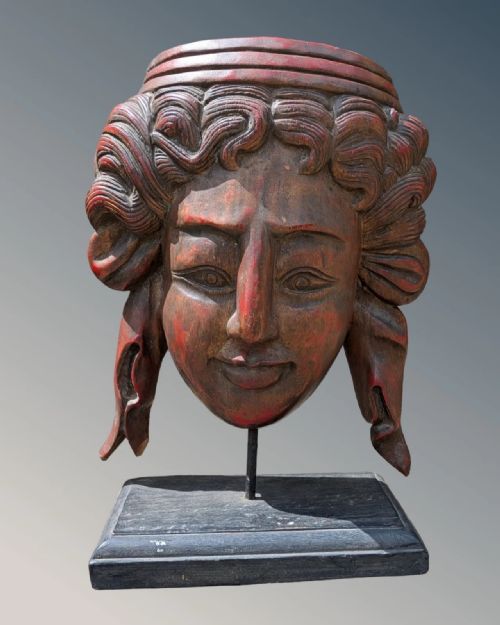


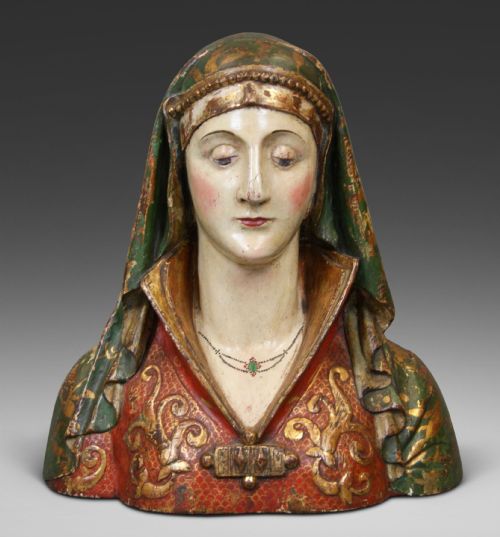

Polychrome Carved Wood Bust
These polychrome carved wood bust examples bring centuries of pigment and timber together, offering collectors a striking sculptural presence for any room.
Polychrome Carved Wood Bust
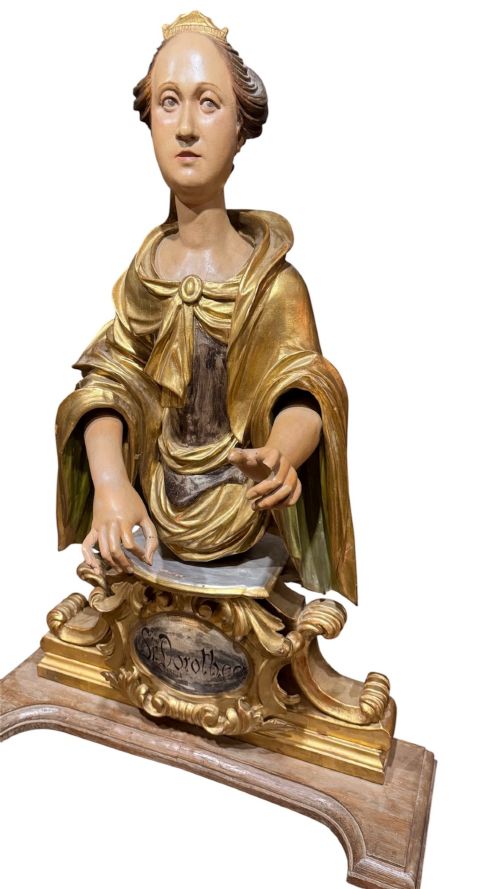
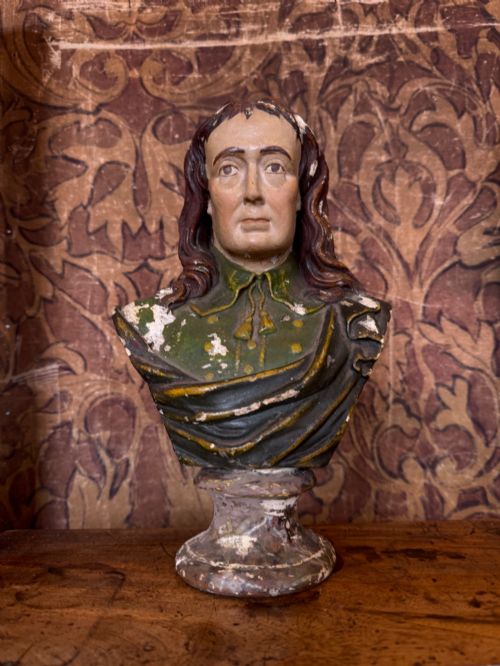
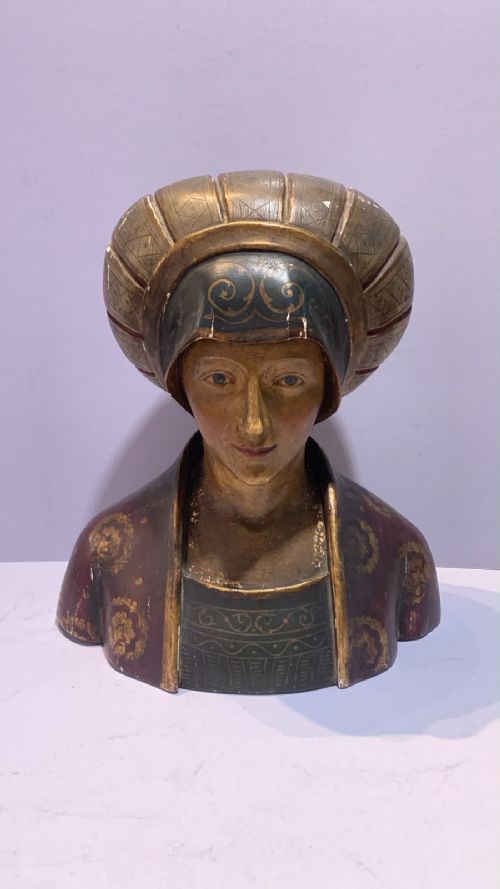
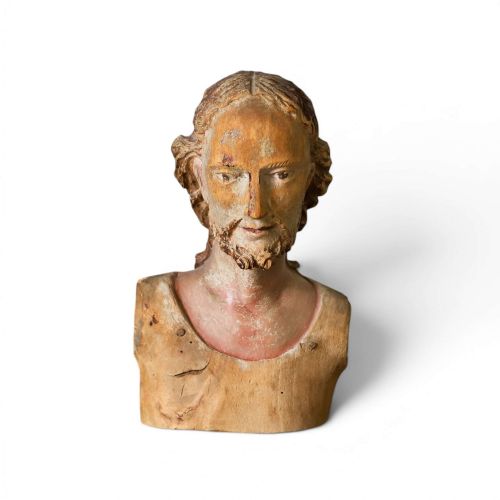
When you search for a polychrome carved wood bust, you encounter sculptural works spanning the sixteenth century through to the nineteenth century. These objects include religious subjects such as Christ and various saints, alongside noble figures and character heads.
The pieces on this page originate from diverse cultural and regional traditions including Italian, Spanish, Russian, and South East Asian workshops. Forms range from solemn religious carvings to grand tour pieces and fairground figures.
You are most likely to meet eighteenth-century Italian and Spanish works finished in polychrome paint and gesso. These examples combine traditional wood carving with historical surface decoration.
Materials and construction
These works are built from carved wood such as olive wood and general timber bases shaped by hand. Artisans then applied layers of gesso to prepare the wooden surface for subsequent decoration.
Among the solemn saints and nobles, a nineteenth-century fairground figure waits to bring a touch of theatrical amusement to your collection.
Markers of quality
The survival of authentic polychrome paint and giltwood layers heavily influences the character of each sculpture. Patination accumulated over centuries adds depth which modern touch-ups cannot replicate.
The Polychrome Carved Wood Bust Glossary
- Polychrome
- Decoration in multiple colours applied to sculpture or pottery. This surface treatment gives carved wooden heads their lifelike appearance.
- Gesso
- A plaster mix applied to wood as a base for paint and gold leaf. It creates a smooth ground for detailed artistic work.
- Giltwood
- Wood that has been coated with thin gold leaf. This technique highlights specific details like halos or garments.
- Grand Tour
- Cultural travel undertaken by wealthy Europeans during the eighteenth and nineteenth centuries. Souvenirs from these journeys often included sculptural busts.
- Baroque
- An artistic style characterised by dramatic movement and rich detail. Spanish and Italian works from this period display intense emotion.
Polychrome Carved Wood Bust: Frequently Asked Questions
What is a polychrome carved wood bust?
It is a three-dimensional sculpture carved from timber and decorated with multiple colours of paint. These pieces frequently depict religious figures, nobles, or character heads from historical periods.
Craftsmen shaped the wood and applied gesso before painting the surface, creating durable artworks that have survived for centuries.
How old are these wooden sculptures?
The pieces available span from the sixteenth century through the seventeenth and eighteenth centuries up to the nineteenth century. Each era brought distinct stylistic approaches to carving and painting.
Earlier examples often have religious themes, while later pieces include grand tour souvenirs and fairground figures.
Where did these busts originate?
Origin locations vary widely across the inventory, encompassing Italian, Spanish, Russian, and South East Asian workshops. Regional traditions strongly influenced both the choice of wood and the style of polychrome decoration.
Italian and Spanish pieces from the seventeenth and eighteenth centuries form a significant portion of the available selection.
How should I display a wooden bust at home?
Place your sculpture on a stable surface away from direct sunlight and sudden temperature shifts to protect the antique wood and paint layers. Stable indoor environments prevent the timber from drying out or cracking.
Allow enough surrounding space for the sculpture to be viewed from multiple angles, as hand-carved details often reveal different character from the side.