
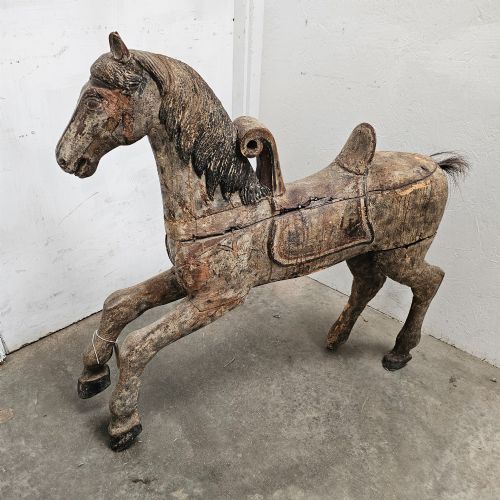
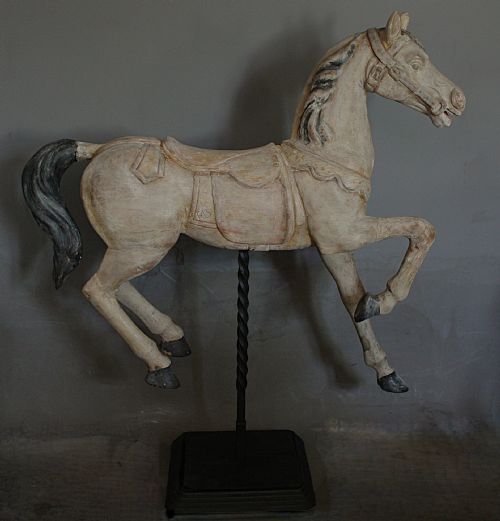


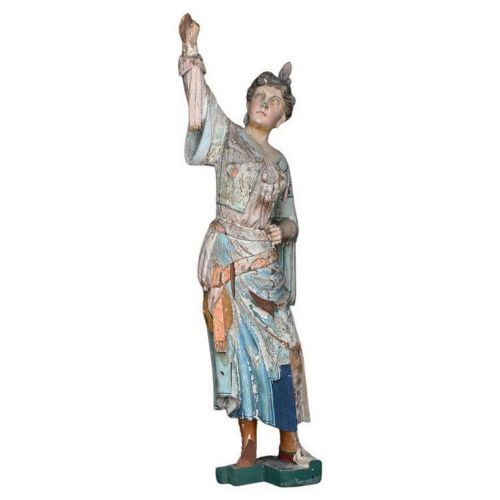
Carved Wooden Fairground Figure
A carved wooden fairground figure brings the kinetic spectacle of the nineteenth and early twentieth century into a room with raw sculptural presence.
Carved Wooden Fairground Figure
When you search for a carved wooden fairground figure, you look for survivors of amusement parks, carousels, and organ facades that once entertained crowds across Europe.
The pieces on this page span the nineteenth century and the 1920s, ranging from French and continental folk art carvings to specific ride components.
You are most likely to encounter carousel horses alongside pigs, dragon ride fragments, and organ figures associated with makers such as Limonaire and Gavioli.
How they were made
These works rely on traditional hand carving in wood, often enhanced with structural iron or metal reinforcement to withstand the rigours of motion.
Surfaces are finished with layers of polychrome paint and occasionally supplemented with horsehair or leather details to bring the animals and creatures to life.
Beneath layers of flaking polychrome paint, some carousel horses still hide the genuine glass eyes that once startled passing children.
What varies in quality
Quality rests upon the vigour of the carving and the character expressed in the animal's head, posture, and anatomical detail.
Limonaire·Gavioli
The Carved Wooden Fairground Figure Glossary
- Polychrome paint
- Decoration applied in multiple colours. This surface treatment defines the visual appeal of many nineteenth-century folk art carvings.
- Ride fragment
- A surviving portion of a larger fairground attraction. These pieces demonstrate the decorative woodwork once mounted on moving machinery.
- Organ figure
- A carved wooden sculpture mounted upon a mechanical fairground organ. Makers such as Gavioli incorporated these figures into their elaborate musical facades.
- Folk art
- Traditional decorative objects made outside formal academic traditions. Carousel figures belong to this category through their vernacular craftsmanship and unpretentious utility.
Carved Wooden Fairground Figure: Frequently Asked Questions
What is a fairground figure?
A fairground figure is a hand-carved wooden sculpture originally created for amusement park rides, carousels, or mechanical organs during the nineteenth and early twentieth centuries.
These pieces served functional roles in public entertainment before transitioning into decorative folk art objects collected for their sculptural form and history.
How were carousel horses used?
Carousel horses were mounted on rotating platform rides where mechanical cranks made them move up and down to simulate galloping.
They were built robustly from carved wood and metal to endure constant motion and heavy use in fairgrounds.
Are these figures French?
Many of the recorded pieces originate from France, representing nineteenth-century French folk art traditions associated with continental carousels.
Continental workshops produced distinctive carved animals and organ figures that display regional variations in paint and style.
How do I date a fairground figure?
Dating relies on the stylistic markers of the nineteenth century and the early twentieth century, alongside construction methods and material wear.
Examining the underlying carved wood, iron brackets, and layers of polychrome paint helps place a piece within its historical period.