
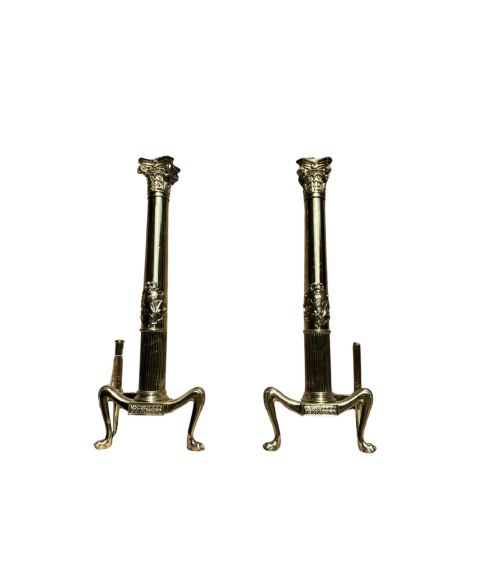
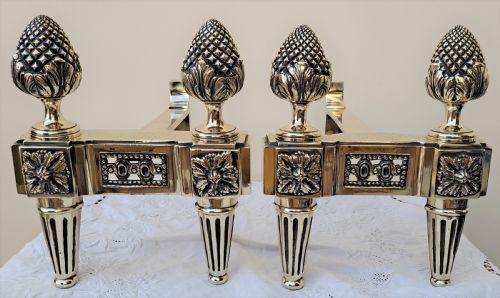
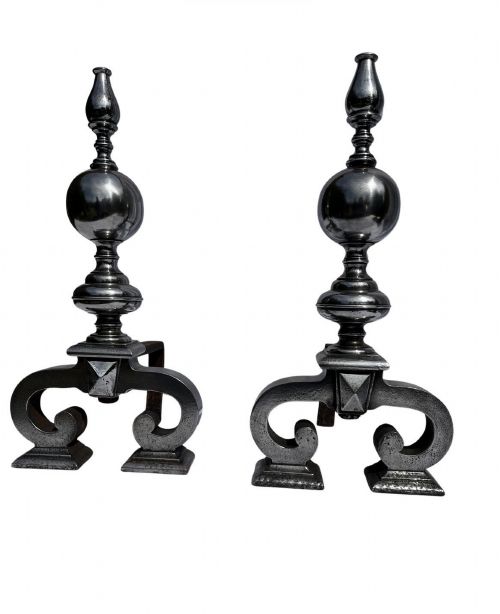


Polished Iron Firedogs
Polished iron firedogs are heavy metal hearth supports designed to hold logs above the hearth floor for better airflow, bringing functional warmth to period fireplaces.
Polished Iron Firedogs
Polished iron firedogs form the structural core of traditional open hearths, supporting logs so that air circulates beneath the fuel. These pieces range from simple utility items to decorative hearth furniture designed to catch the firelight.
The versions encountered on this page span the nineteenth century, including Victorian and Georgian interpretations, alongside Regency revival and Dutch baroque styles. They frequently appear paired with companion sets, fire tools, and mixed metals like brass and copper.
How they were made
Makers shaped these hearth supports primarily from iron and steel, often applying a polished finish to catch the room's light. Wrought iron provided structural strength for the log-bearing shafts, while forged techniques shaped the front billets and feet.
Designers combined metals by pairing iron with brass and copper elements, uniting durability with decorative contrast. Casting and forging methods allowed workshops to produce both utilitarian fire dogs and ornate claw and ball designs.
Listings feature iron, steel, polished iron, and wrought iron, frequently combined with brass and copper.
What varies in quality
Quality rests in the crispness of the metal finishing and the integrity of the original construction rather than mere surface shine. Heavier gauge iron and substantial brass mountings indicate robust workshop production intended for daily hearth use.
Proportion and stylistic coherence separate standard utility items from finer decorative examples. Pieces that retain their matched components and uncompromised metal surfaces demonstrate superior original manufacture.
James Cartland & Sons
The Polished Iron Firedogs Glossary
- Firedogs
- Heavy metal supports placed in a hearth to hold logs above the floor. They prevent wood from smothering and improve the draft.
- Andirons
- An alternative term for firedogs, usually featuring an upright decorative front standard and a horizontal bar behind. They often coordinate with matching fire irons.
- Wrought iron
- Iron beaten into shape while hot by a blacksmith, offering high tensile strength. This material resists bending under intense heat.
- Regency Revival
- A nineteenth-century design movement looking back to the Regency period. It emphasises classical restraint and clean lines.
Polished Iron Firedogs: Frequently Asked Questions
What are polished iron firedogs?
Polished iron firedogs are heavy metal supports placed inside a fireplace to hold logs off the hearth floor.
They elevate the fuel to improve air circulation, ensuring a steady burn while framing the fireplace opening.
How were firedogs used?
They sat in pairs on the hearth floor, supporting heavy pieces of firewood between them.
Their upright fronts kept logs from rolling forward into the room while protecting the masonry behind.
How do I live with firedogs?
Place them securely on a stable hearth floor, leaving adequate clearance around the fireplace opening.
Keep the polished iron surfaces dry and clean them gently to preserve the metal finish without harsh abrasives.
How do I tell periods apart?
Study the decorative motifs and metal combinations, noting whether they follow Georgian symmetry or Victorian ornamentation.
Compare the construction methods and stylistic cues against known nineteenth-century design revivals.