
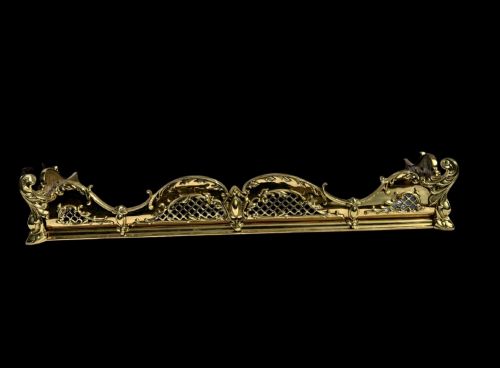
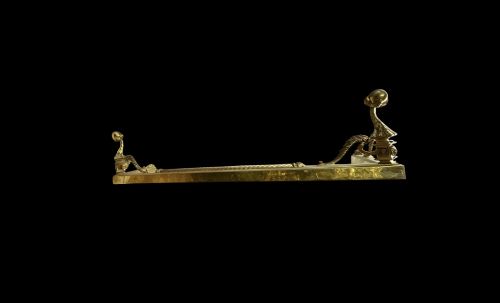


Polished Brass Hearth Guard
A polished brass hearth guard frames a fireplace with bright metal, protecting the room while holding fireside tools in order.
Polished Brass Hearth Guard
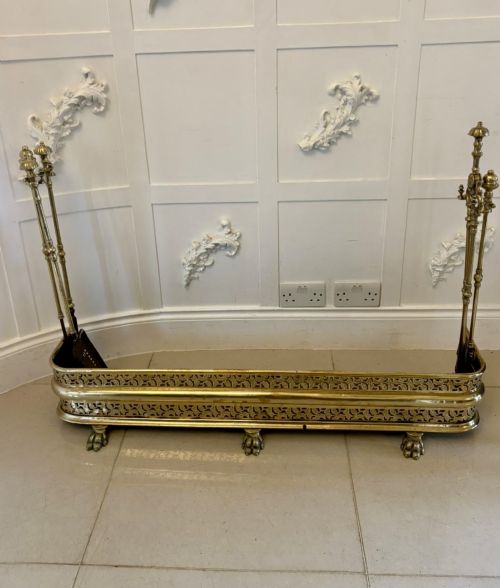
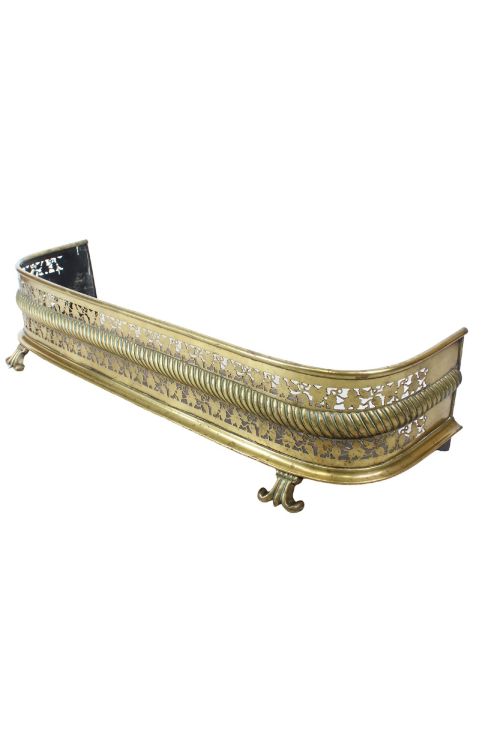
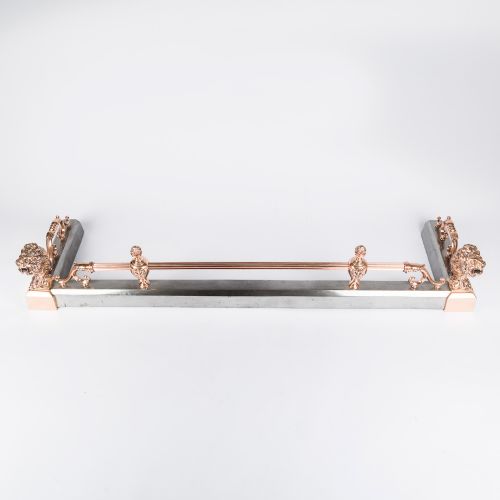
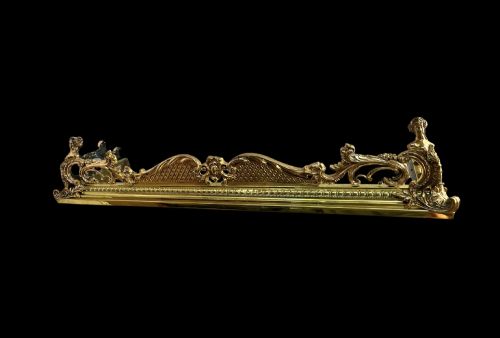
When you search for a polished brass hearth guard, you are looking at functional metal barriers designed to sit directly on the floor around a domestic fireplace. The items matching this search take the form of fire fenders, curb fenders, and hearth guards primarily originating from the Georgian, Victorian, and Edwardian eras. You are most likely to meet solid brass or combined brass and steel versions featuring pierced patterns, extending frames, or decorative lions and claw-and-ball details.
These metal surrounds served a practical role in keeping stray embers contained within the hearth while offering a polished surface that reflected the firelight. Many examples include matched fire irons or accompanying fire tools designed to sit alongside or attach directly to the fender structure. The forms range from simple linear guards to ornate Regency and Art Nouveau designs shaped by period aesthetics.
How they were made
The primary construction relies on polished brass, often combined with iron or steel for structural strength and stability. Makers utilised casting techniques for decorative mounts, lion figures, and claw-and-ball feet, while sheet brass was frequently pierced or perforated with geometric and floral patterns.
Some examples incorporate bronze elements or polished steel components alongside the brass body to create contrasting metallic tones. Extending mechanisms were engineered into certain designs to allow the fender width to adjust to different hearth dimensions.
Several Victorian guards feature cast iron lions keeping watch over the hearth.
What varies in quality
Quality in these hearth guards rests on the thickness of the metal gauge and the crispness of the casting detail in motifs like floral scrolls or animal feet. Superior pieces display finely pierced sheet work and solid brass construction rather than thin plated alternatives.
The presence of original matching fire irons or integrated tool sets elevates a piece. Fenders featuring deliberate stylistic execution, such as restrained Regency lines or fluid Art Nouveau curves, represent the higher end of period production.
The Polished Brass Hearth Guard Glossary
- Curb fender
- A low metal barrier enclosing three sides of a hearth to keep coal and ash from spilling onto the floor. It typically sits directly on the carpet or stone flooring.
- Pierced brass
- Sheet brass punched or cut through with decorative repeating patterns such as foliage or lattices. This technique lightens the visual weight of the metal.
- Extending fender
- A metal hearth guard constructed in sliding sections to permit width adjustment. This allowed a single accessory to fit various fireplace openings.
- Fire irons
- A set of matching fireplace tools including tongs, a poker, and a shovel, frequently designed to accompany the fender. They were often displayed alongside the hearth guard.
Polished Brass Hearth Guard: Frequently Asked Questions
How do I clean a brass hearth guard?
Use a soft cloth and a dedicated brass cleaner to remove tarnish while preserving the underlying metal surface. Avoid abrasive pads that can scratch the polished finish.
Take care around pierced sections and cast decorative mounts where residue might accumulate during polishing.
Did these guards come with fire tools?
Many period hearth guards were sold alongside matching fire irons or complete fireside suites. These included pokers, shovels, and tongs designed in a complementary metal.
Some fenders feature built-in rests or specific architectural brackets to hold these tools neatly in place.
How do I tell Victorian from Edwardian fenders?
Victorian pieces often display heavier casting, Rococo Revival influences, or intricate pierced brass work. They tend to emphasise ornate detail and substantial proportions.
Edwardian examples frequently lean towards lighter proportions or incorporate flowing Art Nouveau motifs that reflect changing twentieth-century tastes.
Can these fenders fit any fireplace?
Many surviving examples include extending designs built with sliding sections to accommodate varying hearth widths. Fixed-size guards require precise measurement of your fireplace opening before placement.
Consider both the interior width of the hearth and the depth required for safe clearance.