
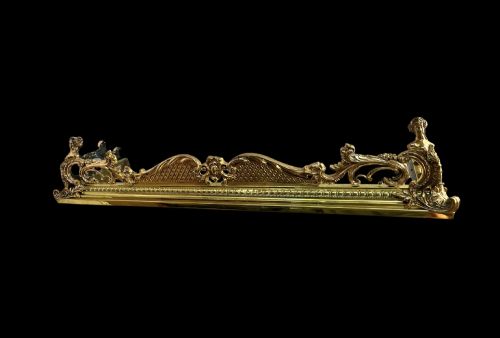
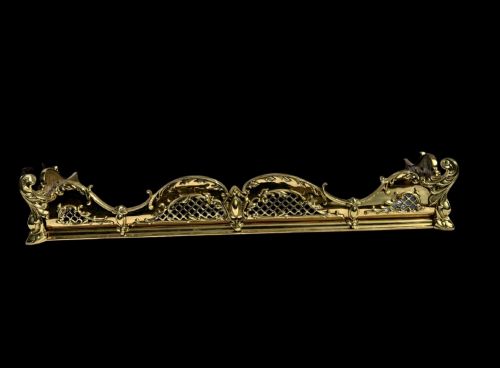
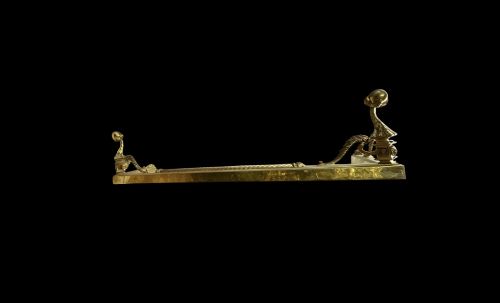


Polished Brass Fireplace Curb
A polished brass fireplace curb frames the hearth with a bright metallic gleam that instantly anchors a room.
Polished Brass Fireplace Curb
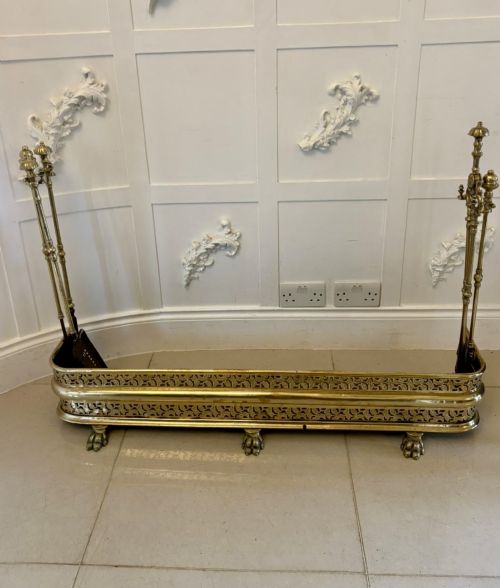
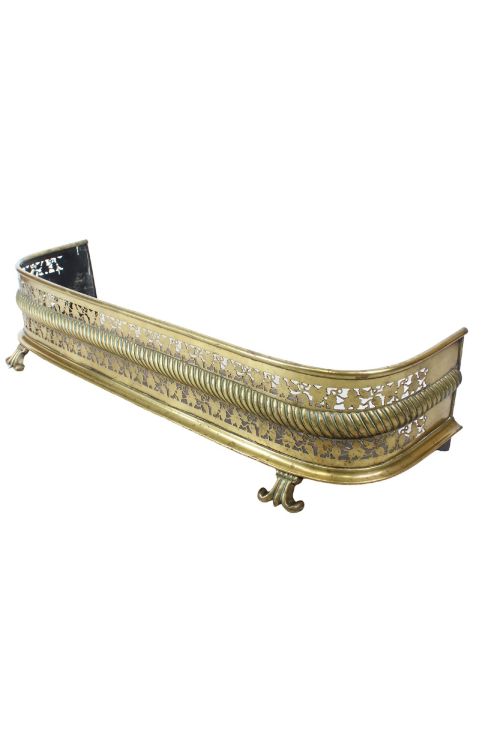
A polished brass fireplace curb, also known as a fender, guards the floor from stray embers while defining the hearth in the room. When you search for this phrase, you meet brass guards spanning the Georgian, Victorian, and Edwardian periods, alongside later twentieth-century interpretations.
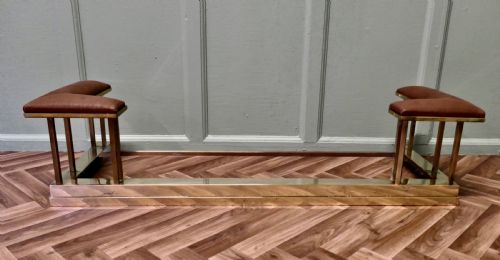
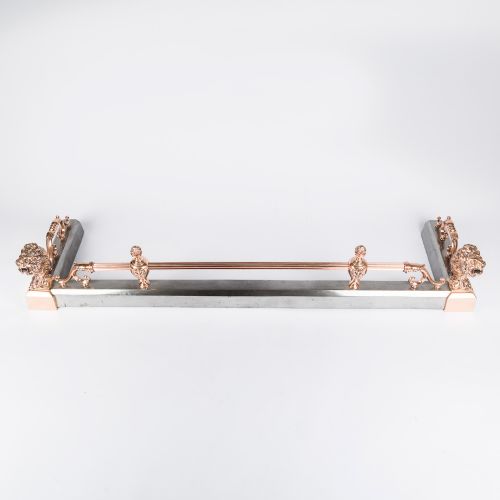
The selections on this page range from simple nineteenth-century brass rails to ornate Victorian pierced designs and club fenders fitted with leather seats. Many pieces combine polished brass with steel, iron, or bronze, occasionally accompanied by original fire irons or decorative cast lions.
How they were made
Maker workshops constructed these guards using solid brass, cast brass, and polished steel, frequently combining metals for structural strength and visual contrast. Pierced galleries required careful metalwork to pierce intricate patterns into sheet brass, while heavy frames relied on durable cast iron foundations.
Some examples incorporated supple leather for club fender seating pads, secured with brass tacks. Nineteenth-century craftsmen also utilised extension mechanisms to allow single fenders to fit variable hearth widths.
Listings feature periods spanning from the Georgian era through the Victorian and Edwardian decades, up to the 1920s.
What varies in quality
Quality in a polished brass fireplace curb rests upon the crispness of the casting, the thickness of the metal, and the integrity of the joints. Superior examples display sharply defined pierced work and heavy gauge brass that resists bending under daily use.
The presence of original components, such as matching fire irons or intact leather upholstery on club styles, elevates a piece. Finer items also demonstrate careful historical styling, whether following the symmetry of the Regency period or the flowing lines of Art Nouveau.
The Polished Brass Fireplace Curb Glossary
- Club fender
- A low fireside guard featuring upholstered leather seats on either end. Originally designed for gentlemen to sit close to the hearth.
- Pierced brass
- Sheet metal perforated with decorative holes or fretwork patterns. This technique lightens the visual weight of the metal border.
- Fire iron
- A poker, shovel, or tongs used to tend the hearth. These tools frequently accompanied the fender as a matching set.
- Extending fender
- A metal guard with adjustable sliding sections. This design allowed the hearth accessory to fit various fireplace dimensions.
Polished Brass Fireplace Curb: Frequently Asked Questions
How do I measure for a fender?
Measure the width and depth of your hearth area, ensuring you leave sufficient clearance around the fireplace opening. Take note of whether the floor space requires a fixed frame or an adjustable model.
Account for any protruding hearth stones so the metal curb sits squarely against the surrounding floor. A proper fit prevents wobbling and keeps the barrier stable against the fireplace.
Can I polish vintage brass?
Traditional brass polishing paste restores the bright finish on solid metal surfaces. Apply the cleaner sparingly with a soft cloth to avoid disturbing aged patinas in recessed areas.
Take care around leather upholstery or iron components on combined pieces. Gentle wiping maintains the integrity of the mixed materials without harsh chemical damage.
What is a club fender used for?
A club fender provides low seating right beside the fireplace in addition to containing ash and embers. The leather pads offer a comfortable perch during colder months.
Victorian and Edwardian drawing rooms utilised these guards to maximise seating space close to the heat source. They remain a practical and sociable feature for active hearths.
How do I date an antique brass curb?
Examine the fastening methods, casting marks, and stylistic motifs to determine the period of manufacture. Georgian and Regency pieces tend to feature cleaner architectural lines, while Victorian examples often display heavier ornamentation.
Art Nouveau and Art Deco pieces introduce distinct botanical curves or geometric angles. Comparing these design markers against the listed period helps establish the age of the guard.