

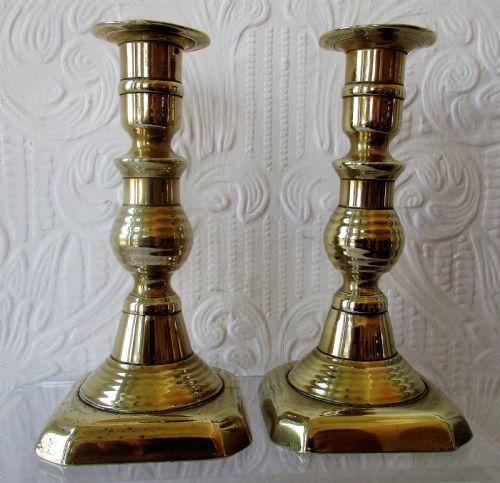
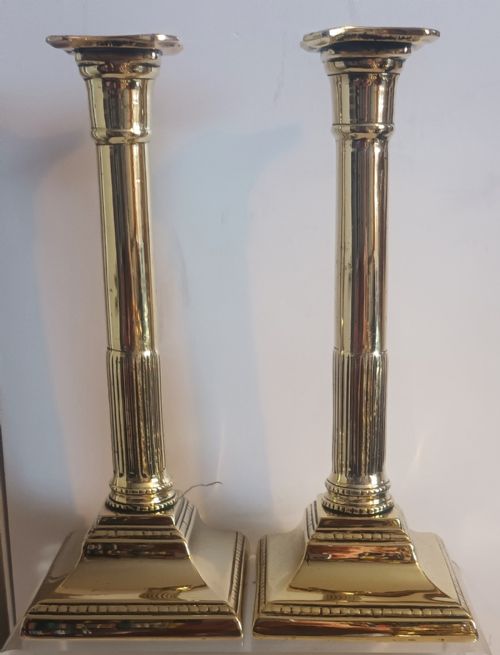
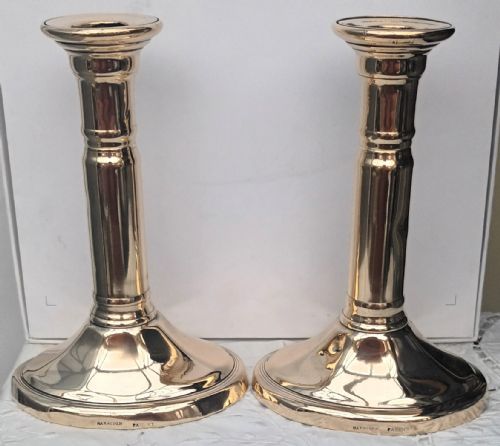
Polished Brass Candlestick Pair
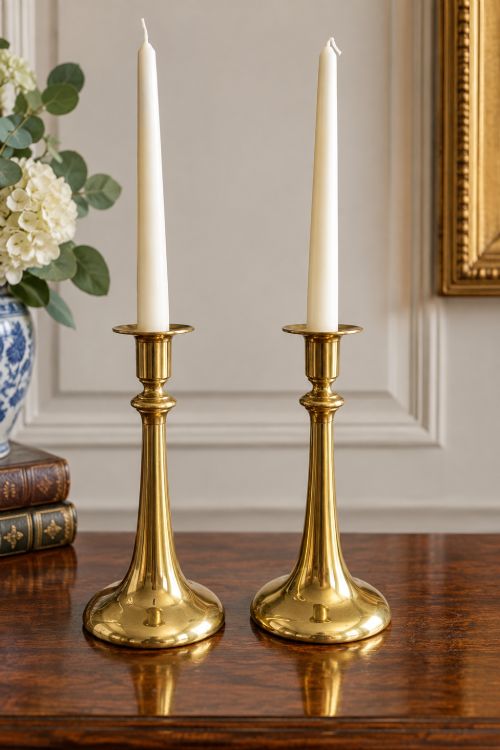
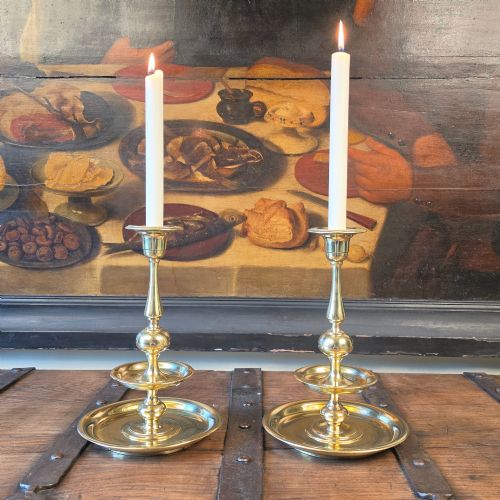
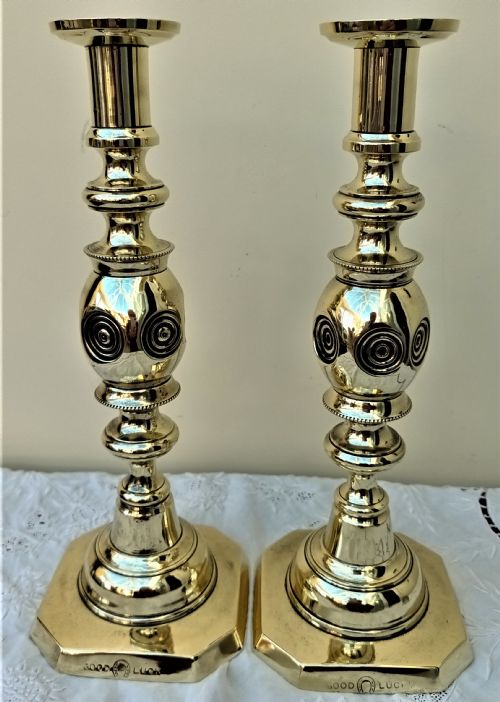
A polished brass candlestick pair brings a bright metallic warmth to a room, catching the candlelight and anchoring a mantelpiece with solid weight.
Polished Brass Candlestick Pair
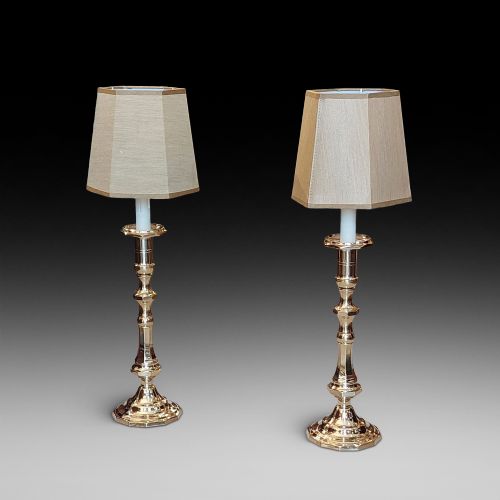
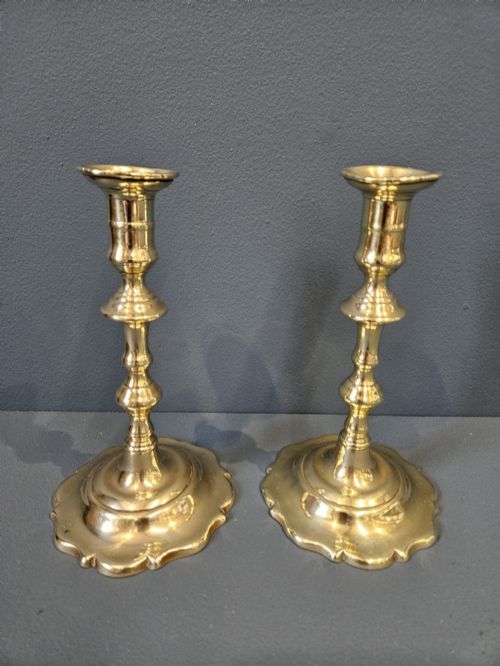
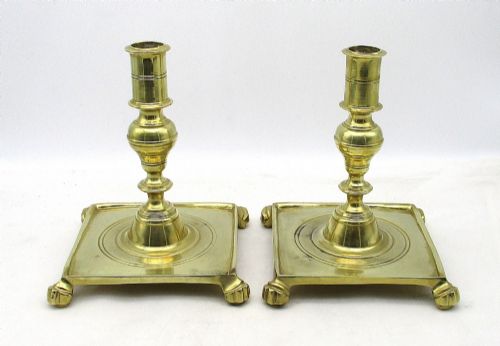
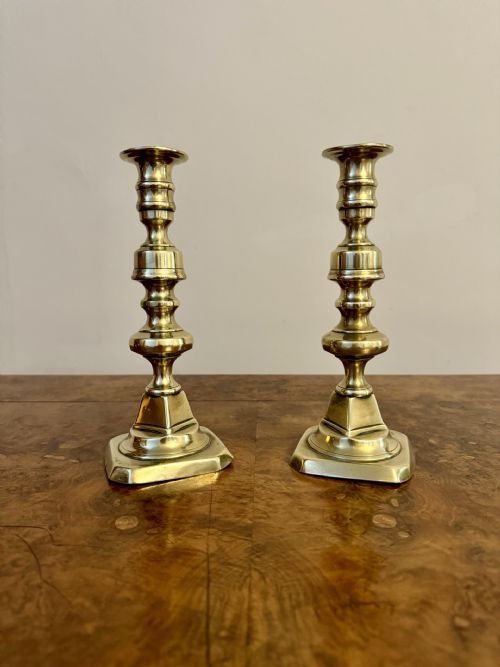
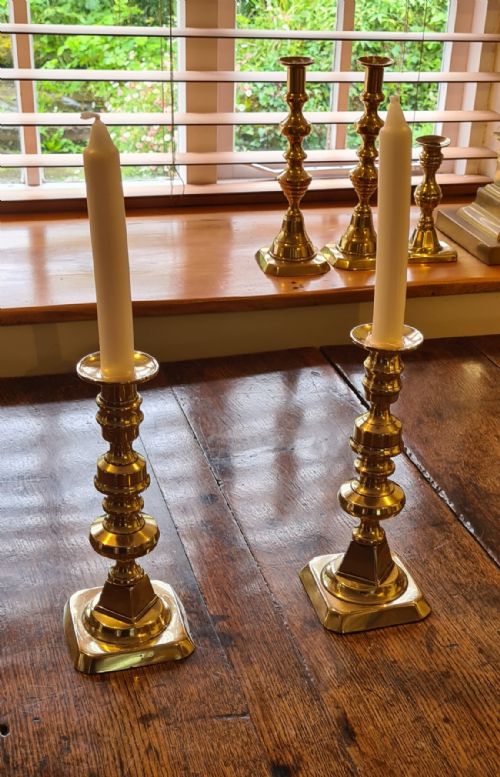
A polished brass candlestick pair consists of matching metal supports designed to hold wax candles securely upon a table, desk or sideboard. When seeking a polished brass candlestick pair, buyers encounter various forms ranging from domestic table lights to tall church altar pieces.
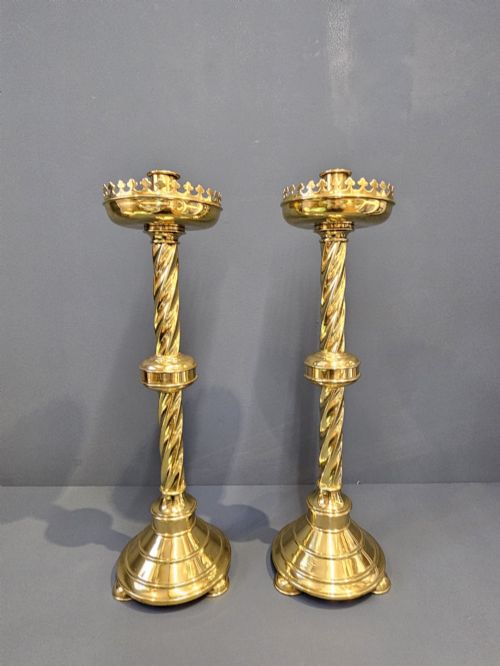
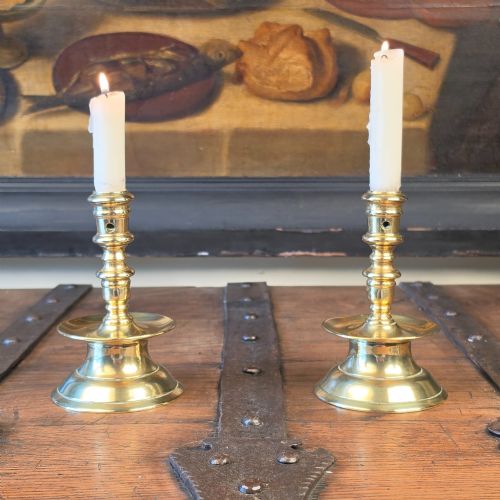
The selections span multiple eras, with Victorian and nineteenth-century examples appearing frequently alongside Georgian, Edwardian and Arts and Crafts pieces. Styles stretch from restrained classical columns to Gothic revival designs, seventeenth-century style castings, and flowing Art Nouveau curves.
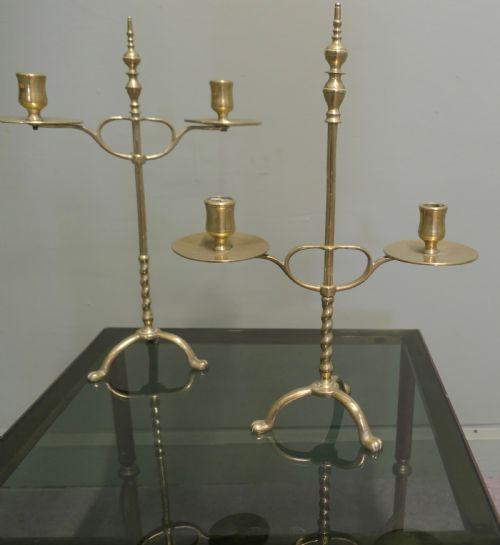
Domestic pairs include standard domestic sticks, ejector mechanisms to push out stubs, adjustable student lights, and chambersticks with side handles. Larger ecclesiastical pricket designs and multi-arm candelabra also emerge among the options.
How They Were Made
Foundry workers cast brass components in sand moulds or utilised lost-wax methods before turning and finishing the metal sections on lathes. Many nineteenth-century and earlier examples rely on seamed construction, where distinct turned parts fit together and join securely.
Makers integrated clever mechanical elements into specific utilitarian designs, such as internal threaded rods for telescopic height adjustment or spring-loaded ejector plates. Surface polishing brought the underlying copper-alloy composition to a bright golden sheen.
Named after a playing card suit, King of Diamonds candlesticks feature distinctive diamond-shaped knops on their stems.
What Varies in Quality
Substantial weight distinguishes superior castings from lighter, hollowed-out alternatives, reflecting the quantity and thickness of the brass used in production. Crispness in turned details, sharp mouldings, and balanced proportions reveal the care taken by the original foundry.
Original matching components across both sticks indicate a well-preserved pair that has remained together through generations of use. Smooth operation in mechanical parts, such as sliding ejectors and adjustable stems, marks high manufacturing standards.
J. Miller·Frederick J Smith & Co·Wm. Tonks & Sons
The Polished Brass Candlestick Pair Glossary
- Ejector
- A built-in internal mechanism featuring a small sliding thumb-piece that pushes the remaining candle stump out of the socket. This practical device gained popularity during the nineteenth century.
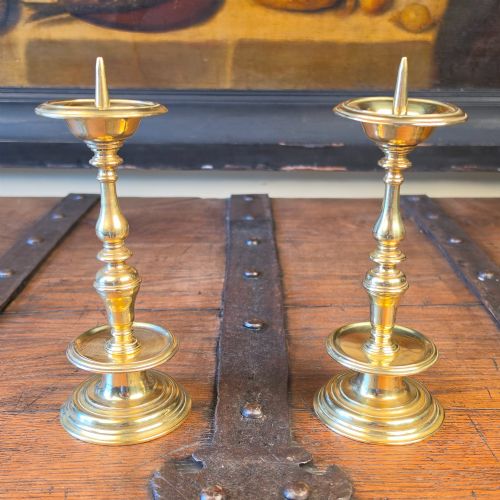
- Pricket
- A sharp vertical spike rising from a drip pan to impale and hold a candle, commonly seen on church altar candlesticks. These contrast with standard socket cups.
- Chamberstick
- A low portable candleholder equipped with a broad drip tray and a loop handle for carrying through dark rooms. They often include a conical snuffer resting on the pan.
- Telescopic
- An adjustable stem construction allowing the candle height to extend upwards via sliding concentric tubes. Harrison patent examples utilise this clever engineering.
- Petal base
- A foot design formed from overlapping or scalloped lobes resembling flower petals. This decorative shaping appears frequently on Georgian period pieces.
Polished Brass Candlestick Pair: Frequently Asked Questions
How do I clean polished brass?
Maintain the bright surface by wiping gently with a soft microfibre cloth to remove dust. Avoid harsh chemical abrasive cleaners that strip the metal finish.
Traditional brass polish should be used sparingly and kept away from seams and crevices where residue can accumulate over time.
How can I tell Georgian from Victorian pieces?
Georgian examples often feature simpler neoclassical lines, heavy solid castings, and petal or square stepped bases. They reflect an aesthetic of restrained proportion and classical balance.
Victorian pieces frequently introduce more ornate decoration, Gothic revival elements, mechanical ejector stems, or heavy church-sized proportions with bolder ornamentation.
What is a church pricket candlestick?
Church prickets use an upright spike rather than a hollow cup to secure large wax candles or altar lights. They originate from ecclesiastical settings and usually stand taller than domestic table candlesticks.
Many examples feature substantial brass or bronze construction designed to carry heavy wax lights during services.