
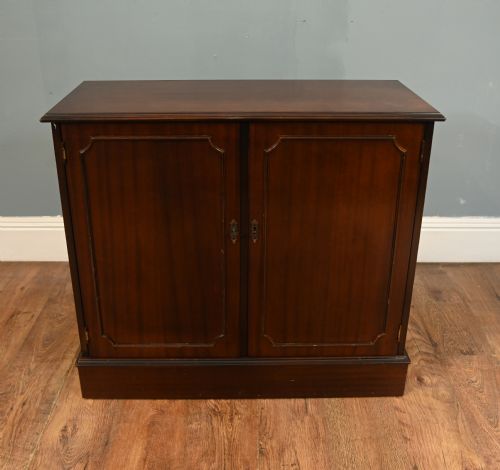


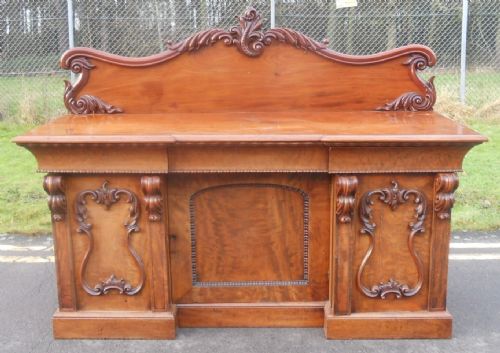
Plinth Base Sideboard
A plinth base sideboard provides robust storage with clean architectural lines, grounding a dining room or hallway with substantial timber presence.
Plinth Base Sideboard
When you search for a plinth base sideboard, you are looking at solid storage furniture defined by a flat, unbroken base resting directly on the floor rather than on legs or feet. The pieces appearing here span the Georgian, Victorian, William IV, and Edwardian periods, demonstrating how this sturdy foundation supported everything from grand dining room sideboards to smaller side cabinets.
The version you are most likely to meet on this page is a Victorian mahogany sideboard or side cabinet. These examples use dense timbers and heavy plinth constructions to anchor the piece firmly, offering generous internal cupboard space behind panelled or glazed doors.
Alongside conventional sideboards, the listings include related forms such as side cabinets, breakfront chiffonier bases, and cupboards. These variations share the characteristic low, solid foundation, adapting the plinth design for smaller rooms and specific storage needs across the nineteenth century.
How they were made
Cabinet makers constructed these pieces using solid timbers such as mahogany and rosewood, frequently applying flame mahogany veneer or burr walnut to prominent surfaces. The timber was selected for rich grain patterns, which added visual depth to the flat panels of the doors and the main body.
The structural foundation relies on a solid plinth box built at the base, distributing weight evenly and giving the furniture its characteristic grounded profile. Metal hardware such as brass fittings and glass or mirror elements were incorporated into specific cabinets and chiffonier bases for functional and decorative effect.
The site listings feature nineteenth century cabinetwork primarily in mahogany and rosewood, with occasional examples in burr walnut.
What varies in quality
The distinction between ordinary and exceptional examples lies in the selection of wood veneers and the precision of the cabinetwork. Pieces featuring matched flame mahogany or burr walnut display a higher grade of craftsmanship than those built from plain timber.
Construction details also separate standard items from finer works, particularly the thickness of the plinth assembly and the internal fitting of shelves and drawers. The handling of corner joints and the integration of brass components reveal the maker's care and skill.
The Plinth Base Sideboard Glossary
- Plinth base
- A heavy, flat architectural foundation upon which a cabinet or sideboard rests directly. It replaces conventional legs or feet to give the furniture a grounded appearance.
- Flame mahogany veneer
- A thin slice of mahogany timber cut from the fork of the tree to create a distinctive flickering flame pattern. Cabinet makers applied this to door fronts for decorative impact.
- Breakfront
- A furniture facade where the central section projects forward from the flanking sections. This configuration adds visual rhythm to larger sideboards and cabinets.
- Chiffonier
- A low sideboard or cabinet equipped with enclosed cupboards below. The form evolved during the nineteenth century to store dining silver and china.
Plinth Base Sideboard: Frequently Asked Questions
What is a plinth base sideboard?
A plinth base sideboard is a low storage unit that rests directly on a solid wooden platform rather than on legs. This design creates a heavy, grounded silhouette that was particularly popular during the Victorian and Georgian periods.
These pieces typically provide enclosed cupboard space behind panelled doors, serving as functional dining room furniture or hallway storage cabinets.
How do I date a sideboard?
Dating requires examining the secondary woods, the construction methods used for the drawers, and the overall architectural style. Pieces from the Georgian era often show simpler proportions, while Victorian examples frequently employ dense mahogany and heavy plinths.
Changes in hardware, such as brass pulls and hinges, also offer clues to the decade of manufacture, matching the stylistic shifts recorded across the nineteenth century.
Where were sideboards used?
These pieces were primarily designed for the dining room to hold heavy porcelain, silverware, and serving dishes. Their sturdy plinth construction supported the heavy weight of these items without strain.
Smaller side cabinets and cupboards also found places in drawing rooms and hallways, serving as versatile surfaces for display and storage.
How do I care for mahogany?
Mahogany requires stable room temperatures and protection from direct sunlight to prevent the timber from drying out or fading. Regular dusting with a soft, dry cloth preserves the polished finish of the wood.
Application of appropriate furniture wax maintains the moisture in the veneer and enhances the natural grain patterns over time.