


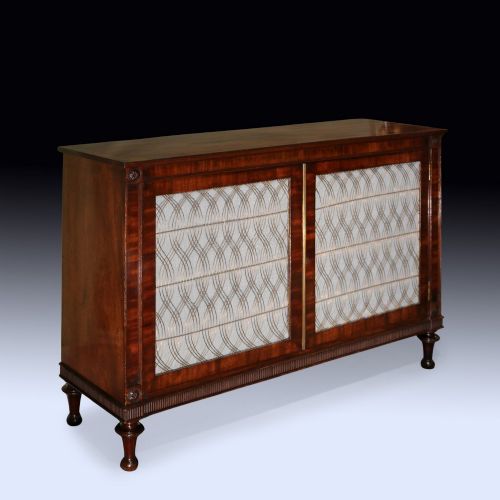
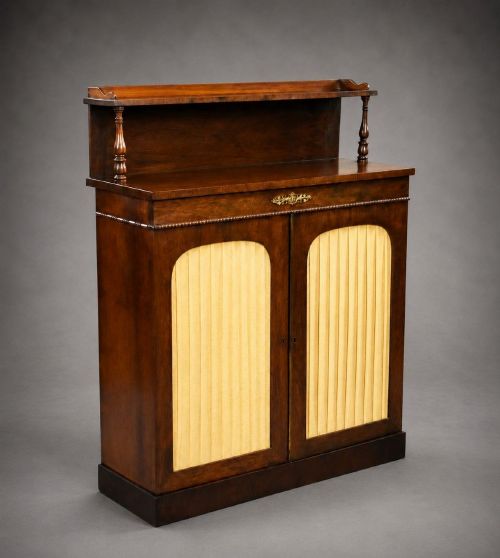


Pleated Door Sideboard
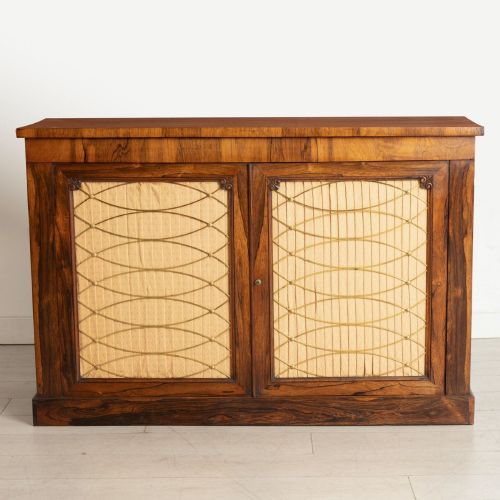
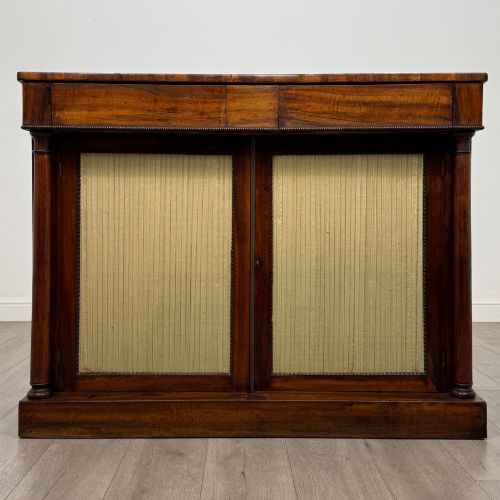
These pleated door sideboard pieces, spanning Regency, Victorian, and Georgian periods, offer substantial storage framed in fine woods like rosewood and mahogany.
Pleated Door Sideboard
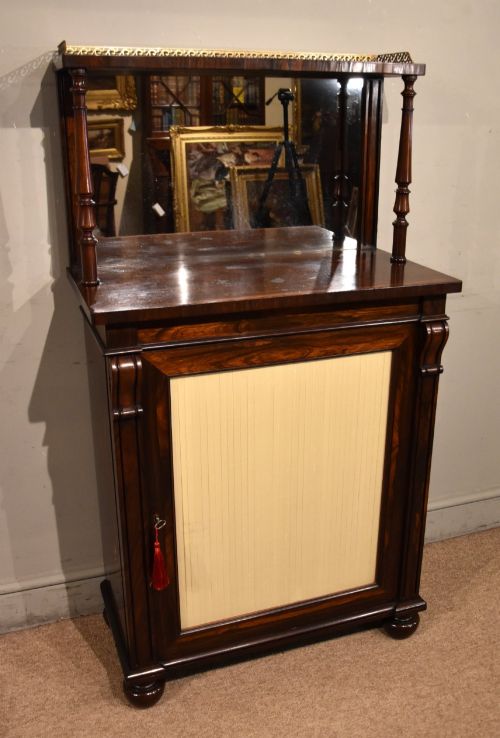
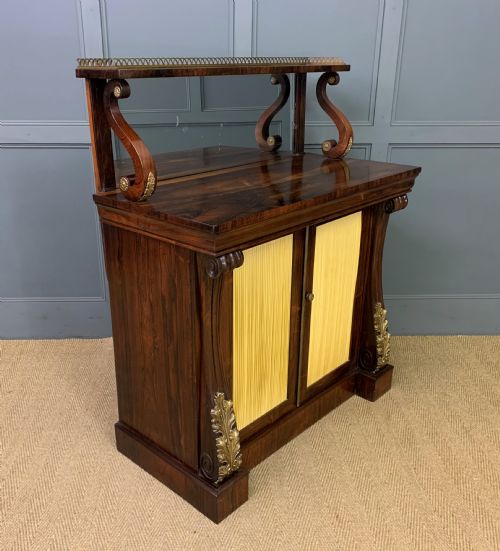
A pleated door sideboard encompasses low cabinets, chiffoniers, and credenzas originating from periods such as the Regency and Victorian eras. These forms provide domestic storage with surface display space, often incorporating glass or fabric elements behind doors.
Buyers seeking a pleated door sideboard will encounter foundational styles like George IV, William IV, and Grand Regency. These variations reflect the cabinet-making trends of the nineteenth century.
How They Were Made
Construction relies upon timbers such as mahogany, rosewood, goncalo alves, and simulated rosewood, sometimes accented with brass mounts and mirror glass. Cabinet makers utilised these dense hardwoods to build durable carcases and flat surfaces.
Detailing often includes brass inlays, brass grilles, and fabric panels fitted to door frames. Joinery methods of the Regency and Victorian periods ensure structural stability across breakfront and serpentine forms.
Pleated Door Sideboard Retail Price Guide 2026
Typical asking prices for pleated door sideboard among the pieces listed under this phrase on Sellingantiques today, from the lower quarter to the upper quarter. They describe what is for sale here now, not the wider market.
Brass grilles hide behind fabric panels, offering a glimpse of hidden ventilation in nineteenth-century parlours.
What Varies in Quality
The quality of a piece depends upon the choice and figuring of the timber, such as highly patterned rosewood or select mahogany. Finer examples display superior grain matching and timber selection across large surfaces.
Execution of decorative elements like brass inlay, mounts, and brass grilles distinguishes standard production from more ambitious workshop output. The precision in fitting doors and integrated elements marks the standard of construction.
The Pleated Door Sideboard Glossary
- Chiffonier
- A low cabinet or sideboard featuring shelves or a superstructure, popular during the Regency and Victorian periods. It typically provides enclosed storage below a display surface.
- Breakfront
- A cabinet design where the central section projects forward from the flanking outer sections. This architectural arrangement creates depth and visual rhythm on large sideboards.
- Goncalo Alves
- A dense exotic hardwood with distinctive figuring, utilised in fine nineteenth-century cabinet making. It offers a rich contrast to standard native timbers.
- Palisander
- A term applied to various dark, richly grained rosewoods used in high-status furniture production. It appears frequently in polished Regency and Victorian cabinet work.
- Serpentine
- A curved contour featuring a convex centre flanked by concave curves, seen on advanced cabinet fronts. This shape requires skilled woodworking to execute cleanly.
Pleated Door Sideboard: Frequently Asked Questions
What periods do these cabinets come from?
The pieces span the Georgian, Regency, and Victorian eras, with dates clustering around the early to mid nineteenth century. Specific styles include George IV and William IV designs.
Cabinet making during these periods evolved from classical Regency lines toward heavier Victorian proportions, using timbers like rosewood and mahogany throughout.
How were these sideboards used originally?
These pieces served primarily in dining rooms and parlours for storing tableware, linens, and documents. Upper surfaces and associated shelves accommodated decorative objects or books.
Smaller variants like chiffoniers functioned in drawing rooms to display porcelain and hold writing materials or volumes.
What materials are most common?
Rosewood and mahogany dominate the inventory, accompanied by walnut, goncalo alves, and simulated rosewood finishes. Brass mounts and fabric door inserts frequently accent the primary woods.
Mirror glass and brass grilles also appear in doors, adding reflective qualities or ventilation depending on the specific cabinet form.
How do I distinguish Regency from Victorian pieces?
Regency items generally exhibit restrained classical proportions, architectural brass inlays, and precise lines associated with the early nineteenth century. They often employ goncalo alves or figured rosewood.
Victorian examples tend toward heavier proportions and more exuberant forms, such as serpentine credenzas with pronounced figured veneers and elaborate mouldings.