






Georgian Brass Inlaid Cabinet
A georgian brass inlaid cabinet brings warmth and precise metalwork together, offering both display space and refined storage for a traditional room.
Georgian Brass Inlaid Cabinet
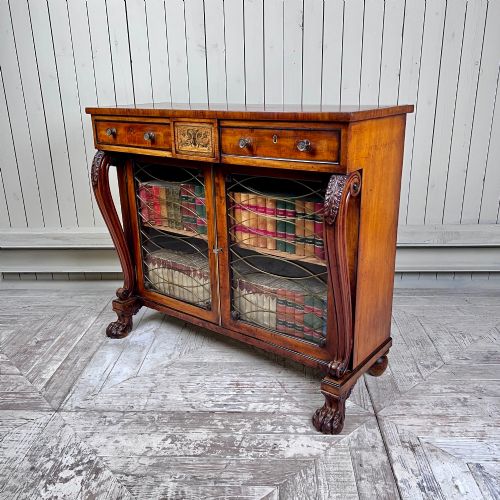
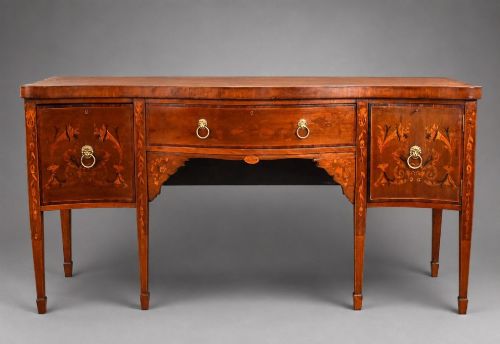
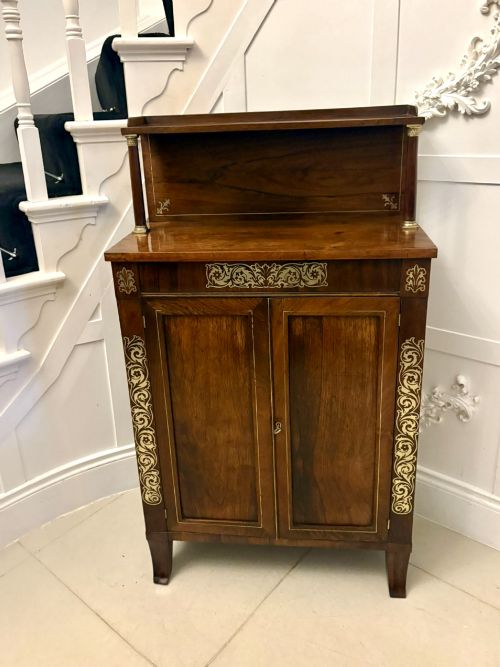
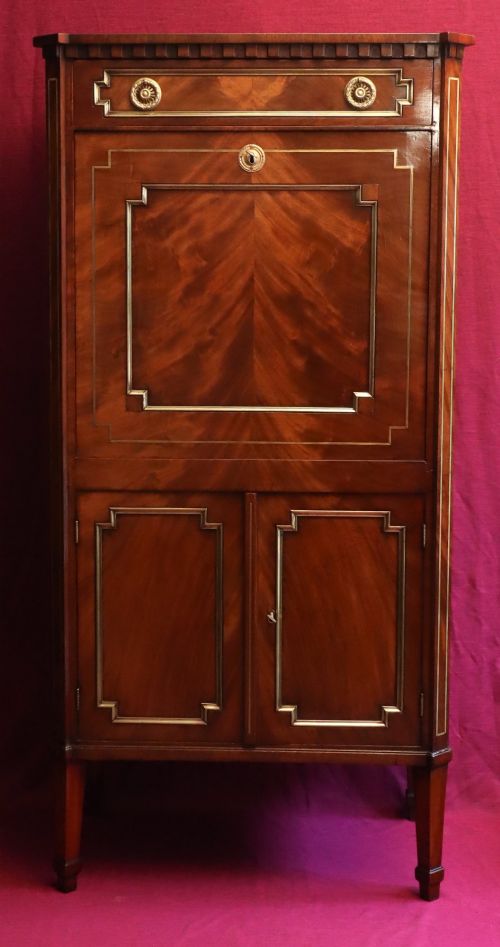
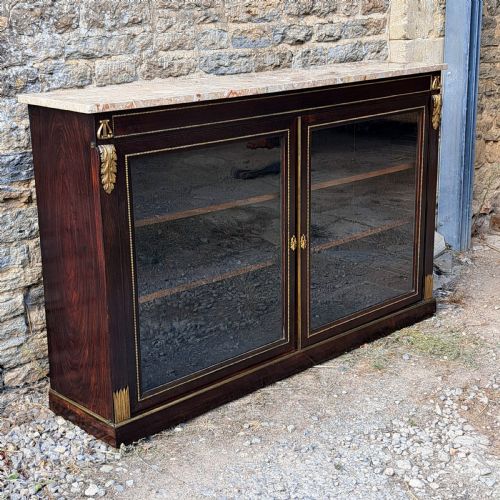
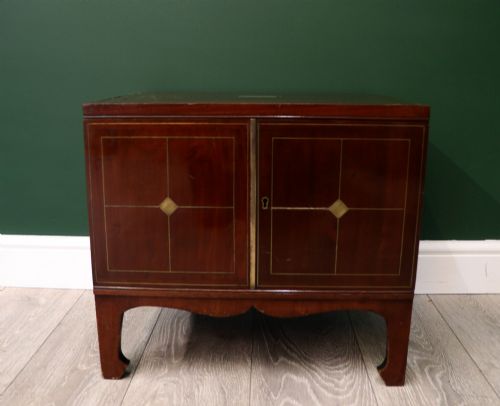
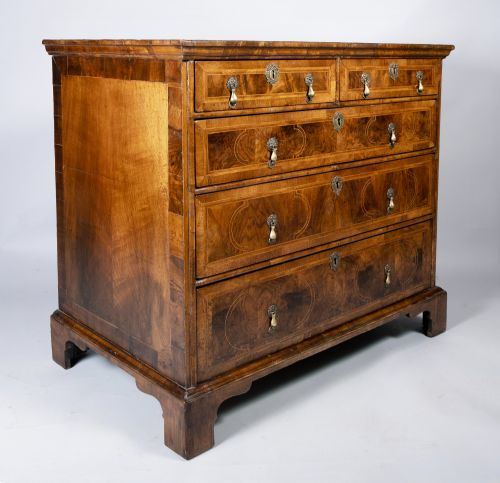
A georgian brass inlaid cabinet encompasses various functional storage forms, including chiffoniers, side cabinets, and bookcases originating from the Georgian, Regency, and later revival periods. Buyers frequently encounter mahogany and rosewood pieces featuring delicate metallic detailing along the doors, plinths, or superstructure.
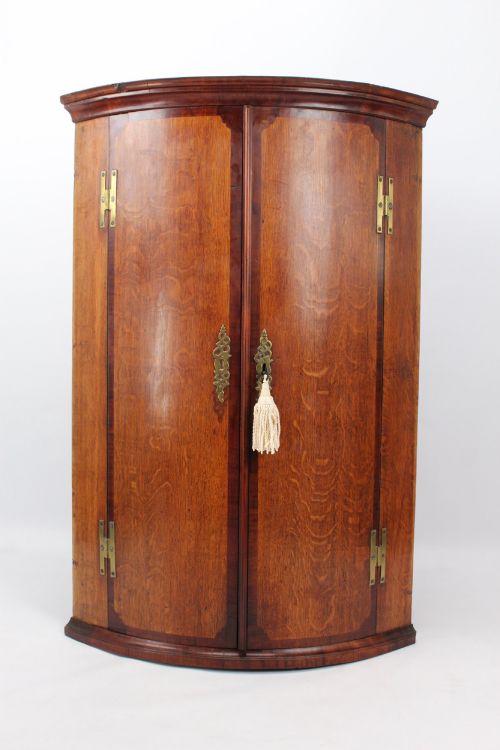
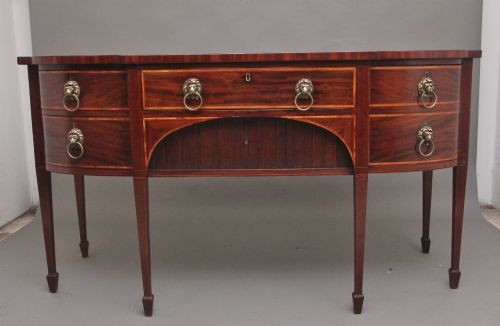
The selection ranges from tall pedestal cabinets and bureau bookcases down to compact corner cupboards and sideboards. Many items trace back to the Regency era, where dark timbers contrast sharply with bright brass lines and arabesque motifs.
How they were made
Cabinet makers constructed carcass frames primarily from dense hardwoods like mahogany, walnut, and rosewood, often incorporating secondary timbers such as oak. Surfaces received thin veneers that provided a smooth canvas for contrasting inlay work.
Craftsmen recessed fine strips of brass and occasionally ebony or boxwood into hand-cut channels across the timber face. This metalwork required immense precision to ensure the brass flush-mounted smoothly with the surrounding wood grain.
Secret compartments occasionally wait inside these cabinets, reminding us that early owners loved hiding their love letters.
What varies in quality
Quality rests heavily on the crispness of the brass inlay and the selection of the underlying timber figures. Superior examples display tight, uniform grain patterns in rosewood or flame mahogany, with brass work that remains completely intact and flush.
Construction details such as dovetailed drawer linings and original glass panes or hardware elevate certain pieces above standard production. The overall architectural proportion and harmony between the timber tone and the metallic lustre define the upper tier.
Mawer & Stephenson·John Mclean
The Georgian Brass Inlaid Cabinet Glossary
- Chiffonier
- A low cabinet or sideboard, typically fitted with shelves or a small bookcase superstructure on top. Regency examples frequently incorporate brass inlay along the panel doors.
- Escritoire
- A writing cabinet featuring a fall-front desk surface concealing small interior compartments and drawers. These pieces often utilise exotic veneers and fine stringing.
- Campaign style
- Furniture designed for portability, often featuring brass corner braces, flush recessed handles, and robust construction. Such items bridge military utility with refined domestic interiors.
- Cellarette
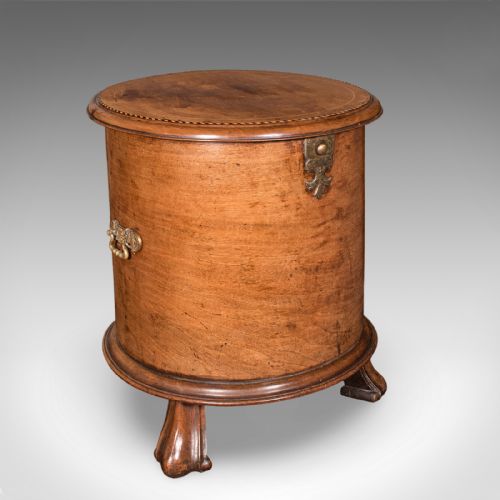
- A wine cooler stand designed to hold bottles securely inside a lined interior. They appear frequently in Regency dining settings alongside larger sideboards.
- Breakfront
- A piece of furniture where the central section projects forward from the flanking wings. This architectural form adds depth and shadow to large sideboards and bookcases.
Georgian Brass Inlaid Cabinet: Frequently Asked Questions
How do I date a brass inlaid cabinet?
Dating relies on combining the timber species, carcass construction methods, and the style of the brass motifs. Regency pieces often favour rosewood with bold brass arabesques, while earlier Georgian items typically utilise mahogany with simpler stringing.
Secondary woods inside drawers and backboards provide further clues to the manufacturing decade. Examining screw types, hinge styles, and dovetail cuts helps narrow down the period alongside stylistic markers.
Where were these cabinets placed originally?
These cabinets served primarily in formal drawing rooms, dining rooms, and libraries to store porcelain, linens, or writing materials. Corner cupboards utilised awkward architectural spaces, whilst chiffoniers stood against principal reception room walls.
Larger pieces like breakfront sideboards anchored the dining room for serving and storage duties. Smaller drawer chests and cabinets functioned as bedside or drawing room display units.
How should I clean brass inlay?
Brass inlay requires gentle dusting with a soft, dry cloth to prevent dirt accumulation within the surrounding wood grain. Avoid harsh commercial metal polishes that can stain or erode the adjacent timber veneer.
Microfibre cloths lift surface grime safely without moisture. If polishing is necessary, use a fine specialist wax applied sparingly with cotton buds, keeping away from the wood.
What woods were commonly used?
Mahogany and rosewood dominate the selection, prized for their rich dark tones and suitability for fine veneering. Walnut appears frequently on earlier pieces, offering a softer grain pattern with varied figuring.
Inlay work often incorporates contrasting light boxwood or dark ebony alongside the bright brass elements. Oak and deal served routinely as sturdy secondary timbers for drawer linings and internal shelving.
Are the brass lines original?
Assessing originality involves looking for consistent patination across both the timber and the metal inlay. Original brass work shows age-appropriate oxidation and sits level with the wood surface.
Replacement inlay often appears brighter, with cleaner channel cuts or modern adhesives visible under close inspection. Hand-cut brass channels exhibit slight irregularities typical of period hand tools.