



Platinum Pendant Necklace
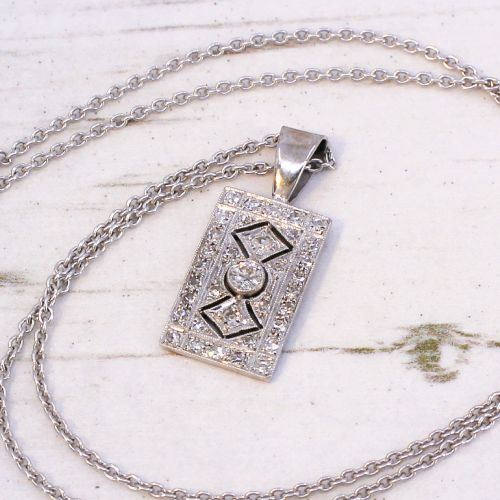
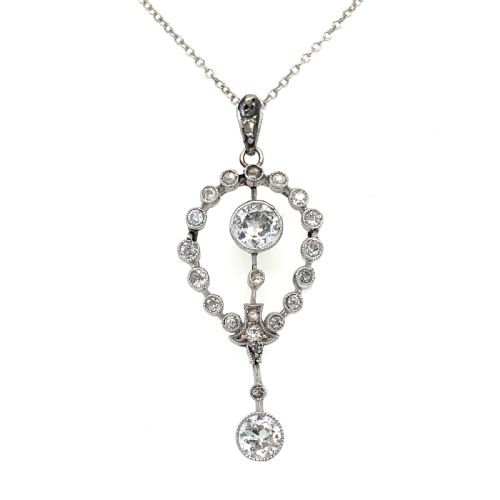
When you search for a platinum pendant necklace, you are looking at delicate Edwardian and geometric Art Deco pieces that combine durability with fine stone-setting.
Platinum Pendant Necklace
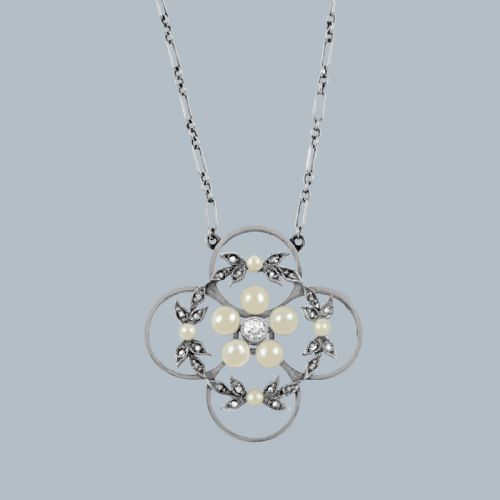
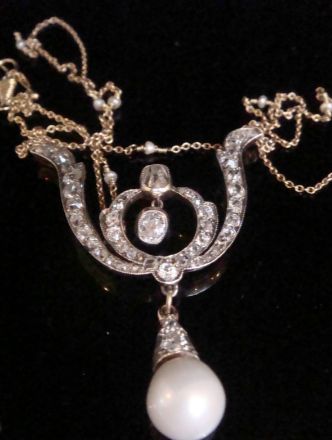
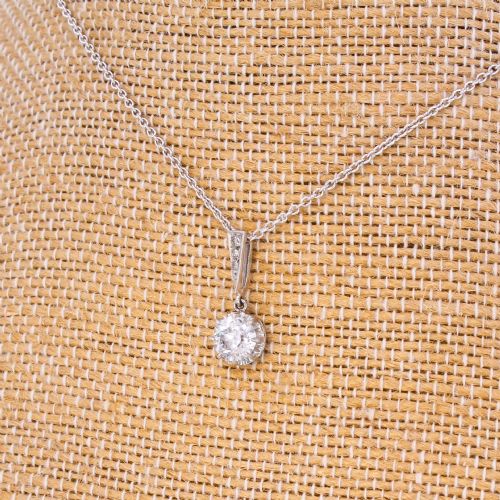
A platinum pendant necklace typically consists of a central gemstone-set drop suspended from a fine chain, spanning several decades of design evolution.
The pieces on this page are most frequently found in Edwardian and Art Deco styles, alongside Victorian, Art Nouveau, and Mid-Century examples.
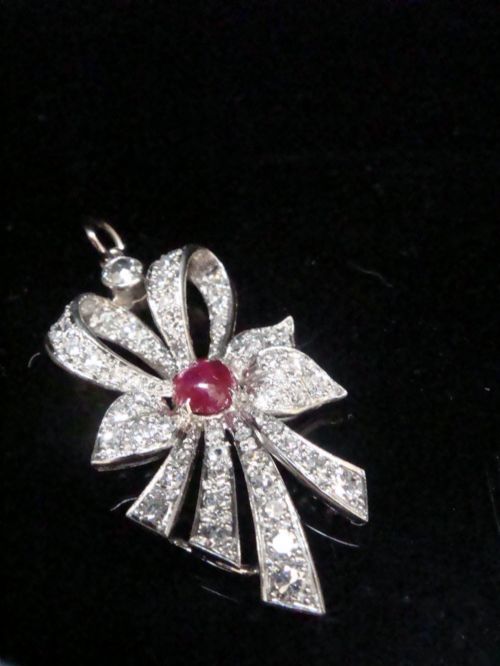
Forms range from simple diamond solitaires and elaborate bow pendants to lorgnettes and multi-stone lavaliere designs.
How they were made
Makers utilised platinum for its strength, which allowed jewellers to create exceptionally fine wirework and delicate settings that securely held diamonds and coloured stones without bulk.
Gold, including 15ct, 18ct white, and yellow gold, often appears alongside platinum in composite mounts, pairing the durability of platinum with traditional backing metals.
Gems such as aquamarine, sapphire, ruby, emerald, opal, and pearl were meticulously cut and arranged in classical halo, cluster, or geometric configurations.
At least one piece doubles as opera glasses, proving that Edwardian practicality could sparkle just as brightly as a diamond bow.
What varies in quality
The precision of the metalwork distinguishes superior examples, particularly in how finely the platinum piercing and millegrain edge-work are executed.
Stone selection and matching play a definitive role, with top-tier pieces featuring well-proportioned old cut diamonds and clean, vibrant coloured gemstones like Ceylon sapphires or natural saltwater pearls.
Eduard Foehr
The Platinum Pendant Necklace Glossary
- Platinum
- A dense, strong, silvery-white precious metal introduced widely in fine jewellery during the Edwardian period for its ability to support delicate stone settings.
- Millegrain
- A decorative technique featuring a row of tiny raised metal beads along the edges of a setting, characteristic of Edwardian and Art Deco work.
- Lavaliere
- A pendant necklace featuring a central dangling drop, often suspended from a smaller secondary stone or bow motif.
- Old Cut
- A historic diamond cutting style preceding modern brilliant cuts, typically characterised by a smaller table, higher crown, and open culet.
Platinum Pendant Necklace: Frequently Asked Questions
How do I care for a platinum pendant necklace?
Store your necklace separately in a soft pouch to prevent the fine platinum chain from tangling or scratching other items in your collection.
Clean the piece gently using warm soapy water and a soft brush, taking extra care if the pendant incorporates pearls or softer opals.
Can I wear these necklaces every day?
Platinum is exceptionally durable and holds small stones securely, making it well-suited for regular wear compared to softer antique metals.
However, delicate Edwardian filigree and antique pearl or opal set pieces benefit from gentler handling during daily activities.
How do I distinguish Edwardian from Art Deco pieces?
Edwardian platinum pendant necklaces favour flowing garlands, bows, and lace-like openwork motifs inspired by natural curves and organic lines.
Art Deco pieces shift towards strict symmetry, bold geometric shapes, and linear arrangements that reflect the design shifts of the 1920s and 1930s.
Are the chains original to the pendants?
Many antique and vintage pendants survive with associated chains rather than their original factory-issued mounts, as lengths were frequently altered over the decades.
Examining the hallmark stamps on both the pendant bale and the chain clasp helps determine if the metals and periods match.