


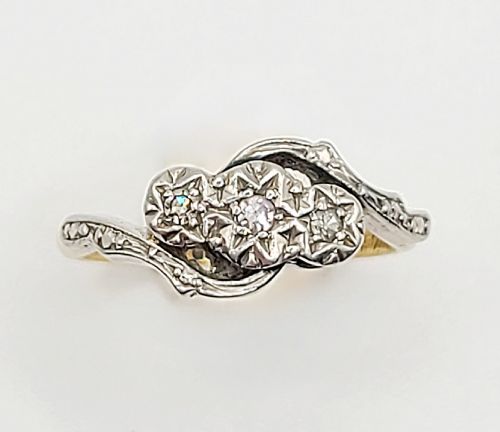


Platinum Illusion Setting Ring
These platinum illusion setting ring examples combine platinum with gold and diamonds, offering a brilliant look.
Platinum Illusion Setting Ring
A platinum illusion setting ring brings together diamonds, platinum, and gold in forms designed to catch the eye. When searching for a platinum illusion setting ring, buyers frequently encounter pieces dating from the Edwardian period through to the mid-century era, with Art Deco examples appearing regularly.
The selections span engagement rings and traditional rings featuring single diamonds or multiple stones in trilogy arrangements. Most pieces combine platinum settings with 18ct gold, white gold, or yellow gold bands, creating distinct contrasts that define the aesthetic of these decades.
Materials and construction methods
Goldsmiths and jewellers utilised platinum to secure diamonds closely, often using clever metalwork to make the central stones appear larger than their actual carat weight. The combination of platinum for the top head and yellow or white gold for the shank remained a standard method of construction.
Stones are set using techniques suited to brilliant cut and transitional cut diamonds. The contrasting metals are worked together to provide both durability for daily wear and a refined appearance around the gemstone clusters.
Listings feature periods from the Edwardian era through the 1910s, 1920s, 1930s, 1950s, and 1960s.
Judging the quality of the work
The standard of a piece rests on the precision of the metalwork surrounding the diamonds and the condition of the combined gold and platinum structure. Better examples maintain crisp geometric lines in Art Deco designs and secure stone mountings without excessive wear to the claws.
Proportion and stone selection dictate the finer pieces, where brilliant cut or transitional cut diamonds are matched thoughtfully to the band. The interaction between the platinum setting and the gold shank shows the maker's skill in balancing different metals.
The Platinum Illusion Setting Ring Glossary
- Illusion setting
- A mounting technique that uses a faceted metal plate around a diamond to make the stone look larger. This method was widely used in Edwardian and Art Deco jewellery.
- Trilogy ring
- A ring featuring three main gemstones set in a row, often symbolising the past, present, and future. These frequently incorporate platinum settings alongside gold bands.
- Solitaire
- A ring set with a single diamond or other gemstone. They appear frequently among the Art Deco and mid-century examples.
- Transitional cut
- A diamond cut used during the period when old mine cuts evolved into modern brilliant cuts. It retains a small table and open culet characteristic of mid-century stones.
- Art Deco
- A design style spanning the 1920s and 1930s characterised by geometric symmetry and clean lines. Pieces from this period often combine platinum with 18ct gold.
Platinum Illusion Setting Ring: Frequently Asked Questions
What is an illusion setting on a ring?
An illusion setting uses a specially shaped metal collar around a diamond to reflect light and increase its apparent size.
This technique allowed makers to create striking visual impact using smaller or moderately sized stones.
Are these rings suitable for daily wear?
Platinum and gold provide a durable structure suitable for everyday use when the metalwork remains in good condition.
Regular checks by a jeweller help ensure the stones stay secure in their settings over time.
How do I identify an Art Deco ring?
Art Deco rings typically display geometric motifs, straight lines, and symmetrical arrangements of diamonds set in platinum.
They often feature contrasting 18ct yellow gold or white gold shanks supporting the platinum head.