


Platinum Claw Solitaire Ring
A platinum claw solitaire ring carries a single central stone in a metal setting designed to maximise light capture.
Platinum Claw Solitaire Ring
A platinum claw solitaire ring centres on a single diamond held securely by prongs, focusing attention entirely on the stone. This page shows examples spanning Victorian, Edwardian, Art Deco, and mid-century periods.
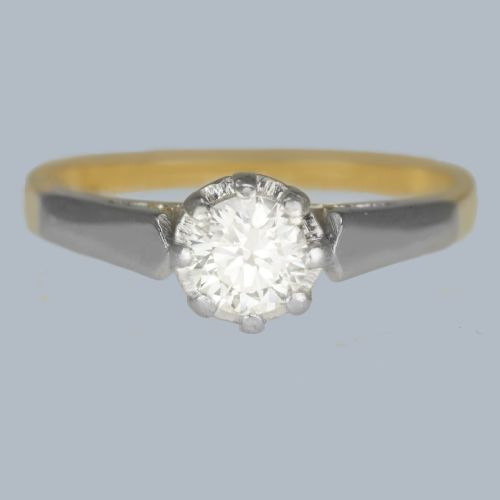
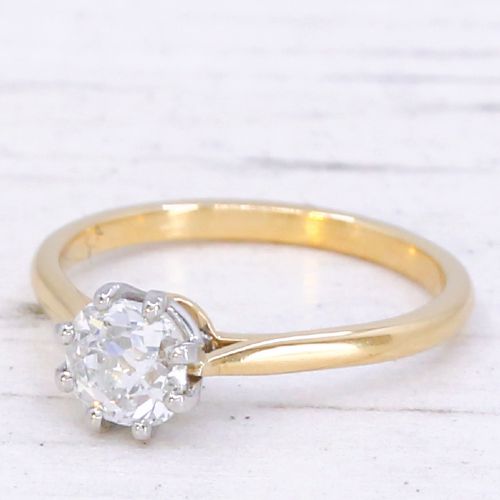
The materials paired with platinum include yellow gold, 18ct gold, and 14ct gold, often providing contrast between the band and the metal holding the diamond. Many pieces date from the 1920s and 1930s, reflecting geometric Art Deco sensibilities alongside classic designs.
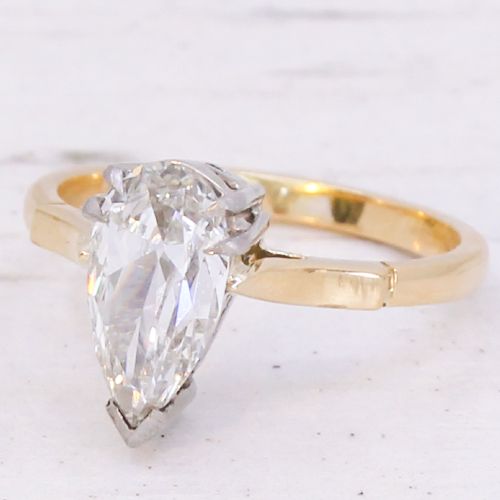
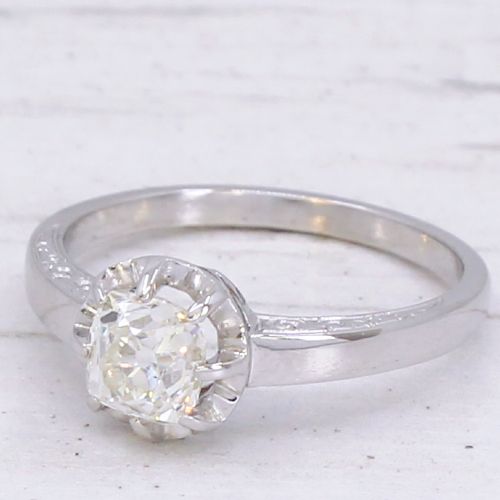
Engagement rings dominate this category, featuring old cut, old mine cut, transitional cut, and pear cut diamonds. Some variations incorporate sapphire accents or rose cut diamond shoulders while maintaining the core solitaire structure.
How they were made
Craftsmen utilised platinum for its strength, allowing delicate claw settings to hold substantial diamonds securely with minimal visible metal. Gold was frequently employed for the band itself, particularly in 18ct yellow gold or white gold combinations.
Diamonds were hand-cut during the Victorian, Edwardian, and Art Deco eras, producing distinct facets such as old European cuts and old mine cuts that respond differently to light compared to modern brilliant cuts.
Listings feature diamonds set in platinum combined with yellow gold, 18ct gold, and 14ct gold across Victorian, Edwardian, and mid-century periods.
What varies in quality
The precision and integrity of the claw setting dictate how securely the central diamond is held and how cleanly the prongs taper against the stone. Fine craftsmanship ensures the metalwork supports the gemstone without overshadowing its proportions.
The cut, clarity, and colour of the diamond fundamentally influence the character of the piece, alongside the preservation of the original metal band across decades of wear.
The Platinum Claw Solitaire Ring Glossary
- Solitaire
- A ring set with a single gemstone, typically a diamond. This design directs visual weight entirely to the main stone.
- Claw setting
- A method of securing a gemstone using metal prongs that grip the girdle of the stone. This technique permits maximum light entry.
- Old mine cut
- An earlier cushion-shaped diamond cut with a near-square girdle, high crown, and deep pavilion. These stones were shaped by hand for candlelight.
- Transitional cut
- A diamond cutting style utilised from the 1920s to the 1940s that bridges older hand-cut stones and modern brilliant cuts. It retains small table facets and steep crown angles.
Platinum Claw Solitaire Ring: Frequently Asked Questions
How do I date these rings?
Dating relies on diamond cutting styles, band materials, and overall aesthetic motifs. Edwardian pieces often display delicate filigree, while Art Deco examples favour geometric lines.
Maker marks and gold purities also assist in establishing the manufacturing period.
Are these rings suitable for daily wear?
Platinum provides exceptional durability and strength, making it well-suited for everyday engagement ring wear. The metal resists thinning over time better than softer gold alloys.
Regular checks on the claw settings ensure the central diamond remains secure.
What diamond cuts are common?
Old European cuts and old mine cuts appear frequently in antique and vintage examples. Transitional cuts emerge in mid-century items as cutting techniques evolved toward modern standards.
Each cut produces a unique optical performance under different lighting conditions.