
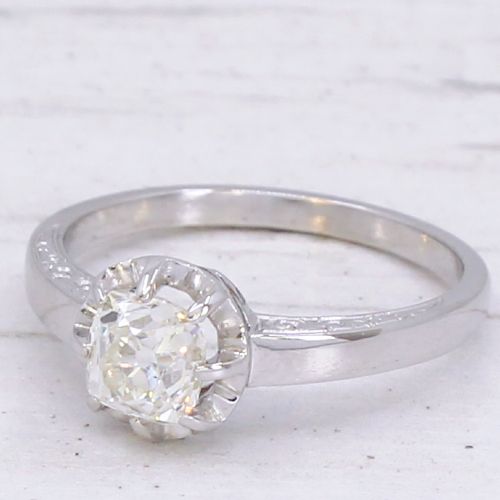
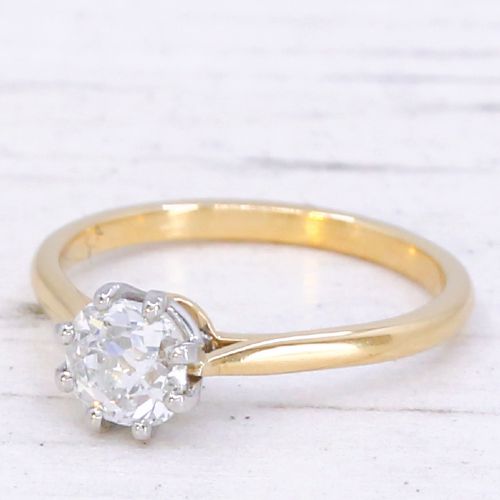
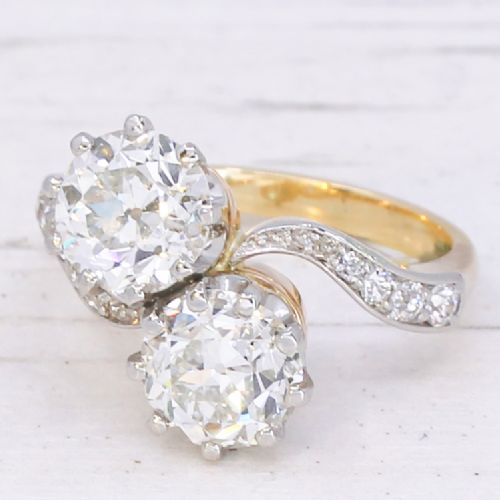


Platinum Claw Diamond Ring
A platinum claw diamond ring brings together enduring white metal and brilliant stones, offering lasting elegance for everyday wear.
Platinum Claw Diamond Ring
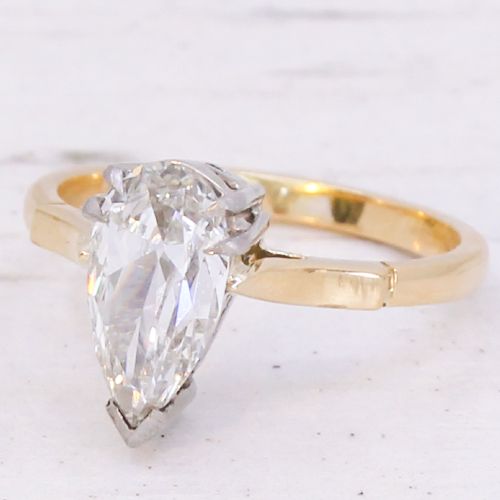
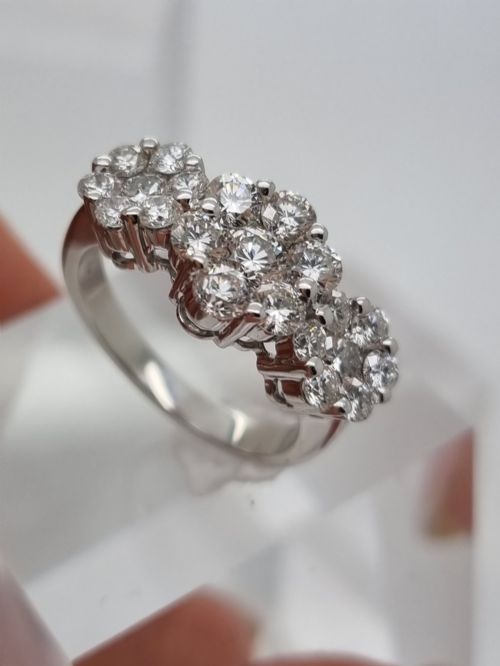
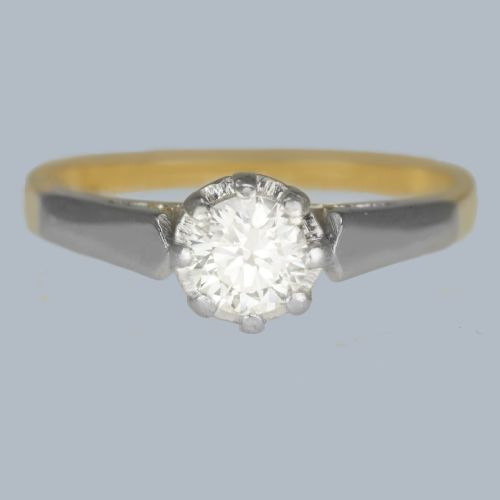
When searching for a platinum claw diamond ring, buyers encounter pieces spanning the Victorian, Edwardian, Art Deco, 1940s Retro, and Mid-Century periods. These items primarily take the form of solitaire engagement rings, trilogy settings, and cluster designs.
The selections on this page rely heavily on platinum mounts, often paired with 18ct yellow gold, 18ct white gold, or standard gold shanks. The diamond configurations range from single old cut stones to multi-stone arrangements incorporating sapphires.
Originating largely from the early to mid-twentieth century, these rings showcase classic jewellery styles that prioritize secure claw settings. Buyers most frequently meet traditional solitaire and multi-stone formats carrying historic diamond cuts.
How platinum claw diamond rings were made
Makers utilised platinum for its strength and ductile nature, allowing craftsmen to form slender, secure claws that held stones firmly while maximising light entry. This white metal gained popularity for jewellery production due to its durability and resistance to tarnishing.
Stones within these mounts typically display historic cutting techniques, including old European cuts, old mine cuts, transitional cuts, and pear shapes. Artisans shaped these diamonds by hand, resulting in characteristic facets that interact uniquely with candlelight or daylight.
Combinations of platinum settings with gold shanks appear across multiple decades, reflecting changing material availability and workshop preferences. Jewelers often incorporated millegrain edges or shoulder stones such as rose cut diamonds to accent the primary gems.
Platinum Claw Diamond Ring Retail Price Guide 2026
Typical asking prices for platinum claw diamond ring among the pieces listed under this phrase on Sellingantiques today, from the lower quarter to the upper quarter. They describe what is for sale here now, not the wider market.
Some vintage rings secretly tuck tiny rose cut diamonds into their shoulders like hidden decorative punctuation.
What varies in quality in platinum claw diamond rings
Quality differences emerge in the precision of the claw work and the symmetry of the metal setting holding the primary stone. Finely wrought claws sit flush against the girdle of the diamond, securing the gem without obscuring its facets.
The optical properties and cut proportions of the diamonds themselves establish the upper tiers of the range. Stones with superior clarity grades and well-centred historic cuts produce a more vibrant play of light.
Proportion and balance between the central diamond and any supporting shoulder stones or side gems dictate the visual harmony of the piece. Masterful construction ensures the ring sits comfortably on the hand while maintaining structural integrity across the band.
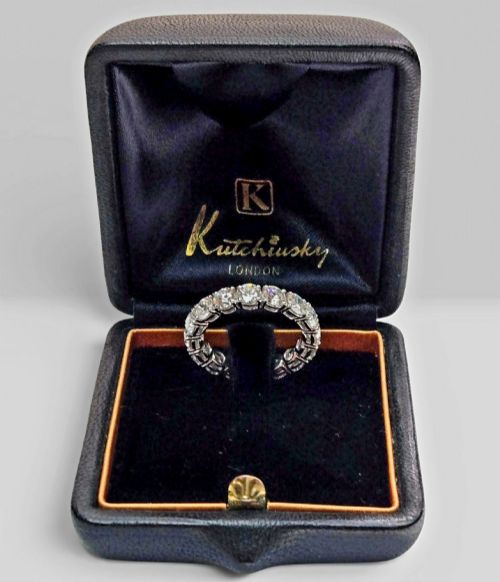
Kutchinsky
The Platinum Claw Diamond Ring Glossary
- Claw setting
- A mounting style where small metal prongs hold a gemstone in place, allowing maximum light to enter the stone from the sides and top.
- Old European cut
- A round diamond cutting style popular from the late nineteenth century through the art deco period, characterised by a small table, heavy crown, and open culet.
- Trilogy ring
- A ring featuring three main gemstones, often interpreted symbolically to represent the past, present, and future of a relationship.
- Transitional cut
- A diamond cut used roughly between the 1920s and the 1950s that bridges the older European cut and the modern brilliant cut.
- Toi et Moi
- French for you and me, describing a ring style featuring two main side-by-side gemstones representing two entwined souls.
Platinum Claw Diamond Ring: Frequently Asked Questions
How do I care for a platinum claw diamond ring?
Clean your platinum ring regularly using warm soapy water and a soft brush to remove everyday oils and debris from beneath the setting. Take the ring to a professional jeweller periodically to check the security of the claws.
Avoid wearing the ring during heavy manual work or strenuous physical activities to prevent bending the platinum prongs or striking the diamond against hard surfaces.
What is an old European cut diamond?
An old European cut is a historic diamond shape commonly found in antique and vintage rings dating from the Victorian era through the mid-twentieth century. These stones feature distinct optical characteristics like a smaller table and a larger culet.
Unlike modern brilliant cuts engineered for maximum mathematical symmetry, old European cuts were shaped by hand to catch candlelight, producing a softer, chunkier pattern of light.
Can I resize a vintage platinum ring?
Most platinum rings can be resized by a skilled jeweller who has experience working with historic metals. Platinum requires specific high-temperature torches and matching solder to alter the band without compromising its strength.
Consult a specialist workshop to ensure the resizing process does not distort any intricate gallery work, side stones, or engraved details on the shoulders of the ring.
How do I identify Art Deco diamond rings?
Art Deco rings typically display geometric motifs, symmetrical lines, and a strong architectural influence spanning the 1920s and 1930s. These pieces frequently utilise platinum mounts to set diamonds alongside contrasting calibre-cut sapphires or emeralds.
Look for fine millegrain decoration and stepped shoulder designs that emphasise clean angles rather than the flowing organic curves seen in earlier Edwardian or Victorian jewellery.