




Plaster Relief Wall Plaque
A plaster relief wall plaque brings classic depth and sculptural presence to an interior through modelled form and historic subject matter.
Plaster Relief Wall Plaque
A plaster relief wall plaque represents sculptural subjects mounted for display, drawing from classicism, religious iconography and architectural fragments. Buyers search for these pieces to introduce texture and historic narrative directly onto plain wall surfaces.
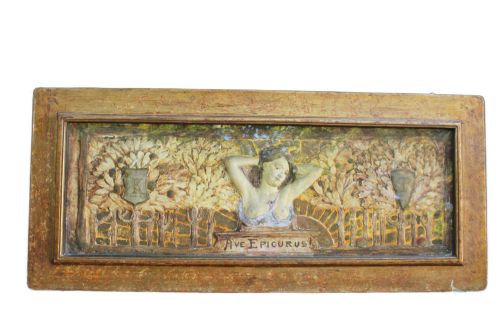
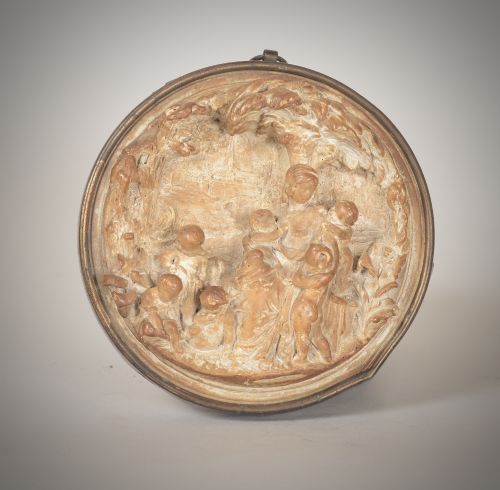
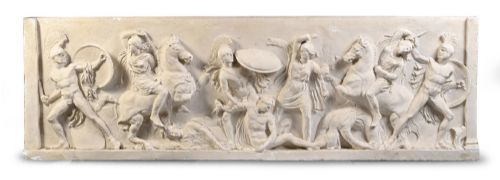
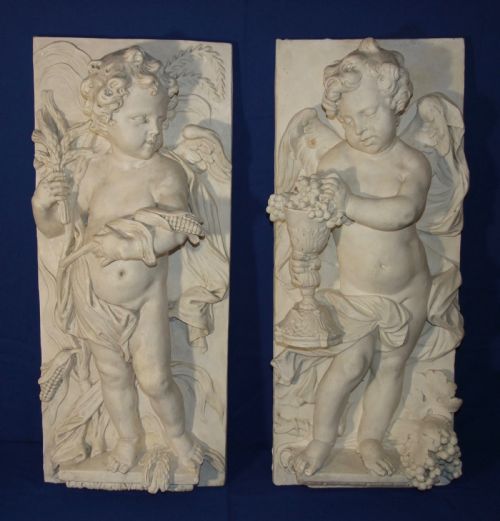
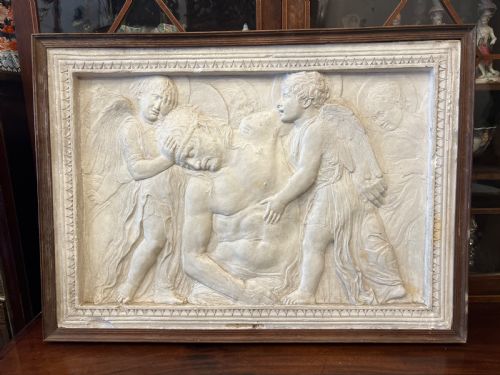
The versions met most frequently on this page span the eighteenth and nineteenth centuries, reflecting neoclassical taste, Renaissance revivals and religious folk art. Forms range from single portraits and devotional shadowboxes to large architectural friezes and pairs of winged cherubs.
Origins vary across British, French and German workshops, encompassing grand tour souvenirs and school pieces alongside architectural salvage. Each object captures a specific sculptural tradition, from classical mythology to Christian devotion.
Materials and construction methods
Plaster, gypsum and marble dust form the primary body of these reliefs, cast or carved to build up three-dimensional depth. Artisans often reinforced or mounted these compositions within wood panels and frames.
Surface finishes include applied paint, gesso, polychrome pigments and bronzed coatings to simulate metal or stone. Brass and metal fixings frequently provide the structural support for hanging and display.
Listings feature works spanning the eighteenth century, the Victorian era, and the early twentieth century, utilising plaster, marble dust, and wood.
Evaluating sculptural quality
Quality rests in the crispness of the modelling and the depth of the undercut, which determines whether facial expressions and drapery folds remain sharp. Softer contours usually indicate worn moulds or secondary casts.
The handling of polychrome paint, gesso and bronzing separates standard decorative pieces from finer studio and school works. Original surface patination enhances the visual weight of the relief without obscuring the underlying plaster work.
The Plaster Relief Wall Plaque Glossary
- Plaster relief
- A sculptural wall piece where figures project from a flat background. This technique creates a sense of perspective and depth on interior walls.
- Gesso
- A plaster-like mixture applied to surfaces to prepare them for gilding or painting. It provides a smooth base for fine detail work.
- Polychrome
- Decorated in multiple colours. This finish brings painted realism to sculptural plaster figures.
- Grand tour
- The nineteenth-century practice of travelling through Europe to collect art and antiquities. Souvenirs often included classical plaster casts.
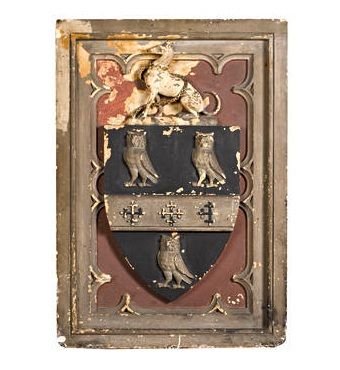
- Armorial panel
- A carved or moulded plaque displaying a coat of arms. These pieces denote lineage and heraldic symbolism.
Plaster Relief Wall Plaque: Frequently Asked Questions
How should I clean antique plaster?
Dust accumulated on textured plaster reliefs should be removed gently using a soft, dry artist brush or ostrich feather duster. Avoid using water or liquid cleaners, which can soften the plaster and damage painted or gesso surfaces.
If the piece has a sealed or painted finish, a very lightly dampened cloth may be used with caution on non-porous areas. Test any cleaning method on a hidden corner first to ensure the surface holds up.
What is a Grand Tour souvenir?
Grand Tour souvenirs were portable artworks and casts acquired by travellers touring the cultural sites of Europe during the eighteenth and nineteenth centuries. Plaster casts of famous classical sculptures allowed collectors to study and display ancient art at home.
These pieces capture the era's fascination with classical antiquity and Renaissance masters. They often bear the marks of studio production from Italy, France or Britain.
How do I date a plaster relief?
Dating relies on examining the mounting materials, wood backing, pigments and stylistic clues within the carving. Eighteenth-century pieces frequently show hand-carved wooden panels and aged gesso, while nineteenth-century works often reflect revival styles like Neoclassical or Arts and Crafts.
Subject matter also provides context, such as specific religious icons or classical mythologies popular during particular decades. Comparing the crispness of the cast and the composition helps place the piece within its historical period.