

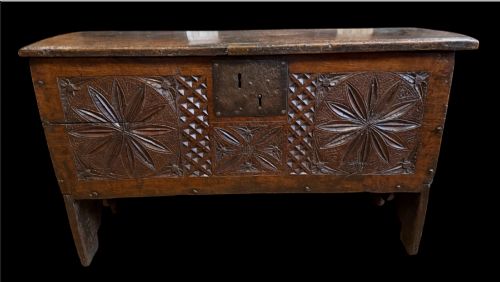


Planked Oak Chest
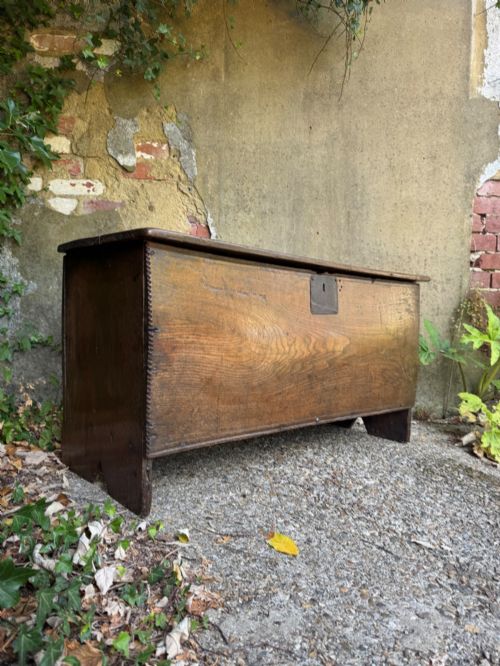
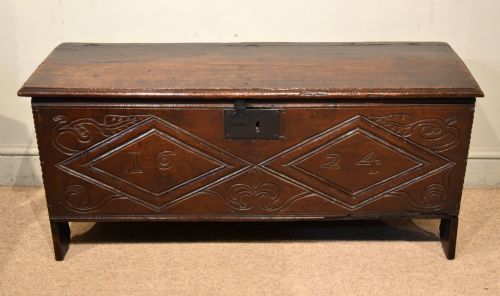
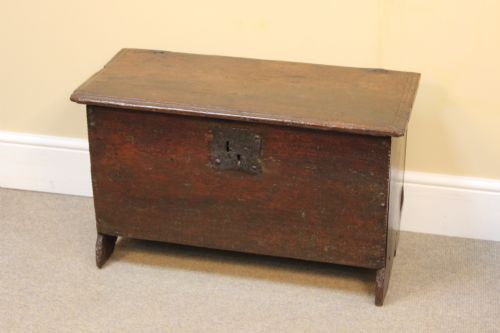
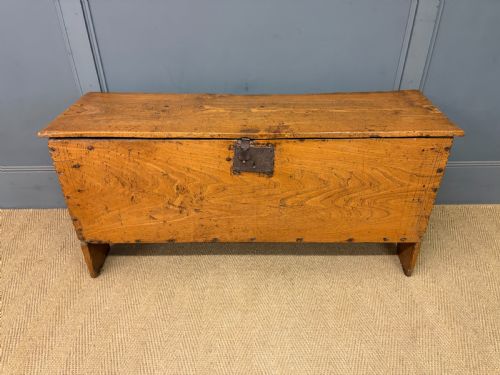
These planked oak chest examples are robust early storage boxes built from solid boards, offering tactile historical character and enduring utility for modern interiors.
Planked Oak Chest
When you search for a planked oak chest, you encounter utilitarian storage boxes constructed directly from vertical and horizontal boards rather than framed panels. These pieces span from the sixteenth century through the eighteenth century, alongside occasional twentieth-century interpretations like the Arts and Crafts movement.
The most common forms on this page are six-plank coffers and sword chests. These utilitarian designs utilise simple board construction for the front, back, ends, lid, and base.
Geographic origins recorded in the listings include regional British variants such as West Country and Welsh pieces. Timbers extend beyond standard oak to encompass elm, pollard oak, and inlaid wood variations.
How they were made
Construction relies on solid oak and elm boards joined directly at the edges and secured with early blacksmith-made ironwork, wrought iron, and robust fixings. Carpenters shaped these heavy planks using hand tools to create rigid enclosures designed to withstand hard domestic or institutional use.
Surface decoration on select examples involves simple carved fluting or inlaid wood rather than complex applied mouldings. These straightforward building techniques prioritise structural rigidity and straightforward utility over elaborate ornamentation.
Planked Oak Chest Retail Price Guide 2026
Typical asking prices for planked oak chest among the pieces listed under this phrase on Sellingantiques today, from the lower quarter to the upper quarter. They describe what is for sale here now, not the wider market.
Several chests on show are specifically proportioned as sword chests, built long and narrow to accommodate an unwelcome houseguest's ironmongery.
What varies in quality
The distinction between ordinary utility boxes and finer examples rests on the selection of timber and the sophistication of regional construction. Heavier boards, intact original hinges, and untouched surface patination elevate certain chests above standard utilitarian work.
The presence of specialised forms, such as sword chests or sixteenth-century origins with carved fluting and inlay, indicates higher ambition from the original maker. Condition of the underlying timber boards and survival of early ironwork heavily influence the standing of each piece.
Jack Grimble
The Planked Oak Chest Glossary
- Six-plank chest
- A primitive box constructed from precisely six individual boards pinned or nailed together at the edges. This method represents the earliest and most direct form of chest building.
- Sword chest
- A narrow, elongated storage box specifically proportioned to hold a sword or other arms. These pieces often date from the seventeenth century.
- Pollard oak
- Timber taken from trees that have been pollarded, producing a dense wood with highly decorative grain patterns. It appears in later Arts and Crafts revival pieces.
Planked Oak Chest: Frequently Asked Questions
How were planked oak chests used originally?
These robust boxes served primarily for securing household valuables, linens, and documents in domestic settings. Their sturdy board construction also suited them for institutional or military storage.
Over centuries, their role shifted from utilitarian strongboxes to decorative furniture pieces in homes.
What is the difference between a coffer and a chest?
In historical terms, the words are often used interchangeably to describe lidded storage boxes. A coffer traditionally implies a more secure receptacle for valuables.
Planked examples rely on simple board assembly rather than complex frame and panel joinery.
How do I date an early oak chest?
Dating relies on observing construction methods, tool marks left by hand planes, and the style of any iron hinges or locks. Early examples from the sixteenth and seventeenth centuries display simple board joints and heavy oak timbers.
Regional characteristics and subtle shifts in joinery help narrow the period of manufacture.
Can I use an antique coffer as a coffee table?
Their flat lids and sturdy proportions make these pieces suitable as low tables in living spaces. The internal compartment provides concealed storage for blankets or books.
Care should be taken to protect the historic wood surface from moisture and heat.