



Plank Top Side Table
These plank top side table pieces offer sturdy timber surfaces suited to everyday use, shaped by centuries of country workshop tradition.
Plank Top Side Table
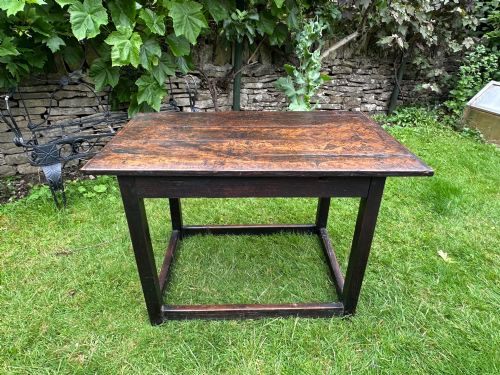
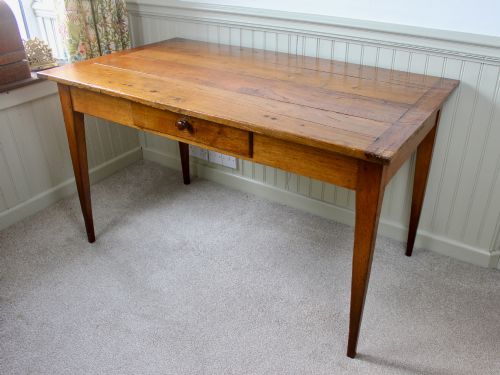
A plank top side table brings together robust boards joined to form a surface, supported by frames ranging from simple pine bases to turned oak legs. These items serve multiple domestic functions as side tables, occasional pieces, or small dining surfaces within traditional rooms.
The versions most frequently met on this page date from the seventeenth, eighteenth, and nineteenth centuries, constructed predominantly in oak and pine. Buyers encounter diverse regional styles, including French provincial designs and English farmhouse forms.
How they were made
Cabinet makers joined solid timber boards using traditional methods, often securing the underside with cleats or battens to maintain stability across the wood grain. Oak and pine served as the primary materials, selected for local availability and structural strength.
Joinery techniques relied on pegged mortise and tenon frames, while iron fixings appeared in specific structural roles or later repairs. Surfaces received hand planing and natural wax finishes rather than modern synthetic treatments.
Listings feature items spanning the seventeenth, eighteenth, and nineteenth centuries, constructed in oak, pine, mahogany, and iron.
What varies in quality
The quality of a piece rests in the choice of timber thickness and the integrity of the board joining, where superior examples display tight seams and minimal warping. Finer items retain their original structural timber without excessive replacement boards or modern hardware insertions.
Proportion and surface patination distinguish standard utility items from more refined country workshop output. Tables showing deep, natural wear from decades of domestic service often possess greater visual character than scrubbed or heavily restored surfaces.
The Plank Top Side Table Glossary
- Cricket table
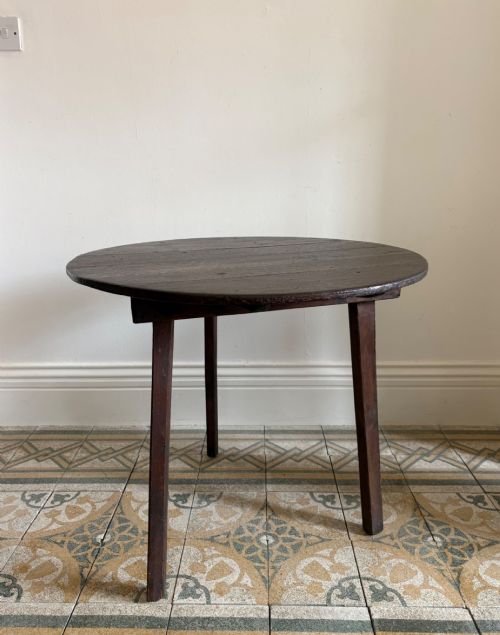
- A small three-legged round table originating in domestic use during earlier centuries. The tripod construction ensured stability on uneven flagstone floors.
- Plank top
- A surface constructed from two or more solid boards joined edge to edge. This method preceded large-scale industrial veneering.
- Provincial
- A term denoting items made in regional workshops outside capital cities. These pieces reflect local timber supplies and traditional vernacular designs.
- Trestle
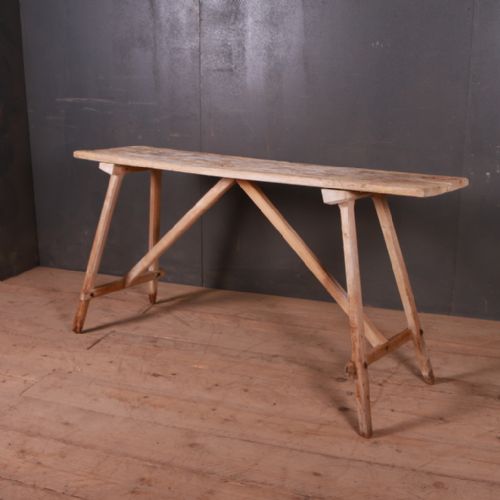
- A support structure consisting of horizontal beams connected to vertical uprights. This design allows maximum legroom beneath the table surface.
Plank Top Side Table: Frequently Asked Questions
What is a plank top side table?
A plank top side table is a domestic surface constructed from solid timber boards joined together and mounted on a wooden base or legs. These tables were traditionally built in regional workshops for everyday household tasks.
Today, they function as versatile accent pieces in hallways, living rooms, or kitchens, providing durable wooden surfaces with visible historical character.
How do I date an old wooden table?
Dating relies on examining the tool marks, timber species, construction joinery, and wear patterns across the base and top. Seventeenth and eighteenth-century examples often feature hand-sawn boards and pegged joints.
Later nineteenth-century pieces display machine-cut timber and standardised iron fixings, helping collectors distinguish between earlier vernacular work and Victorian production.
Are these tables suitable for daily use?
These tables were originally built for heavy domestic service, making them remarkably robust for modern living spaces. Solid oak and pine construction withstands regular use as a side or occasional table.
Proper care involves using wax polishes and protecting the aged wooden surface from excessive moisture and direct heat sources.
What woods were used in these tables?
English and European country furniture makers relied heavily on native hardwoods and softwoods such as oak, pine, and mahogany. Oak provided exceptional strength for seventeenth and eighteenth-century frames.
Pine and fruitwoods appeared frequently in provincial and Victorian kitchen tables, offering lighter alternatives for regional domestic utility.