



Pitched Pine Cabinet
A pitched pine cabinet brings a warm, resinous grain to a room, offering robust storage built to last through generations of daily use.
Pitched Pine Cabinet
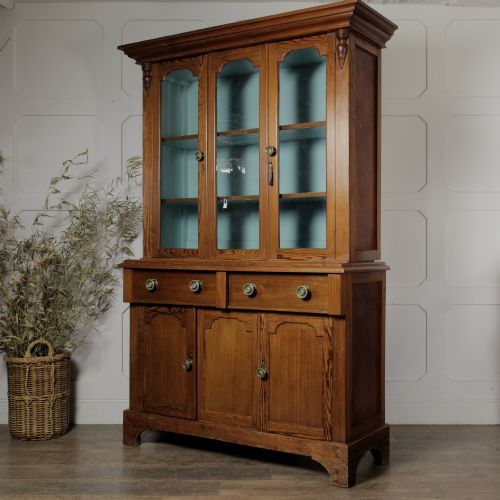
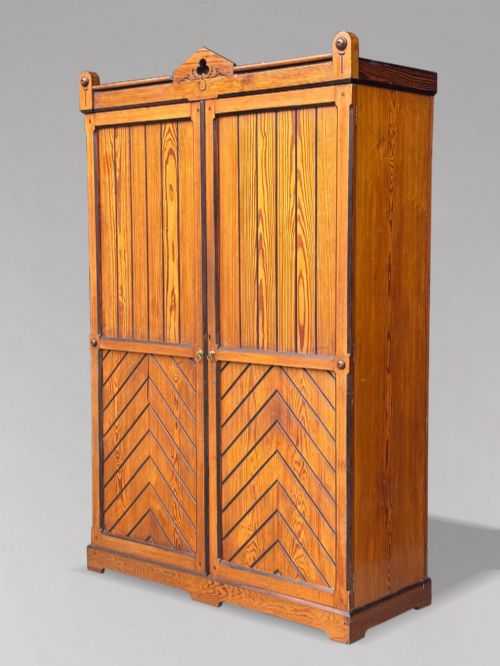
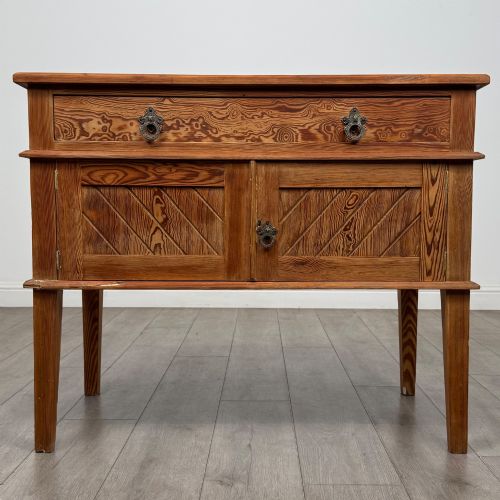
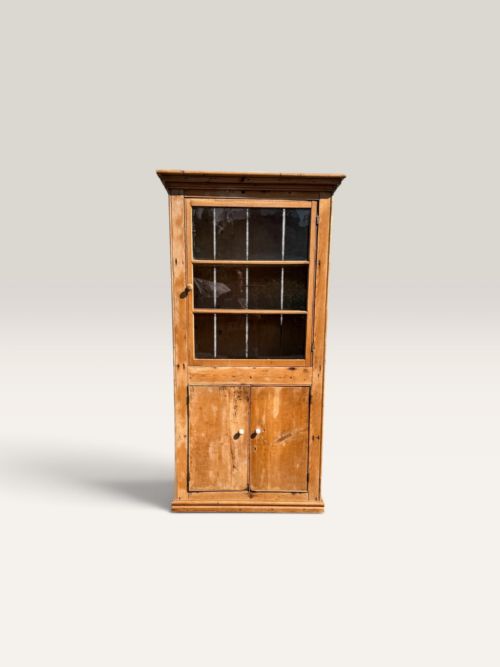
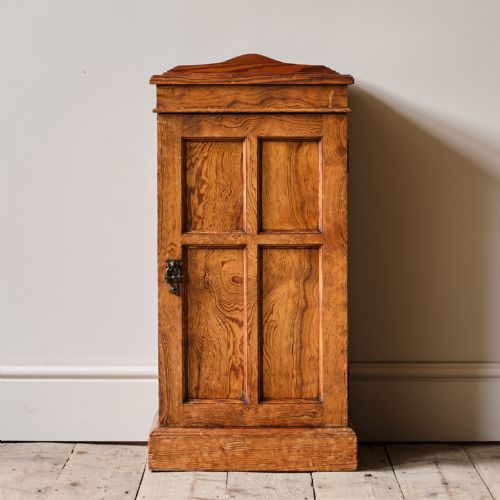
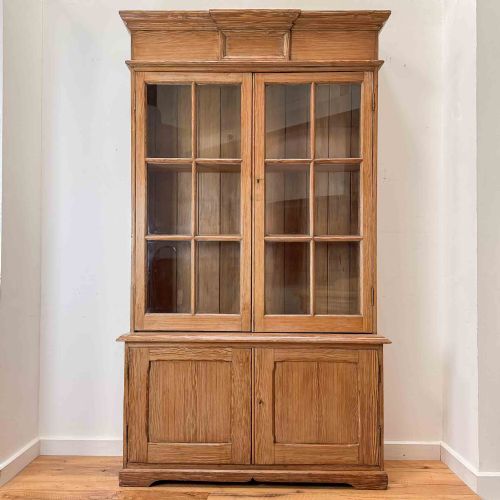
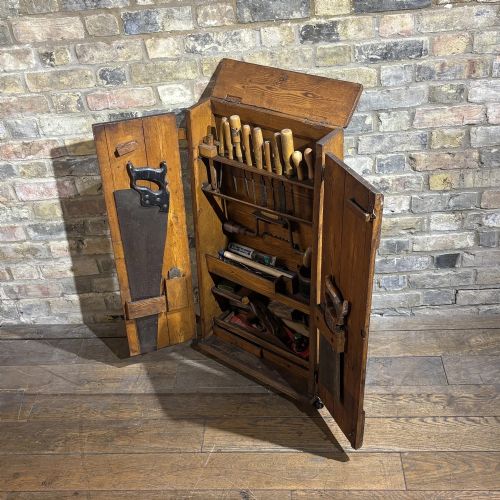
A pitched pine cabinet ranges from tall glazed bookcases and school cupboards to compact bedside pot cupboards and multi-drawer tool chests. You will frequently encounter Victorian examples alongside Edwardian and Arts and Crafts pieces, each showing the characteristic dense grain of the timber.
The forms span domestic furniture like wardrobes and dresser bases as well as institutional pieces such as plan chests and large multi-door cupboards. These items originate from varied settings, including British provincial workshops and institutional spaces, shaped by the practical needs of their era.
How they were made
Makers utilised pitch pine for its high resin content and durability, often pairing the timber with brass handles, iron hinges, and glass panels. Construction methods relied on solid wood joinery, sometimes accented by ebonised moulding or straightforward panel work.
Surfaces were left natural, waxed, or stripped down to expose the prominent grain and warm yellow-orange tones inherent in the timber. Hardware like ceramic pulls and metal locks were chosen for hard-wearing functionality in domestic or institutional environments.
Listings feature Victorian, Edwardian, and Arts and Crafts pieces utilising pitch pine, brass, and glass.
What varies in quality
Quality rests upon the selection of timber and the complexity of the piece, distinguishing large multi-drawer collectors' cabinets or buffet deux corps from simpler utility cupboards. Dense, well-figured grain and thoughtful proportions elevate an item well above standard workshop production.
The integrity of the construction and the retention of original hardware, such as brass fittings and glass, dictate the standing of a piece. Finer examples display meticulous attention to detail in their mouldings and drawer configurations.
J T Crockett
The Pitched Pine Cabinet Glossary
- Pitch pine
- A dense, resinous softwood prized for its prominent grain pattern and durability. It was widely used in British and institutional furniture during the nineteenth century.
- Buffet deux corps
- A large two-tier storage piece consisting of a lower cabinet surmounted by an upper section. This form provides substantial display and shelving capacity.
- Pot cupboard
- A small bedside cabinet originally designed to house a chamber pot. These compact units usually feature a single door enclosing a shelf.
- Plan chest
- A large, shallow-drawer cabinet built for storing architectural drawings and maps. They offer numerous wide tiers configured for flat paper storage.
- Apprentice cabinet
- A small-scale model created to demonstrate a woodworker's skill. These miniature chests exhibit the same joinery techniques found in full-size furniture.
Pitched Pine Cabinet: Frequently Asked Questions
What is a pitched pine cabinet?
A pitched pine cabinet is a storage piece constructed from resinous pine timber, featuring a distinctively strong grain pattern. These items range from small bedside cupboards to large glazed bookcases and multi-drawer chests.
Built primarily during the nineteenth and early twentieth centuries, they served both domestic and institutional purposes. Their robust construction has ensured their survival through decades of daily use.
How do I date a pitched pine cabinet?
Dating relies on architectural styles, hardware, and construction methods visible in the piece. Victorian and Edwardian examples often display characteristic period mouldings, brass fittings, or locks specific to their decade of manufacture.
Changes in form and secondary woods also offer clues to the era of production. Maker labels or institutional stamps can occasionally narrow down the exact decade.
How do I care for pitched pine furniture?
Care involves maintaining the wood with appropriate waxes and avoiding placement near direct heat sources. Because the timber contains natural resins, keeping the surface clean preserves the warm tone and grain definition.
Gentle dusting and occasional conditioning prevent the wood from drying out. Protecting the finish from moisture ensures the piece remains stable over time.