





Pitch Pine Chest
A pitch pine chest brings dense, resinous timber and robust nineteenth-century utility directly into a modern room.
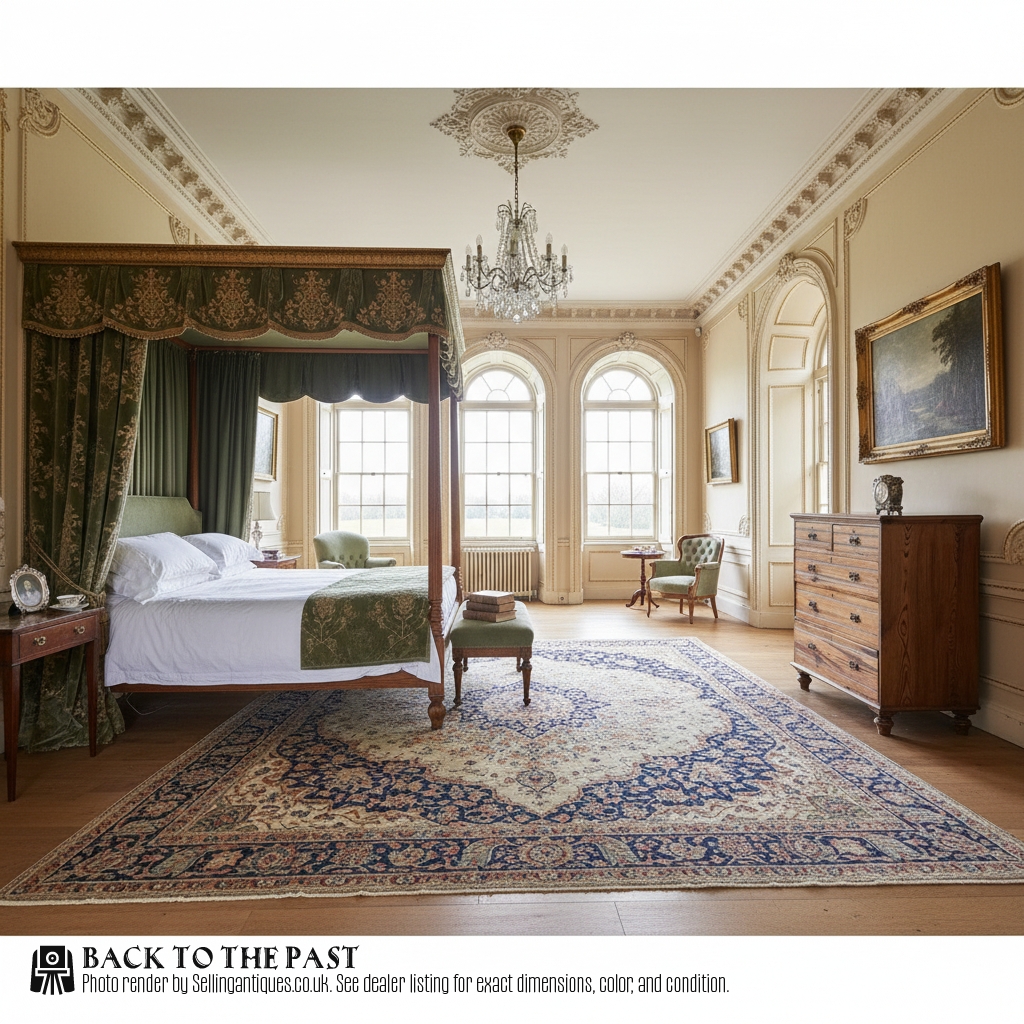
Pitch Pine Chest
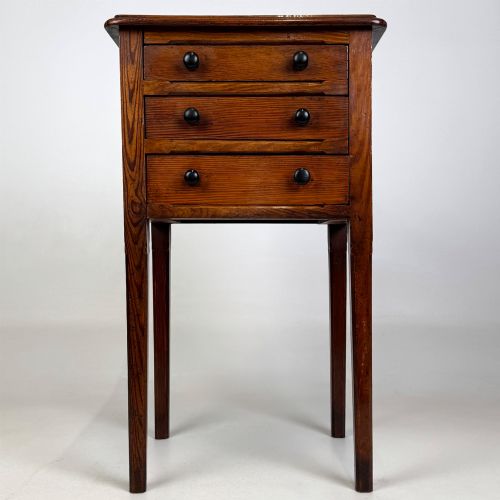
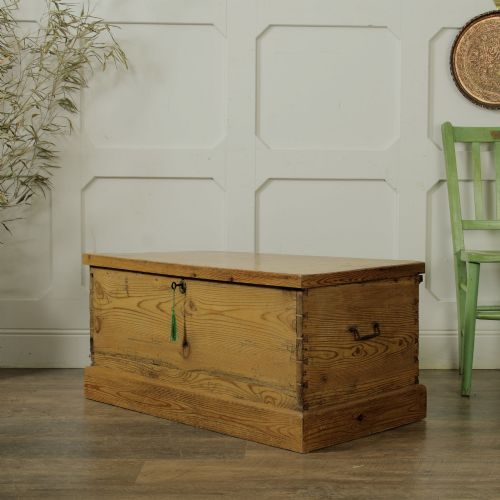
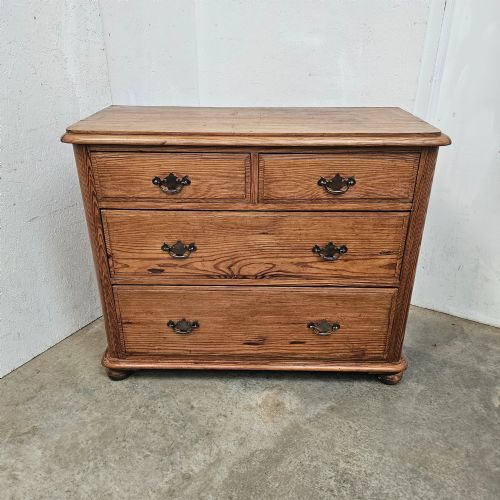
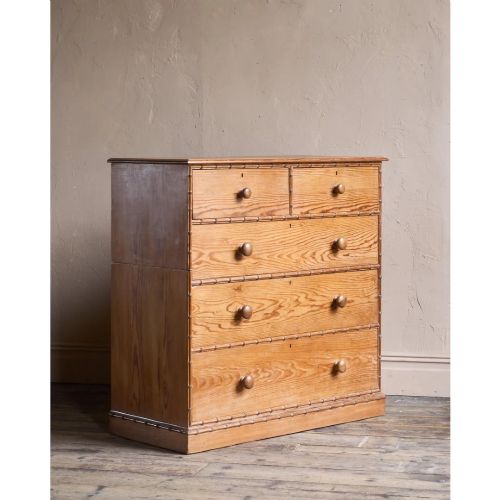
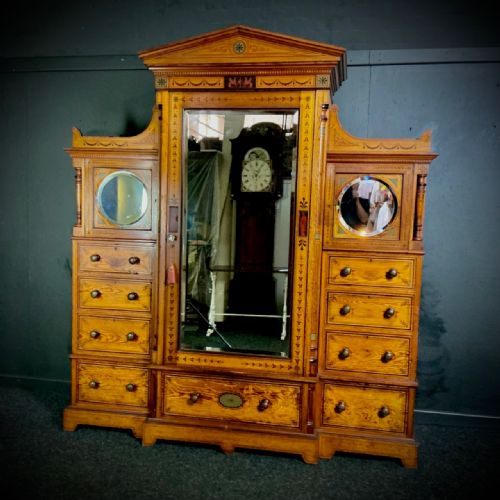
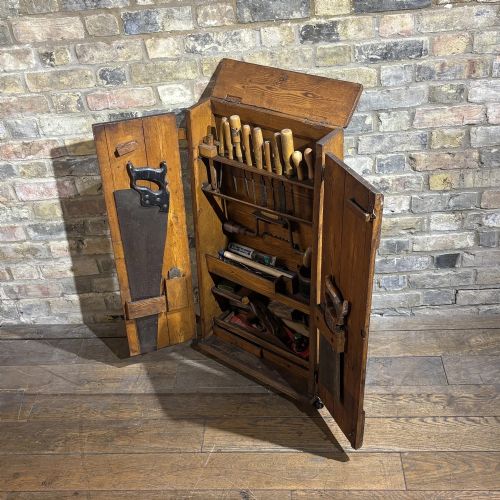
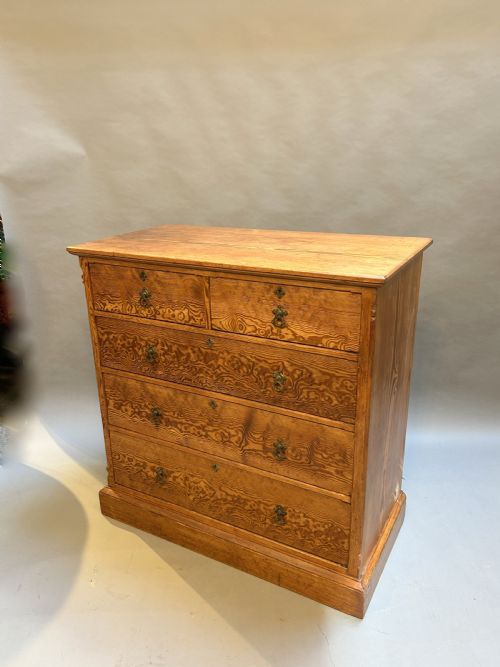
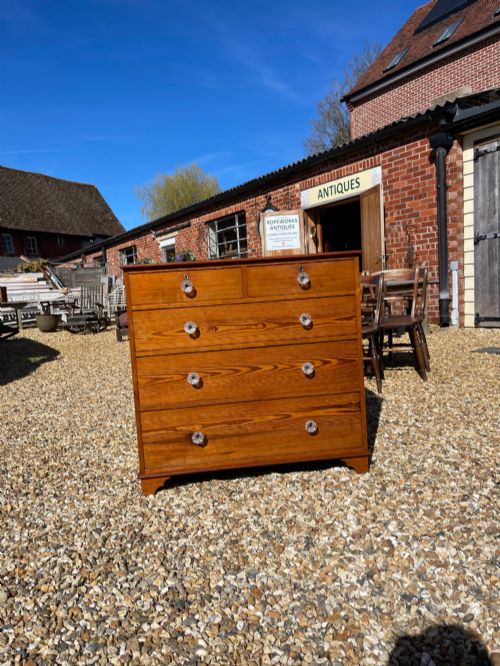
A pitch pine chest serves primarily as a sturdy storage form, most commonly found as a chest of drawers from the Victorian era. These pieces range from standard domestic chests of two short over three long drawers to specialised trunk formats, plan chests, and campaign items.
The selection spans nineteenth-century pieces alongside Edwardian examples, taking in maritime origins, Aesthetic Movement designs, and Gothic influences. Buyers encounter everything from tall Wellington chests to miniature apprentice cabinets and low blanket boxes.
Makers and workshops utilised the timber for practical furniture requiring durability, resulting in heavy, resilient carcases. The prevalence of nineteenth-century dates across the record shows that most surviving examples date from the height of the Victorian period.
Materials and construction
Makers built these pieces using pitch pine as the primary timber, valued for its prominent grain and resin content. This wood was frequently paired with brass hardware, iron hinges, and occasionally ebonised wood mouldings for contrast.
Joinery on these trunks and chests relied on solid board construction, dovetailed drawer boxes, and robust internal framing to handle heavy domestic or travel use. Metal bound corners and recessed brass handles appear on campaign and maritime versions designed for portability.
One recorded ship chest sailed aboard the SS Orontes before finding a second life on dry land.
Assessing quality
Quality rests in the grain figure of the pitch pine and the crispness of any applied mouldings or ebonised details. Pieces featuring dense, highly figured wood sit at the upper end of the range compared to plain utility boards.
Hardware integrity and original mounts distinguish standard furniture from campaign or maritime pieces fitted with heavy brass and iron work. The retention of original drawer configurations, internal partitions, and working locks elevates the standing of an individual chest.
Howard and Sons·J.T.Crockett
The Pitch Pine Chest Glossary
- Pitch pine
- A dense, resinous softwood with a pronounced grain pattern, widely used for nineteenth-century furniture and cabinetry. It resists wear and takes a deep finish.
- Campaign chest
- A portable chest built in sections with recessed brass handles and corner brackets for military or travel use. These pieces separate into distinct modular units.
- Wellington chest
- A tall, narrow chest of drawers secured by a locking hinged side stile that fastens over the drawer edges. This form originates from the nineteenth century.
- Aesthetic Movement
- A late nineteenth-century design style emphasising simplicity, decorative surface patterns, and artistic form over heavy historical revival. It appears on several chests in this record.
- Plan chest
- A wide, shallow multi-drawer cabinet originally designed for storing architectural drawings or maps. They provide flat, expansive storage surfaces.
Pitch Pine Chest: Frequently Asked Questions
How do I date a pitch pine chest?
Dating relies on construction methods, hardware styles, and recorded periods stretching from the early nineteenth century through the Edwardian era. Details like brass bound corners or ebonised mouldings point toward specific Victorian aesthetics.
Examining the drawer linings, backboards, and fastener types helps narrow the decade of production. Most examples in this group cluster around the late nineteenth century.
Were these chests used at sea?
Many examples originate from maritime or campaign contexts, including ships, boat builders, and travel service. These pieces feature reinforced brass corners, iron bands, and robust carrying handles.
Domestic chests of drawers share the same timber but lack the portable hardware built into trunks and campaign boxes designed for movement.
How should I clean pitch pine furniture?
Maintenance involves dusting with a soft cloth and occasionally applying a traditional beeswax to nourish the timber. Avoid excessive moisture, which can affect the resinous grain.
Preserving the original surface finish maintains the character developed over a century or more of domestic or maritime use.
What is the difference between a trunk and a chest of drawers?
Trunks and blanket boxes provide open internal storage accessed from a top lid, often featuring metal bindings and rope or brass handles for transport. Chests of drawers offer stacked horizontal drawers accessed from the front.
Both utilise pitch pine timber, but their internal organisation and intended placement within a room differ entirely.