


Vintage Ship Chest
These vintage ship chest examples combine utility and maritime history, offering practical storage with genuine nautical character.
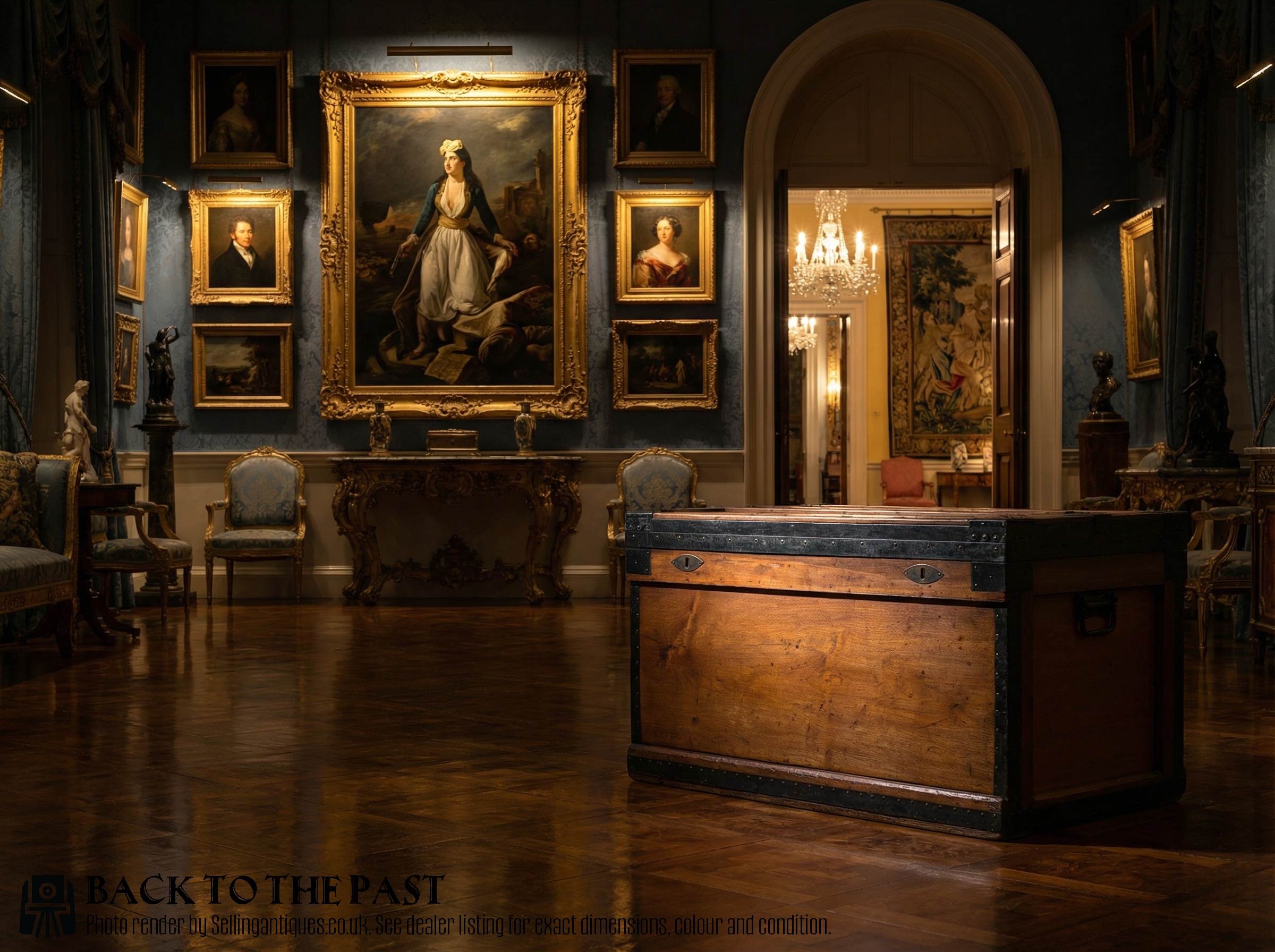
Vintage Ship Chest
A vintage ship chest serves as a robust container designed for maritime travel and storage aboard vessels. Buyers searching this phrase encounter sturdy trunks and chests originating from the nineteenth and early twentieth centuries.
The selections on this page span Victorian and Edwardian periods alongside distinct maritime and rustic farmhouse styles. Common forms include travelling trunks, silver chests, and fitted storage pieces fashioned for life at sea.
Origin variations range from English pine and oak constructions to Japanese tansu chests and continental aluminium shipping trunks. These items reflect the diverse practical needs of travellers and sailors across different global routes.
Materials and construction
Construction relies heavily on durable timbers such as pine, pitch pine, oak, teak, and wood, chosen for their resilience against harsh conditions. Many examples incorporate metal components, utilising iron or brass for structural reinforcement and protective corner brackets.
Surface treatments vary from simple painted finishes and black lacquer to paper linings and fitted internal compartments. Metal banding and iron bindings secure the wooden panels to withstand heavy handling during maritime journeys.
Current listings feature pine, oak, teak, and pitch pine materials alongside iron and brass hardware from the nineteenth and early twentieth centuries.
Judging quality and provenance
Quality separates standard utilitarian boxes from superior pieces through the integrity of the timber and the robustness of the iron or brass hardware. Fine examples retain original painted surfaces, maker labels, or specific historical associations like named steamships.
The sophistication of internal fittings, such as specialised compartments for silverware or travel gear, distinguishes better items. Superior construction involves tight dovetail joints and well-preserved structural hardware that remains fully intact.
The Vintage Ship Chest Glossary
- Pitch pine
- A resinous softwood utilised for its exceptional durability and resistance to moisture in marine environments. This timber forms the sturdy carcase of many maritime trunks.
- Tansu
- A traditional Japanese mobile storage chest built with modular drawers and compartments. These pieces reflect distinct joinery traditions distinct from European maritime boxes.
- Silver chest
- A heavy wooden storage box lined to protect valuable tableware and cutlery during transit. These containers often feature robust iron bindings for security.
- Seaman's chest
- A personal trunk built for a sailor to store belongings in cramped quarters aboard a ship. They frequently display maritime painted motifs or personal inscriptions.
Vintage Ship Chest: Frequently Asked Questions
What were ship chests used for?
Sailors and passengers used these robust trunks to store personal clothing, navigational instruments, and valuables during long ocean voyages. The heavy construction protected contents from rough seas and moisture.
Officers often utilised specialised fitted chests to secure silverware, uniforms, or documents while travelling between ports on steamships and sailing vessels.
How do I date a vintage ship chest?
Dating relies on examining construction methods, timber choices, and hardware styles such as iron or brass bindings. Nineteenth-century examples often feature hand-cut dovetails and painted pine.
Later pieces from the Edwardian era or the nineteen-twenties introduce materials like aluminium and different lacquer finishes. Inscriptions or labels relating to specific ships also help narrow the timeframe.
Are these chests waterproof?
While built to endure damp marine conditions and harsh weather at sea, vintage wooden chests are rarely completely waterproof today. Gaps can develop in the timber over decades of environmental changes.
They function best for dry indoor storage rather than exposure to continuous moisture or outdoor elements.
How do I clean a painted pine chest?
Maintenance requires gentle dusting with a dry or slightly damp cloth to preserve delicate historical painted surfaces. Avoid harsh chemical cleaners that might strip original paint or lacquer.
Applying a traditional wax can help protect exposed wooden areas without damaging the underlying patina.