

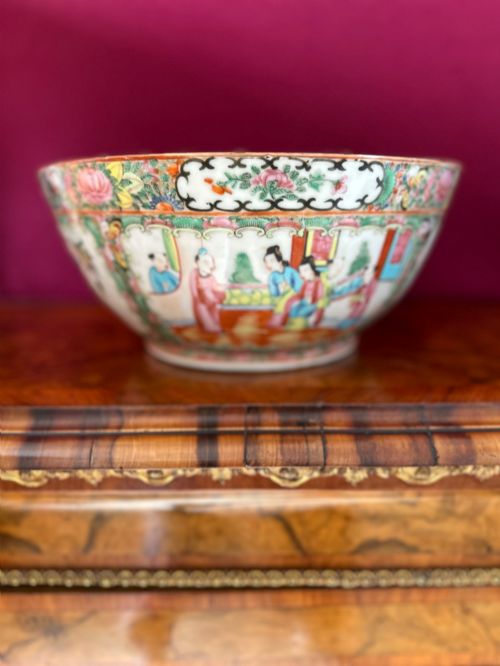


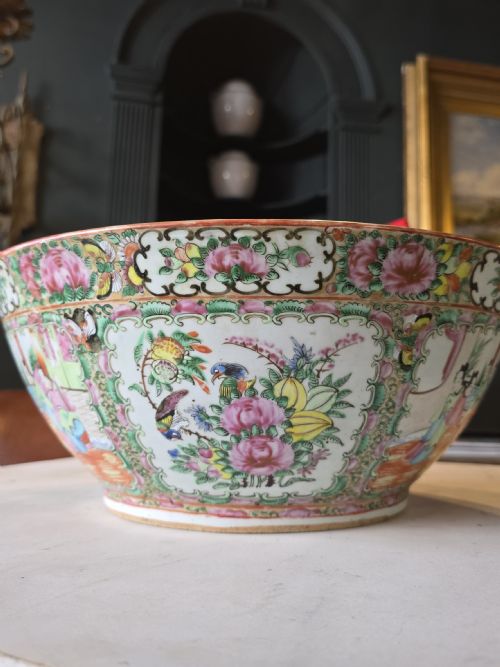


Pink Rose Bowl
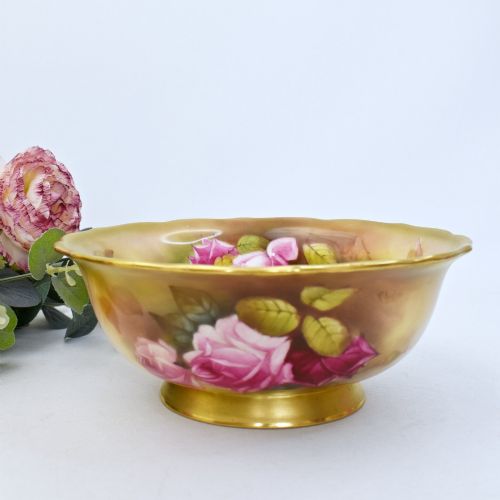
A pink rose bowl brings vibrant palette work and deep historical form to a table, uniting centuries of Chinese export porcelain and English porcelain traditions.
Pink Rose Bowl
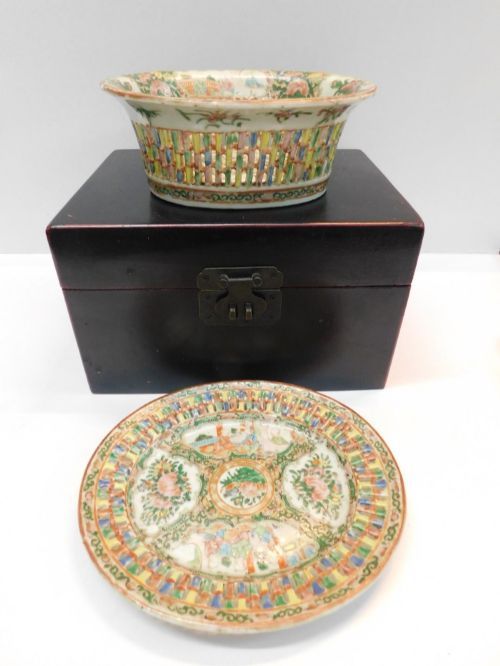
The objects stem from distinct geographic and stylistic origins, merging Qing Dynasty Chinese export production with English country and Edwardian studio ceramics. Most items present robust circular forms, pedestals, or reticulated stands designed to hold arrangements or display hand-painted floral narratives.
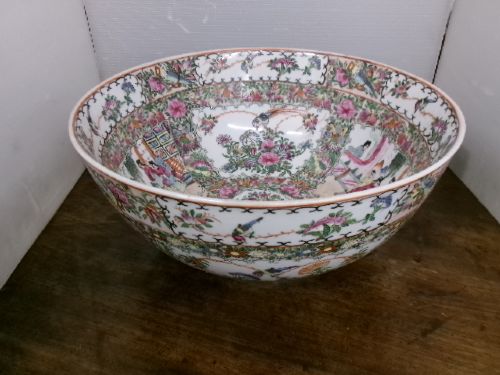
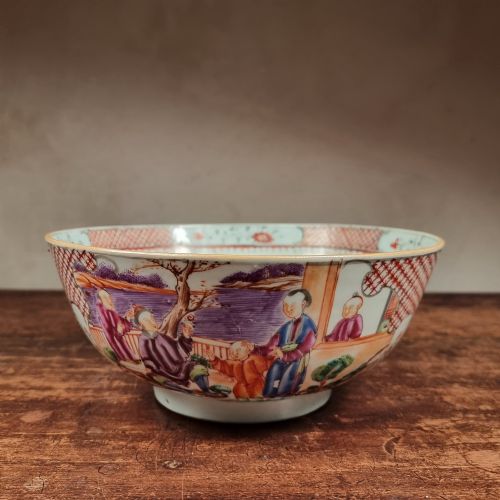
Buyers are most likely to meet large nineteenth-century Chinese export porcelain pieces decorated with Mandarin palettes and intricate pink rose motifs. These substantial vessels sit alongside compact tea bowls, saucers, and pedestal dishes sharing the same characteristic enamel pigmentation.
Materials and technique
The creation of these pieces relies fundamentally on high-fired porcelain and earthenware bodies, shaped by hand or thrown before receiving detailed surface treatments. Makers applied overglaze enamel pigments, incorporating extensive pink rose tones alongside contrasting gilt highlights and gold leaf details.
Artisans executed intricate hand-painted designs directly onto the ceramic surfaces, often depicting complex figural scenes, auspicious symbols, or botanical subjects. Certain vessels incorporate fine reticulated openwork cutting in the wet clay body, combined with matching porcelain stands and hardwood display supports.
Pink Rose Bowl Retail Price Guide 2026
Typical asking prices for pink rose bowl among the pieces listed under this phrase on Sellingantiques today, from the lower quarter to the upper quarter. They describe what is for sale here now, not the wider market.
Materials recorded across the selection include hard-paste porcelain, overglaze enamel, gold leaf, and carved hardwood.
Distinctions in quality
Quality rests primarily in the precision and complexity of the hand-painted brushwork across the porcelain surface. Finer examples display meticulous control in the overglaze enamel application, particularly where intricate facial expressions or dense floral medallions meet the pink rose palette.
The depth and preservation of the gilding and gold leaf ornamentation separate exceptional works from simpler production pieces. Superior porcelain forms also exhibit better-balanced proportions, crisper reticulation on basket stands, and signatures from noted makers or artists.
Reginald Austin·J. Southall
The Pink Rose Bowl Glossary
- Famille Rose
- A major palette of Chinese ceramic glazes introduced during the Qing dynasty, distinguished by its dominant opaque pink enamel colour derived from colloidal gold. This palette allowed artisans to render subtle gradations of tone in floral and figural subjects.
- Rose Medallion
- A specific style of Chinese export porcelain featuring distinct panels filled with alternating birds, flowers, and figures, arranged around a central medallion. The panels are typically framed by dense floral borders incorporating abundant pink roses and gilt work.
- Canton
- A major trading port in China from which vast quantities of porcelain were exported to Western markets during the eighteenth and nineteenth centuries. Pieces attributed to this origin often showcase vibrant hand-painted overglaze enamel decoration.
- Reticulated
- Describes ceramic or porcelain work featuring pierced or cut-out openwork patterns arranged in geometric or floral lattices. This technique required skilled handling of the clay body before the initial firing.
- Overglaze Enamel
- Decorative glass-like pigments applied to the surface of a previously fired and glazed ceramic piece before undergoing a subsequent low-temperature firing. This method permits a wide spectrum of colours including the signature pink rose hues.
Pink Rose Bowl: Frequently Asked Questions
How were pink rose bowls used historically?
These vessels served primarily as functional punch bowls for large gatherings or as decorative centerpieces and jardinières for holding flowers in elite interiors. Smaller variants functioned as tea bowls and saucers during formal dining and social rituals.
Over time, their roles shifted from utilitarian dining wares to prominent display objects showcasing fine craftsmanship and wealth in drawing rooms and parlours.
How do I distinguish Chinese export from English pieces?
Chinese export pieces, such as those from the Qing Dynasty, typically feature dense Famille Rose or Canton enamelwork, often on thicker porcelain bodies with Mandarin palettes. English pieces like Royal Worcester display distinct European floral interpretations and marked artist signatures.
Examining the foot rings, paste texture, and underlying potting characteristics also helps separate Eastern export production from Western studio porcelain.
What is the Qing Dynasty?
The Qing Dynasty was the last imperial dynasty of China, ruling from the mid-seventeenth century until the early twentieth century. It marked a period of immense porcelain production and export innovation.
Pieces from this era often carry reign marks or reflect specific stylistic periods such as the Qianlong or Daoguang eras.
How should I display a heavy porcelain bowl?
Heavy porcelain bowls require sturdy, flat surfaces away from high-traffic edges, and many nineteenth-century examples benefit from supportive hardwood stands. Ensuring the weight is evenly distributed prevents stress on the ceramic body.
Direct sunlight should be avoided to protect the stability of overglaze enamels and applied gilding over long periods.