
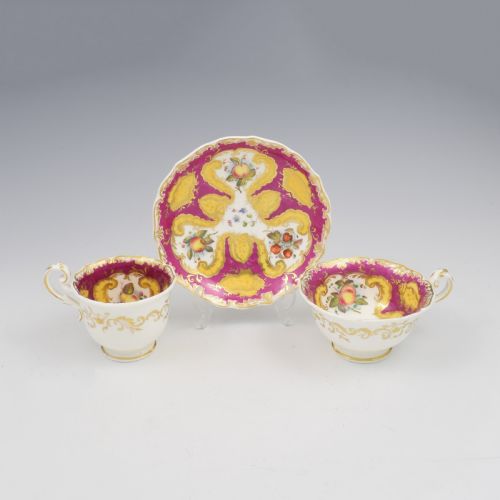


Pink Porcelain Cup
A pink porcelain cup brings quiet colour to a table, shaped by centuries of ceramic tradition.
Pink Porcelain Cup
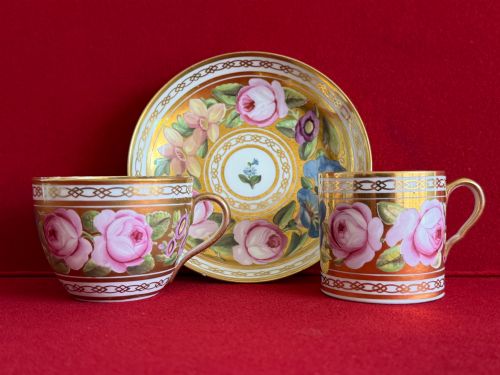
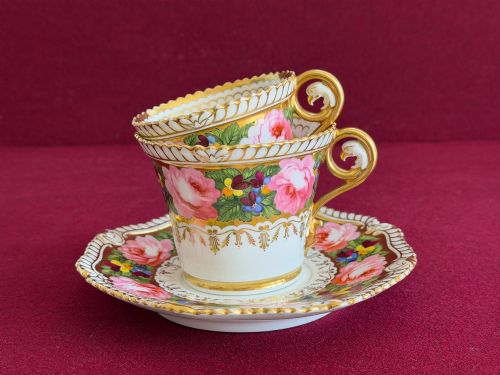
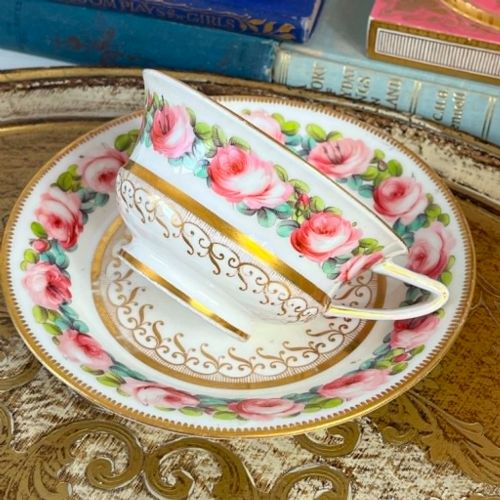
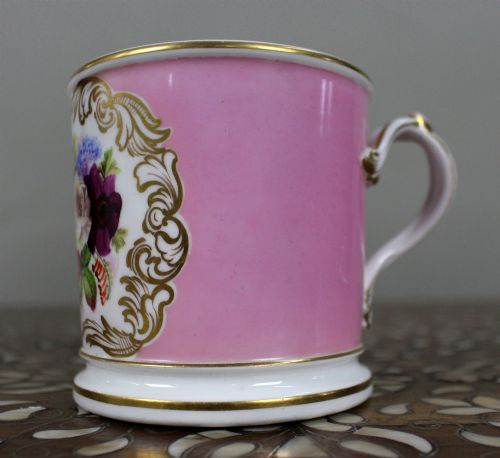
A pink porcelain cup covers tea and coffee drinking vessels alongside cabinet pieces and dessert sets originating from British, European, and Chinese kilns. The selection spans the eighteenth century through to the twentieth century, taking the form of teacups and saucers, coffee cups, demitasse, mugs, and tankards.
Buyers will most frequently encounter nineteenth-century English and European pieces decorated with floral grounds or handpainted motifs. Forms range from utilitarian Regency trios and Georgian teabowls to decorative cabinet cups and larger twentieth-century table wares.
Examples stretch from early Chinese export porcelain through to classic Regency works from factories such as Worcester, Spode, and Coalport. Each period brings distinct forms and firing techniques, showing how makers handled pink grounds and enamel pigments over generations.
How they were made
Makers utilised hard-paste porcelain, soft-paste porcelain, and bone china, shaping vessels by hand or moulding them in clay bodies before initial kiln firing. Once shaped, pieces received underglaze decoration or were painted with enamel colours.
Application of gold leaf, gilding, and gold gilt highlighted rims, handles, and borders, followed by a secondary firing to fuse the metallic details to the glaze. Pink tones were achieved through specialised enamel mixtures, sometimes laid down as a solid ground colour like Rose Pompadour before further painting took place.
Listings feature porcelain pieces spanning the eighteenth, nineteenth, and twentieth centuries, utilising materials from enamel and gold leaf to bone china and soft-paste porcelain.
What varies in quality
Quality rests upon the fineness of the porcelain body and the precision of the handpainted detail, particularly in floral motifs and gilded borders. Finer vessels show thin, translucent walls and careful control during the glazing and firing processes.
The sophistication of the design, whether a delicate Regency pattern or an eighteenth-century Chinese export palette, dictates the standing of the piece. Makers noted for superior paste formulas and skilled brushwork command greater recognition among collectors.
Chamberlain Worcester·Grainger Worcester·Coalport Porcelain·Manufacture de la Reine·Kusnetzoff·Spode·Royal Worcester·Ridgeway·Bloor Derby
The Pink Porcelain Cup Glossary
- Soft-Paste Porcelain
- An artificial porcelain composition fired at lower temperatures than hard-paste porcelain, common in eighteenth-century European factories. It produces a warm texture and distinct translucency.
- Bone China
- A type of porcelain containing bone ash, developed in England to create a strong, white, and translucent body suitable for delicate teaware. This material supports thin-walled vessel construction.
- Rose Pompadour
- A rich pink enamel ground colour used on porcelain wares, named after the French royal favourite. Factories employed this hue to create striking decorative fields.
- Demitasse
- A small cup used for serving strong black coffee or espresso, frequently paired with a matching saucer. These pieces often feature fine gilding and painted highlights.
- Teabowl
- A handleless drinking vessel used before cups with handles became standard in European tea service. Originating from Chinese forms, they require careful handling due to the absence of a handle.
Pink Porcelain Cup: Frequently Asked Questions
How do I date an old pink cup?
Dating relies on observing paste composition, shape characteristics, and any painted pattern numbers or factory marks found on the base. Comparing the handle style and floral painting techniques against known period examples helps narrow the decade of production.
Early pieces often feature soft-paste bodies and delicate handpainting, while later nineteenth-century wares utilise bone china and machine-assisted transfer printing alongside enamel work.
Can I use these cups for daily tea?
Many antique porcelain and bone china cups remain structurally sound for gentle daily use, provided they are washed by hand rather than placed in a dishwasher. Hand washing protects fragile gilding and delicate enamel decorations from abrasive detergents.
Regency and Victorian cups with extensive gold leaf require particular care to preserve the metallic surface over years of handling and hot liquids.
What is a cabinet cup?
A cabinet cup is a decorative vessel made primarily for display within a cabinet or on a shelf rather than for regular tea service. These pieces often feature elaborate painting, unusual forms, or commemorative designs.
They frequently include matching stands and showcase the highest skills of the porcelain painter and ceramic manufacturer.
How are hard-paste and soft-paste different?
Hard-paste porcelain uses natural kaolin clay and petuntse fired at very high temperatures, resulting in a dense, vitrified body that resists scratching. Soft-paste porcelain combines glass frits and white clays fired at lower heat, creating a softer texture with a warmer glaze appearance.
Distinguishing between the two involves examining the translucency and how the glaze interacts with light under magnification.