


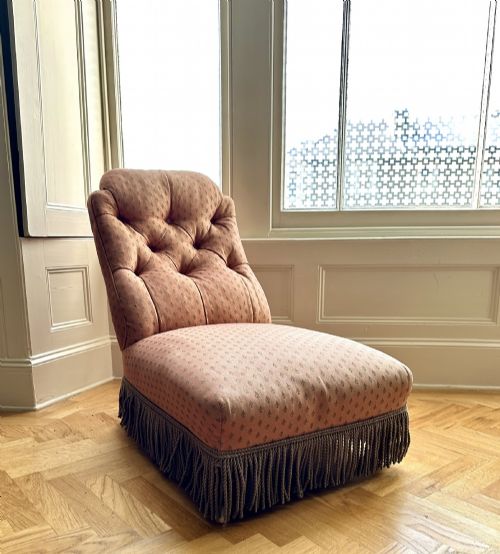


Pink Bedroom Chairs
Pink bedroom chairs bring a distinct touch of period character to a dressing room or boudoir through upholstered comfort and rich timber frames.
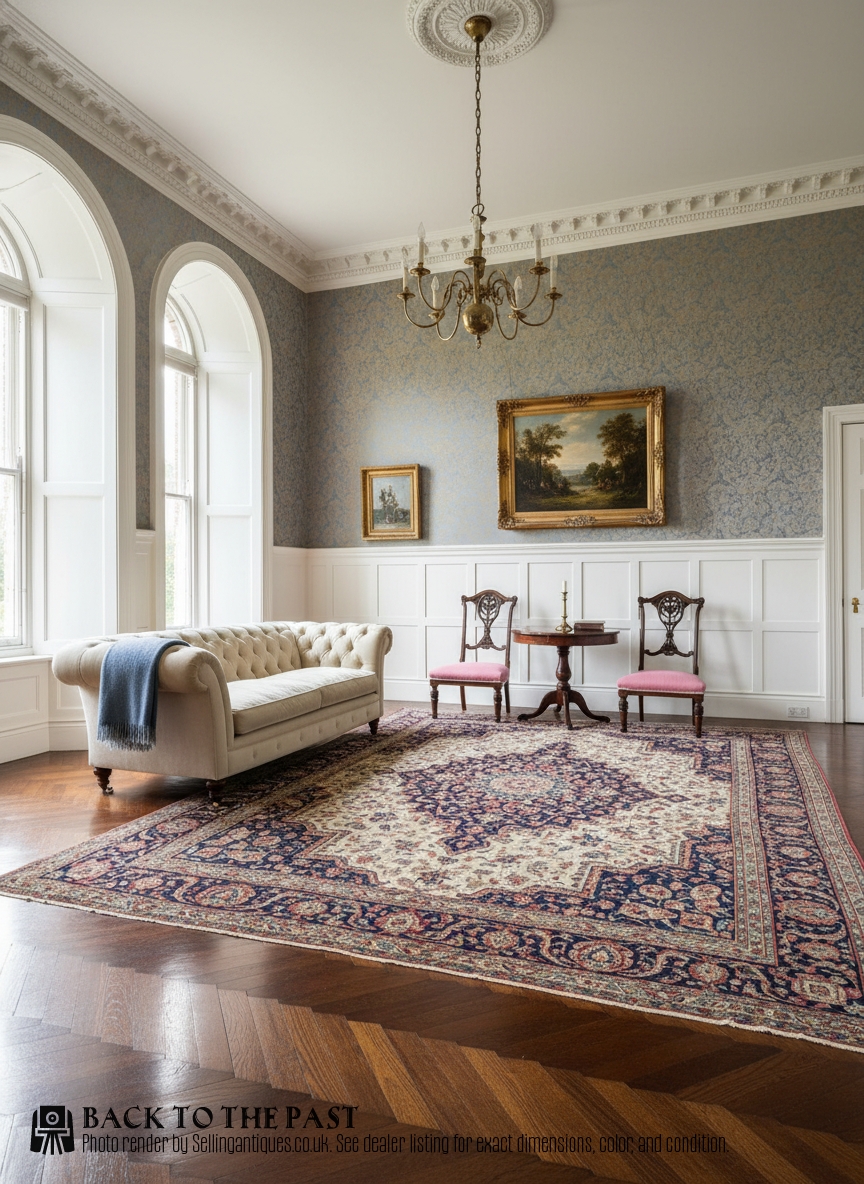
Pink Bedroom Chairs
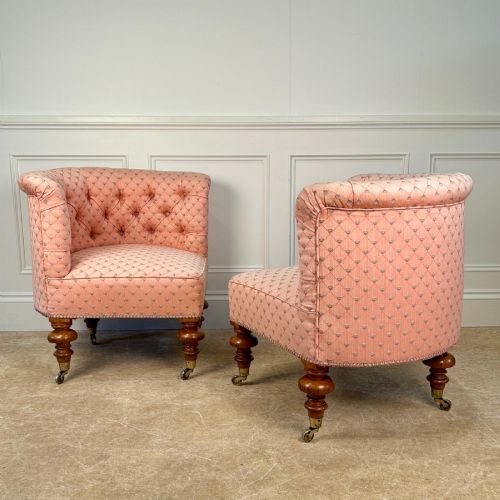
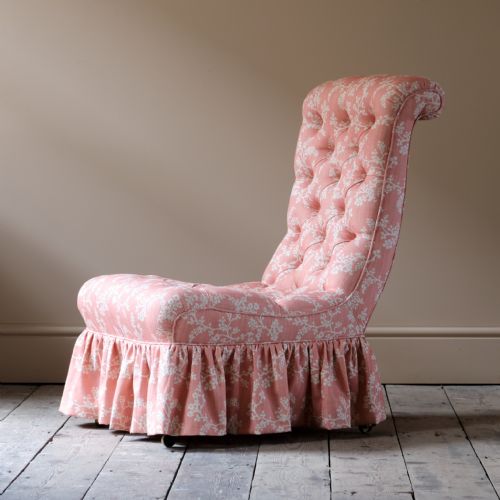
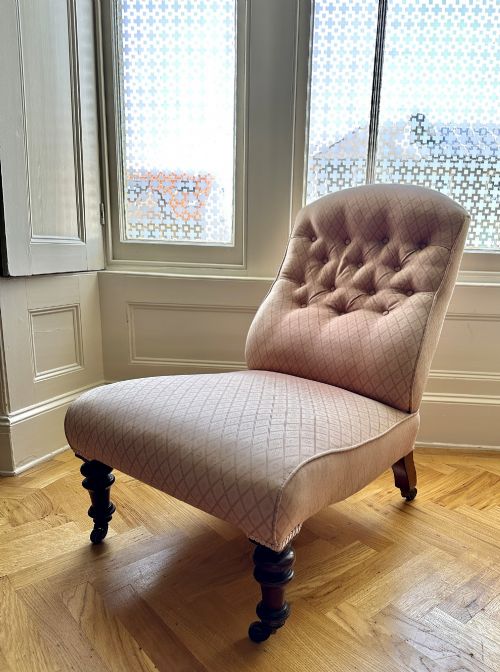
Pink bedroom chairs encompass nineteenth-century nursing chairs, slipper chairs, and low occasional seats designed for dressing rooms and private chambers. These pieces frequently surface in Victorian walnut or mahogany alongside Edwardian interpretations, offering low-slung seating positions intended for comfort during grooming or relaxation.
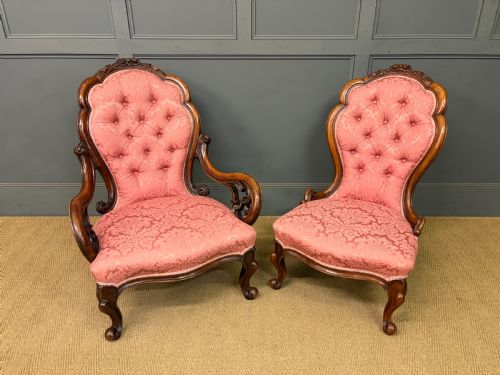
The selection ranges from button-backed Victorian low chairs to French-influenced giltwood salon pieces and inlaid satinwood frames. Walnut and mahogany predominate among the timber structures, often paired with textile coverings ranging from velvet to patterned fabric.
How they were made
Cabinet makers utilised dense hardwoods such as walnut, mahogany, oak, and satinwood to construct robust frames, frequently incorporating hand-carved details, barley twist turnings, or giltwood finishes. These structural woods support intricate upholstery techniques, including deep buttoning and fringed trims.
Textiles played a central role in the construction of these seats, utilising plush velvet, woven fabrics, and textiles stretched over coil springs and horsehair stuffing. Frames often incorporated exposed polished wood alongside concealed padding to balance structural support with tactile comfort.
Historical archives show a distinct prior fondness for pink velvet upholstery on French button-back bedroom chairs.
What varies in quality
The distinction between standard production and superior craftsmanship lies in the crispness of the timber carving and the sophistication of the frame proportions. Examples attributed to established makers exhibit finer joinery, refined turnings, and more substantial hardwood frames.
Upholstery execution and frame integrity dictate the overall standard of each piece, with superior examples maintaining rigid joinery and carefully balanced spring or stuffing tension. The choice of primary timber, such as figured walnut or inlaid satinwood, further elevates the tier of the piece.
Gillows·Hindley And Sons·Lamb Of Manchester
The Pink Bedroom Chairs Glossary
- Nursing chair
- A low-seated Victorian chair designed originally for feeding infants or personal grooming, featuring a compact frame that sits close to the floor.
- Slipper chair
- An upholstered bedroom seat without arms, traditionally positioned near a dressing table or bedside for ease of putting on footwear.
- Button back
- An upholstery technique where buttons are pulled deep into the padding to create a diamond pattern of tufts.
- Giltwood
- Timber that has been coated with a thin layer of gold leaf or metallic paint to achieve a decorative surface finish.
Pink Bedroom Chairs: Frequently Asked Questions
What distinguishes a nursing chair from a slipper chair?
Nursing chairs sit exceptionally low to the ground and frequently feature a high, supportive back designed for comfort during extended periods of sitting in private chambers.
Slipper chairs share a similarly low profile but typically lack arms entirely, making them well-suited for tight spaces near dressing tables.
How do I identify a Victorian bedroom chair?
Victorian examples generally rely on dark hardwoods such as walnut or mahogany, often displaying carved balloon backs, button-tufted upholstery, or turned legs.
Construction from this period commonly utilises heavy internal webbing and traditional stuffing materials beneath the top fabric layer.
Where should I place a bedroom chair?
These compact seats function effectively beside a dressing table, in the corner of a guest room, or paired with a matching footstool for a quiet reading corner.
Their modest proportions allow them to fit into alcoves and spaces where standard armchairs would prove too bulky.
What timber types are most common?
Walnut and mahogany appear most frequently across nineteenth-century examples, providing dark, rich tones that contrast with lighter fabric coverings.
Later Edwardian and revival pieces occasionally introduce satinwood, giltwood, or oak into the construction.