
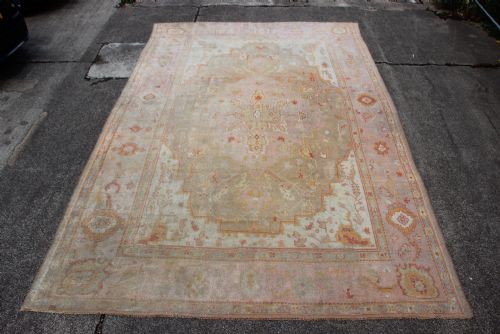
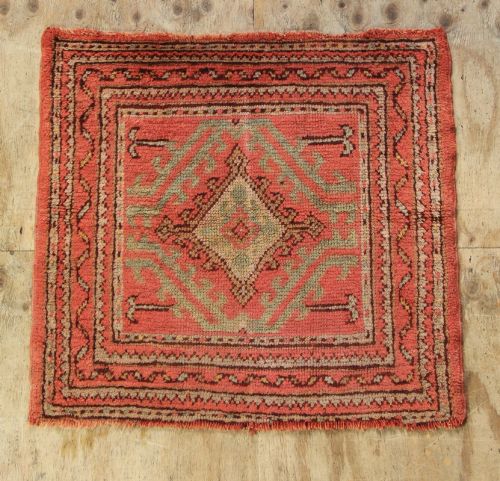


Pink Anatolian Rug
A pink anatolian rug brings warmth and history to a floor, offering muted pastel tones and traditional motifs woven in wool and cotton.
Pink Anatolian Rug
A pink anatolian rug draws on traditions from Turkish weaving centres, spanning the nineteenth and early twentieth centuries. These floor coverings range from small mats to large carpets, produced across various Anatolian regions.
The pieces appearing here include Oushak, Mujur, Kirsehir, Panderma, and Sivas styles. Each brings distinct regional designs, from classic medallions to prayer niches and willow tree patterns, rendered in soft or pale pink grounds.
Buyers seeking a pink anatolian rug typically encounter hand-knotted wool pile structures on cotton foundations. These textiles reflect Ottoman heritage through established regional aesthetics and time-honoured weaving techniques.
Materials and construction
Weavers constructed these rugs using wool for the surface pile, providing durability and a soft texture underfoot. Foundations typically utilise cotton for stability and precise structural alignment.
Dyes achieved the characteristic pink and pastel shades seen across these Turkish carpets. Traditional knotting techniques bound the wool pile securely to the warp and weft threads.
Current listings span the nineteenth century up to the nineteen-twenties, utilising wool and cotton materials exclusively.
Quality factors in traditional weaving
Knot density and structural tightness dictate the longevity and definition of the woven pattern. Finer knots allow intricate medallion and floral details to appear crisp and clear.
The condition of the wool pile and the integrity of the foundation determine how well a carpet survives daily use. Even wear across the surface indicates balanced handling over generations.
The Pink Anatolian Rug Glossary
- Anatolian
- Pertaining to the geographic region of Asia Minor, known historically for distinct carpet weaving traditions. These rugs reflect the diverse cultural influences of the Turkish interior.
- Oushak
- A traditional style of Turkish carpet originating from the town of Ushak, noted for soft pastel colour palettes and large-scale floral or medallion designs. These pieces often feature muted pink grounds.
- Prayer rug
- A small carpet featuring a mihrab or niche design, traditionally used for Islamic prayer. The motif points towards Mecca during use.
- Medallion
- A central ornamental design motif placed in the middle of the carpet field. This focal point anchors the surrounding geometric or floral patterns.
- Pile
- The vertical or slanted wool threads that form the usable surface of the rug. Pile thickness varies depending on the regional tradition and intended function.
Pink Anatolian Rug: Frequently Asked Questions
How do I clean an antique rug?
Gentle surface brushing and professional specialist washing maintain the wool pile without damaging the natural dyes.
Avoid harsh chemical detergents and excessive moisture to preserve the structural integrity of the cotton foundation.
Can I place these rugs in high traffic areas?
Traditional wool pile construction provides natural resilience against everyday foot traffic in residential spaces.
Using a quality underlay prevents slipping and reduces friction between the rug and the floorboards.
How do I date an old Turkish carpet?
Examination of the natural dyes, wool consistency, and regional knotting style helps determine the approximate period.
Stylistic elements like Ottoman medallion layouts also provide clues to the era of manufacture.
What is the difference between an Oushak and a Sivas rug?
Oushak carpets generally feature looser weaves with soft pastel palettes and expansive floral motifs.
Sivas rugs tend to show finer knotting with more detailed medallion compositions originating from central weaving workshops.