

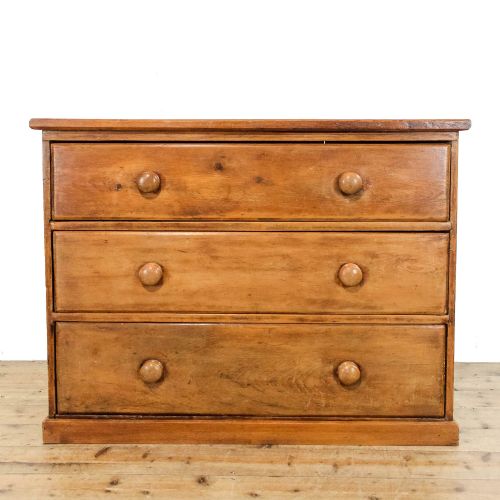
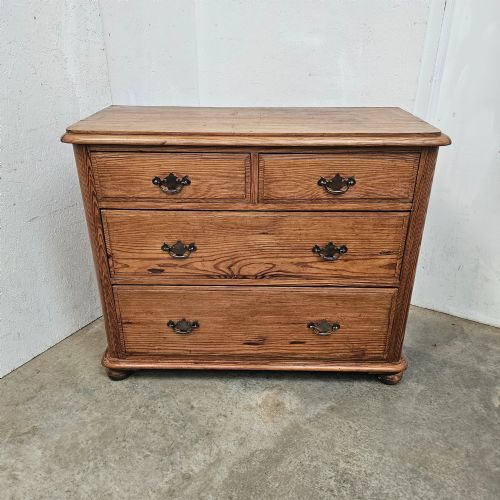
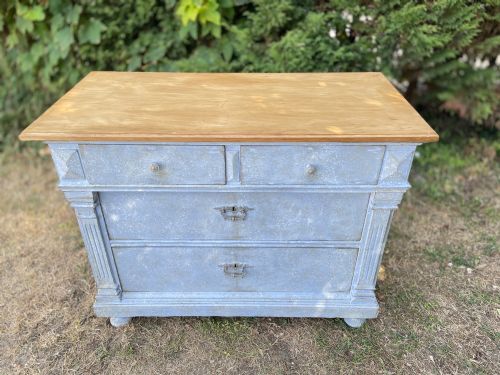
Pine Wooden Storage Drawers
Pine wooden storage drawers are practical utilitarian pieces offering honest storage space for the home.
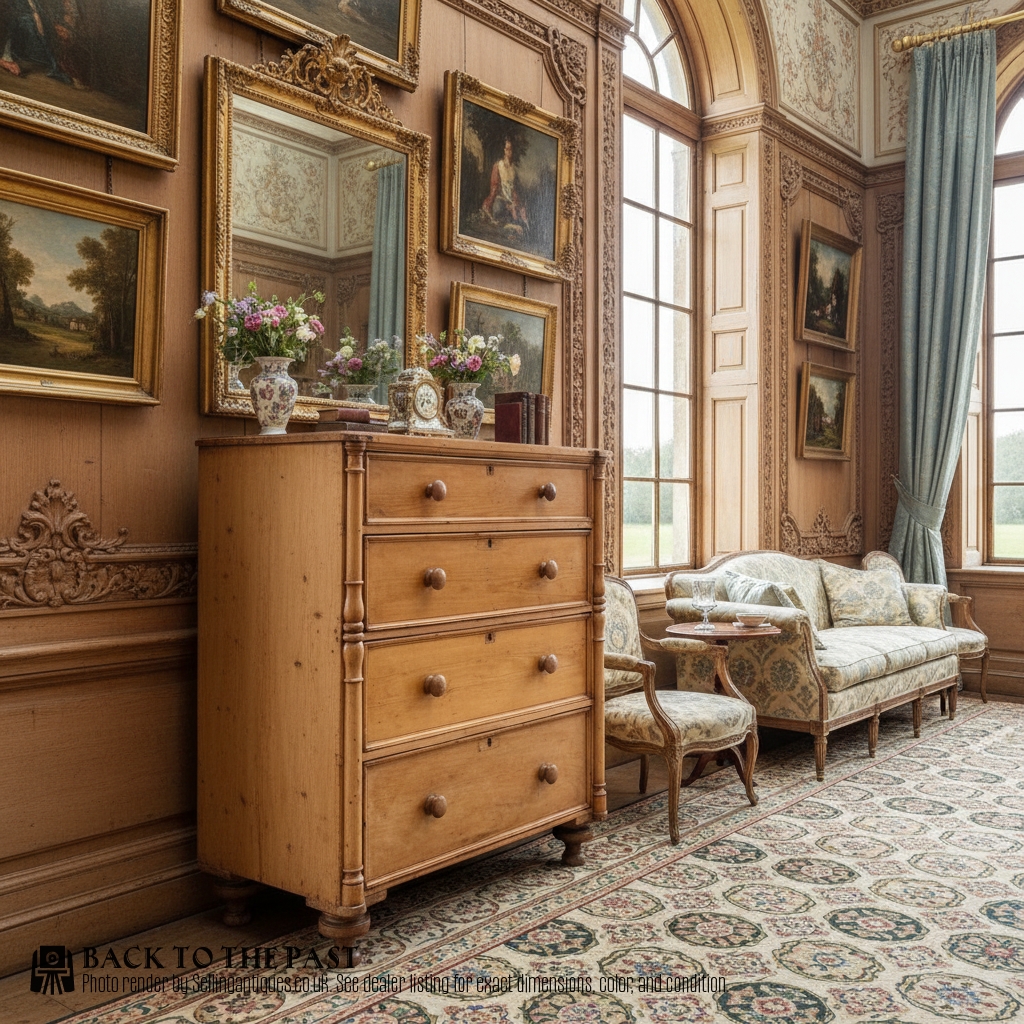
Pine Wooden Storage Drawers
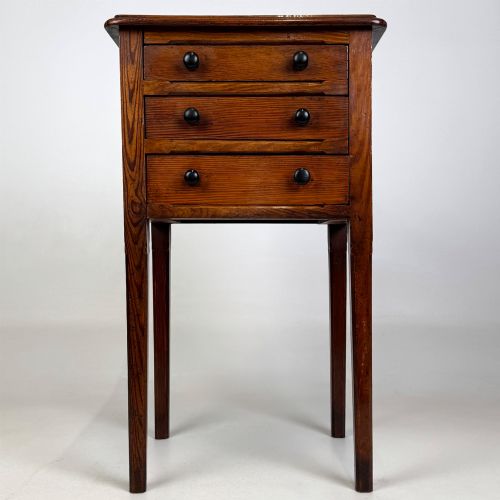
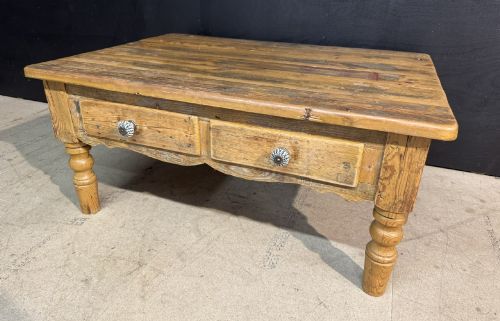
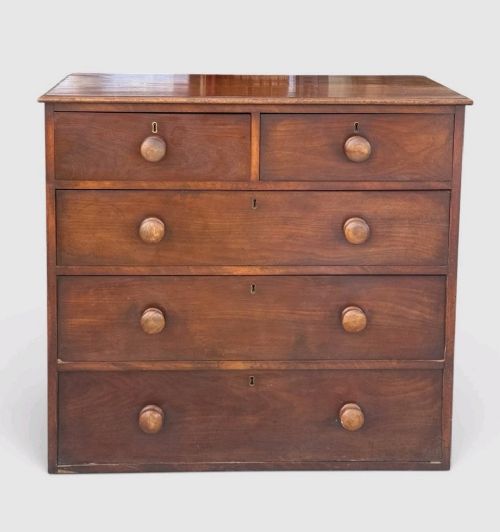
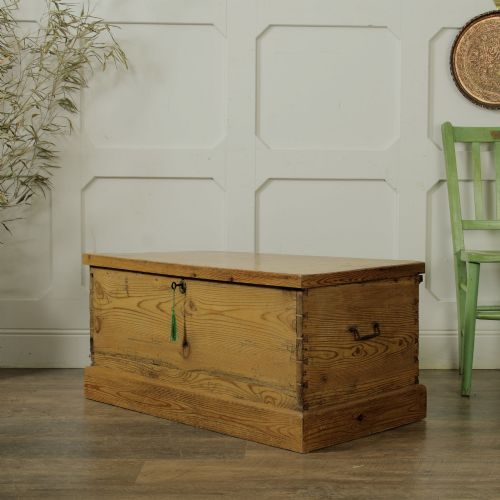
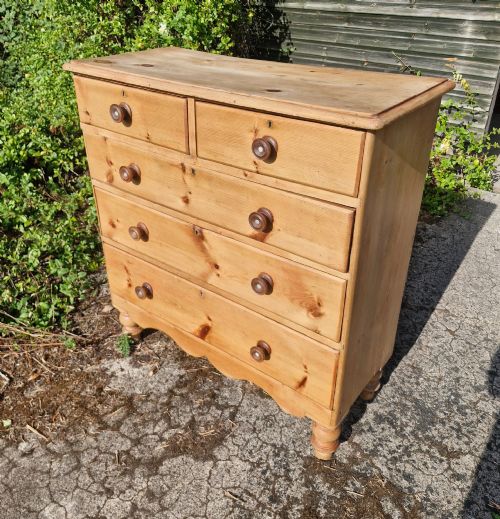
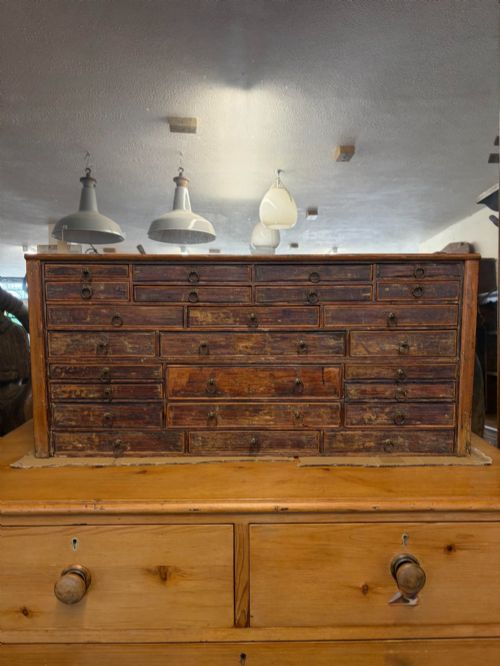
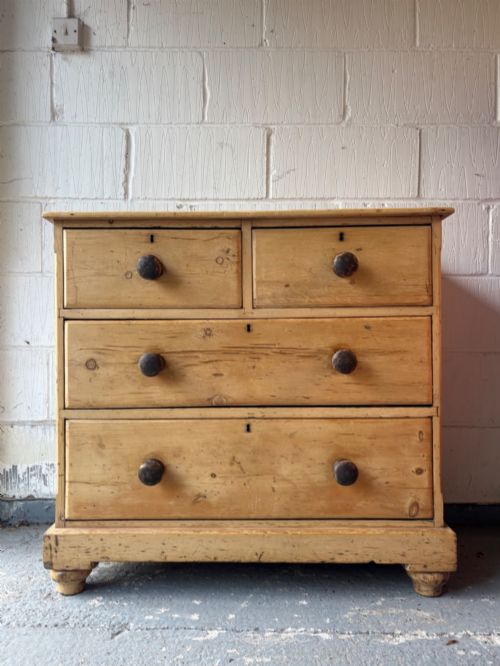
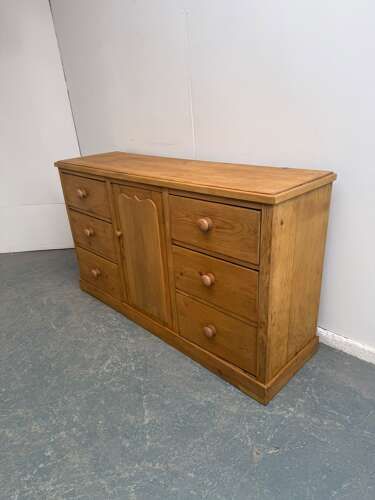
When you search for pine wooden storage drawers, you encounter practical utility furniture designed for holding domestic items. The selections on this page range from compact collector cabinets and blanket chests to tall chests of drawers and kitchen dresser bases.
Most examples originate from the Victorian and Georgian periods, alongside Edwardian and early twentieth-century pieces. You will frequently find multi-drawer banks, kitchen dressers, and mule chests constructed from standard pine or dense pitch pine.
Regional variations include English country pieces, French Gustavian styles, and Irish workshop builds. Each form serves a distinct organizational purpose, from bedroom storage to workshop utility.
How they were made
Carpenters utilised durable softwoods such as standard pine, pitch pine, and deal for the primary carcase and drawer construction. Timber was frequently joined using traditional methods and finished with wax, paint, or stain.
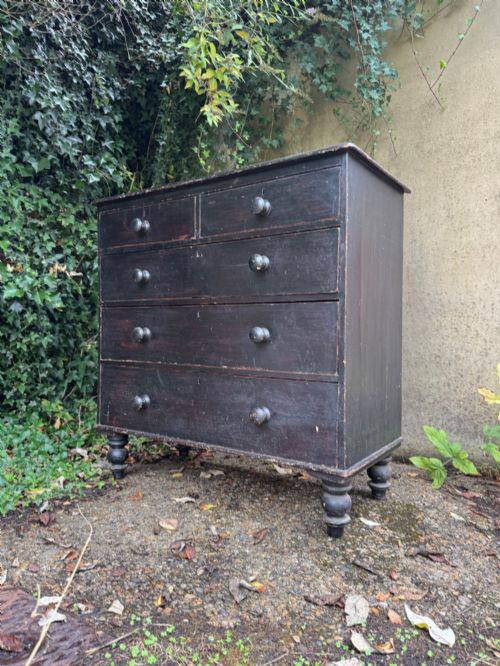
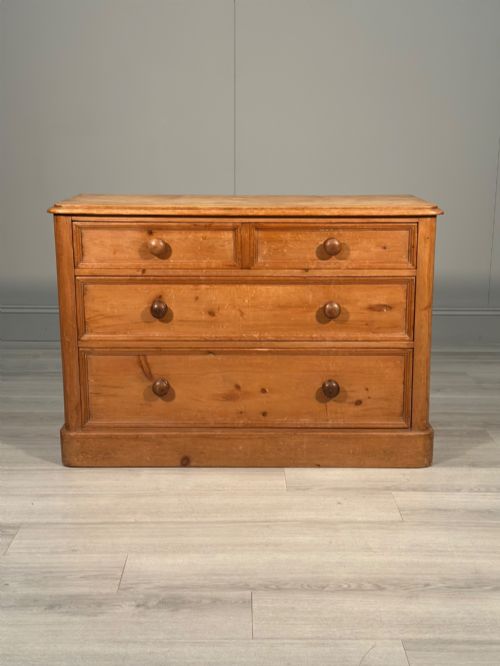
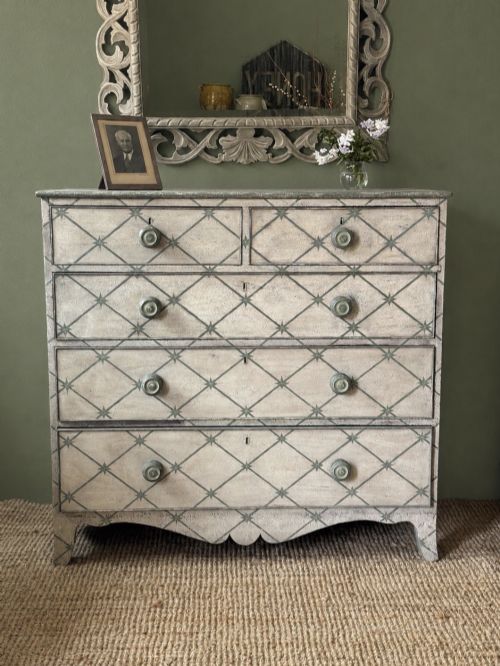
Hardware elements incorporate brass, iron, and ceramic fittings alongside turned wooden bun handles. Surfaces display original paint layers, scrubbed bare timber, or polished finishes applied during the nineteenth and early twentieth centuries.
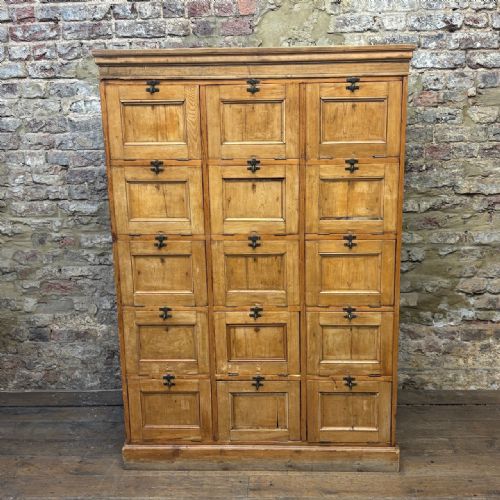
Some multi-drawer banks retain their original merchant origins, having previously served business premises in coastal towns.
What varies in quality
The standard of a piece rests upon the integrity of the timber selection and the retention of original surface treatments like historic paint or warm wax patination. Heavier pitch pine and dense deal examples exhibit greater structural resilience over time.
Subtleties in construction, such as dovetailed drawer boxes and unaltered brass or iron hardware, separate standard utility items from finer cabinetmaker output.
The Pine Wooden Storage Drawers Glossary
- Pitch pine
- A dense, resinous variety of pine timber known for distinct grain patterns and durability. It was frequently utilised for heavy-duty Victorian furniture and trunk construction.
- Mule chest
- A storage chest fitted with one or more drawers at the base beneath the main lift-top compartment. This form bridges the evolution between the traditional blanket box and the chest of drawers.
- Bank of drawers
- A multi-drawer cabinetry unit designed for sorting large quantities of small items, documents, or specimens. These industrial and domestic pieces often feature numerous small pull drawers.
- Deal
- An older trade term for fir or pine timber boards imported from northern Europe. It served as a primary material for utilitarian furniture and secondary drawer linings.
- Scrubbed pine
- Timber surfaces that have been repeatedly washed or scrubbed clean of old finishes to reveal the pale natural grain. This treatment is commonly found on kitchen dresser tops and work tables.
Pine Wooden Storage Drawers: Frequently Asked Questions
What periods do these storage drawers come from?
The pieces span the Georgian, Victorian, and Edwardian eras, with many dating through the nineteenth century.
Manufacturing dates extend into the early twentieth century, incorporating industrial utility designs alongside country workshop furniture.
How were these pine chests originally used?
They served practical domestic and workshop functions, acting as bedroom clothing stores, kitchen linen holders, and merchant storage.
Specialised variants like collector cabinets and carpenters chests held tools, specimens, and small household goods.
Are original painted finishes common?
Surviving examples frequently display historic painted surfaces, original wax patination, or scrubbed bare timber.
Finish treatments vary from plain waxed deals to decorative painted schemes seen on regional vernacular furniture.
What is the difference between standard pine and pitch pine?
Pitch pine contains a higher resin content, resulting in a heavier, harder board with prominent grain patterns.
Standard pine offers a lighter weight and paler tone, widely utilised across general domestic furniture of the nineteenth century.