
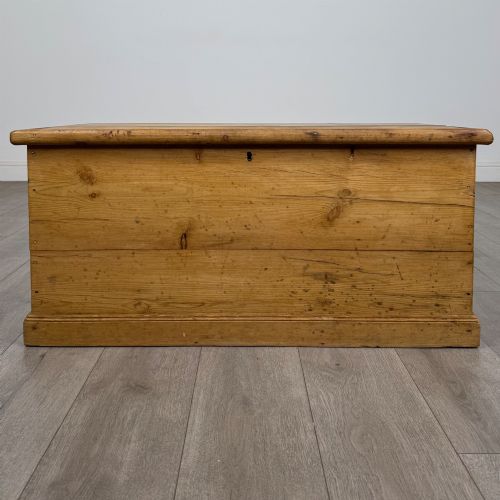
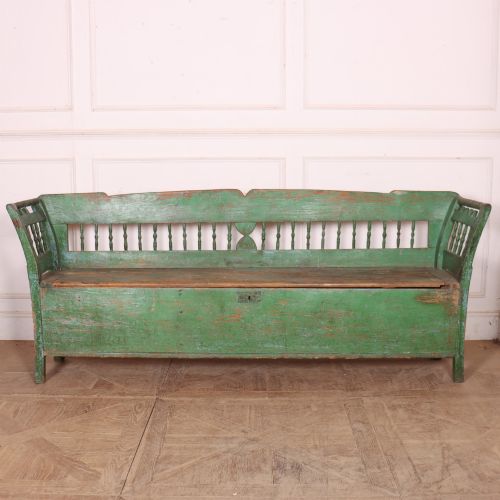
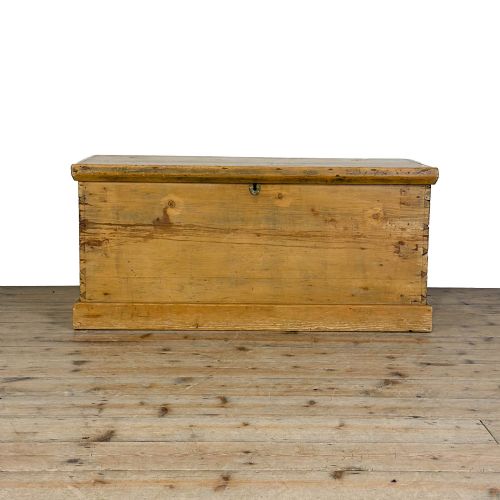
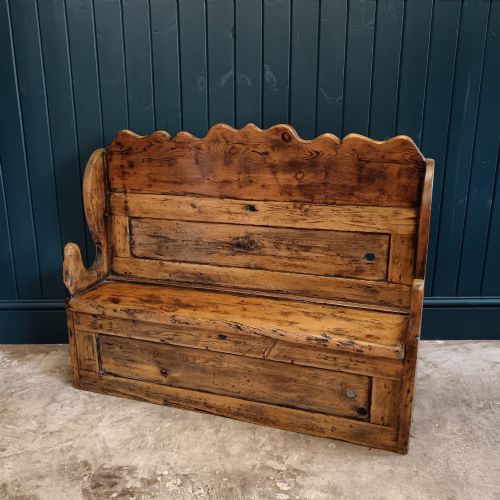
Pine Wooden Box
A pine wooden box offers honest utility and tactile warmth, bringing straightforward historic storage into modern rooms.
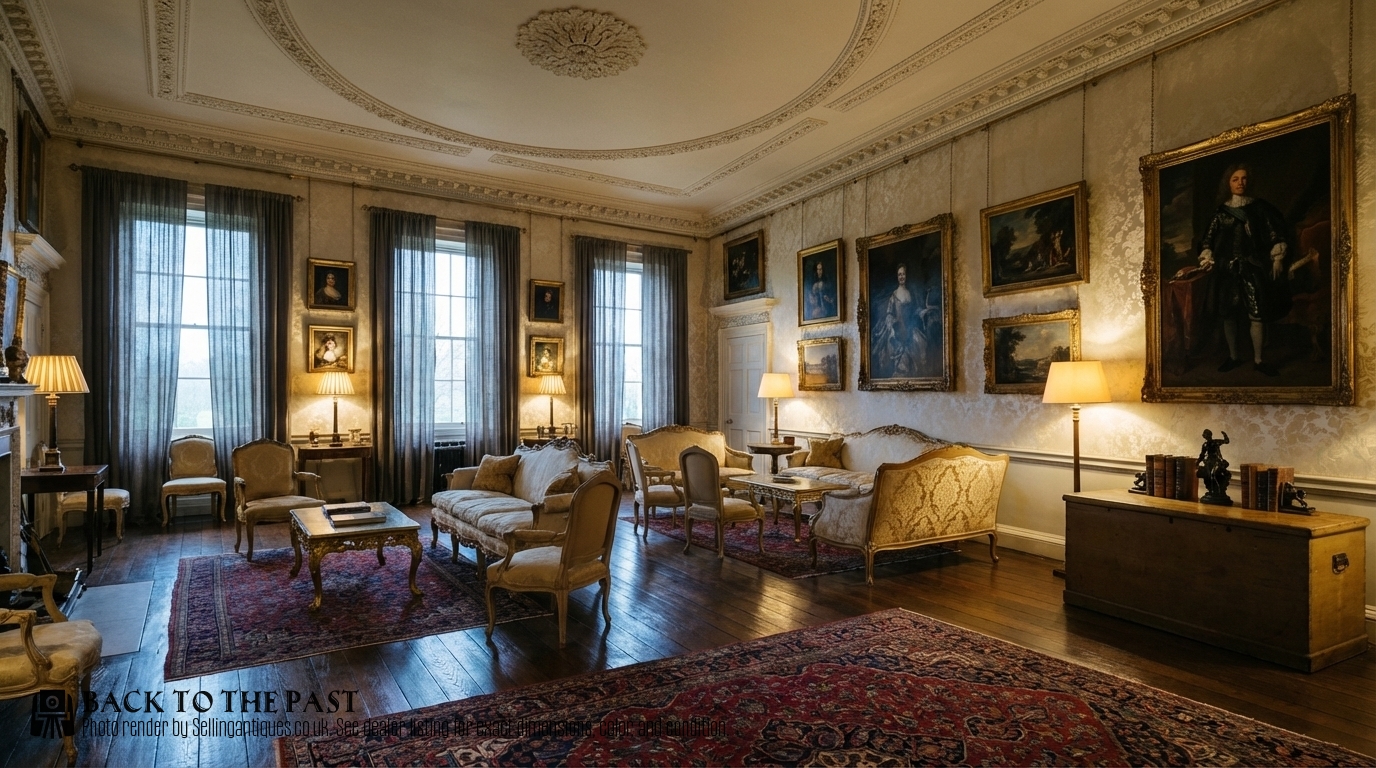
Pine Wooden Box
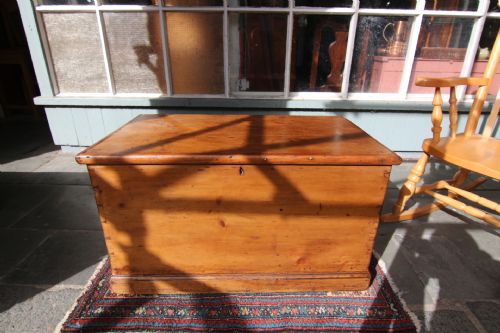
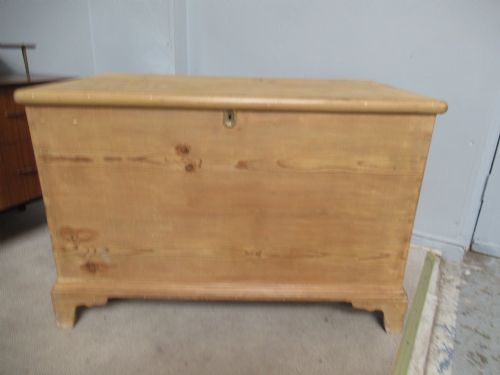
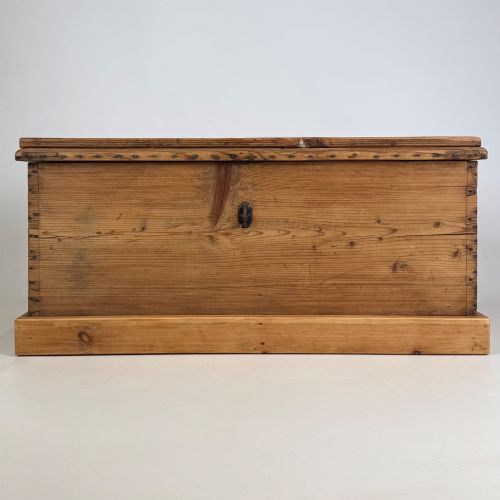
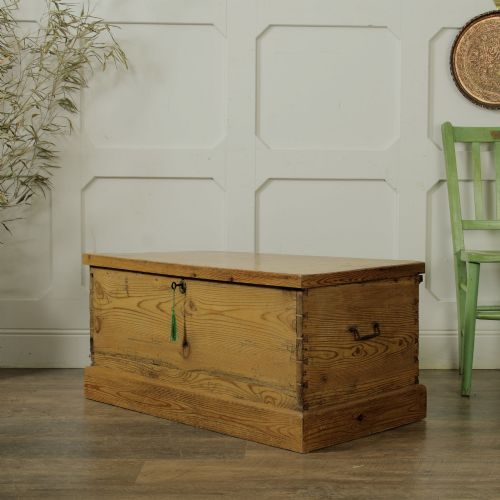
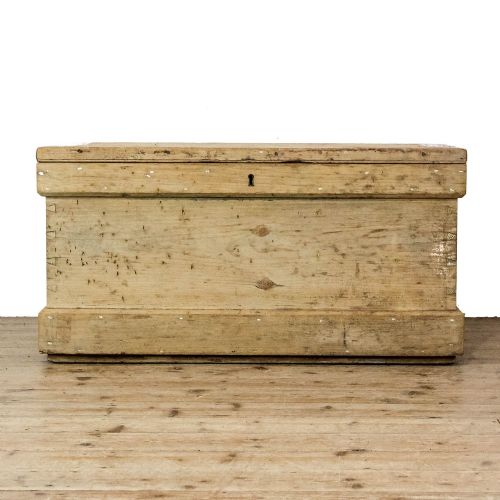
A pine wooden box serves as a robust container for household goods, blankets, and tools, shaped by everyday domestic needs across centuries. When searching for a pine wooden box, buyers encounter sturdy trunks, blanket boxes, and mule chests spanning the Georgian and Victorian eras.
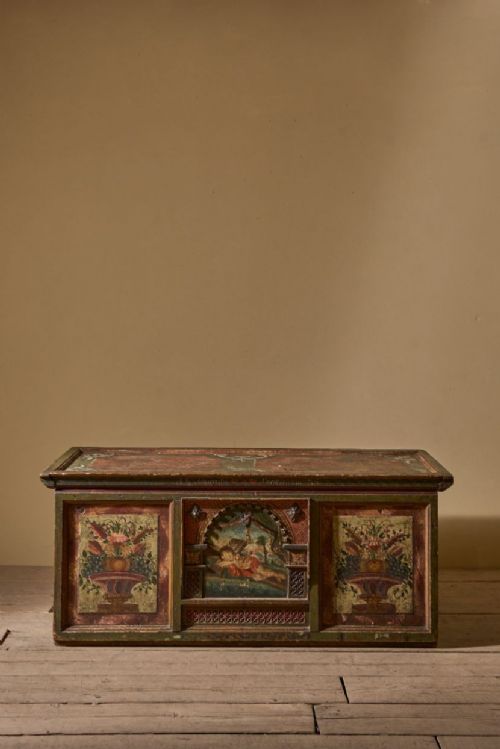
The selections on this page lean heavily toward nineteenth-century examples alongside eighteenth-century regional pieces. Form follows function closely, resulting in simple lidded chests as well as fitted tool cabinets and painted storage trunks.
Origins stretch across Britain, Scandinavia, and continental Europe, showing regional variations in timber selection and joinery. Pitch pine, standard pine, and occasional elm or hardwood feature in these utilitarian pieces.
How they were made
Carpenters constructed these containers using solid pine planks joined with dovetails, tongue and groove boards, or simple nailed joints. Surfaces were often left bare to absorb wax or finished with paint and protective glazes.
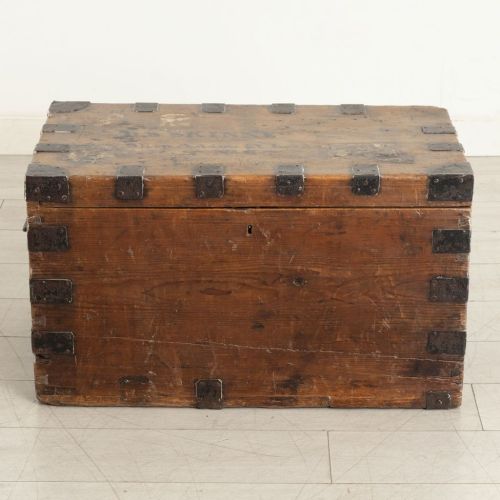
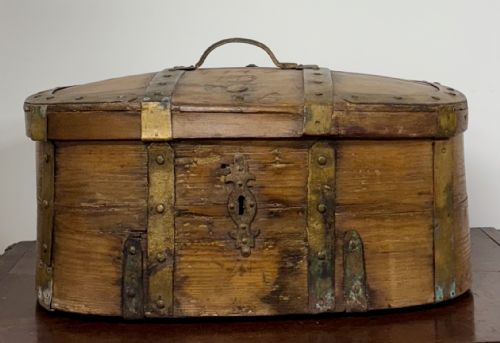
Iron strapwork, brass mounts, and forged hinges provided structural reinforcement for travel and heavy daily use. Internal compartments, till boxes, and occasional drawers added organisational utility to the simple volume.
Storage forms range from plain blanket boxes and travel trunks to fitted tool chests, spice boxes, and pigeon holes.
What varies in quality
Quality rests upon the integrity of the timber, the crispness of the joinery, and the retention of original surface treatments such as early paint or scumble glaze. Heavy ironwork and robust brass hardware elevate a piece from basic utility to fine craftsmanship.
Proportion and patination dictate visual success, with mellow waxed surfaces outperforming dry or over-stripped timber. Intact interior fittings like till boxes or small drawers mark superior examples.
The Pine Wooden Box Glossary
- Mule chest
- A storage chest featuring one or more drawers beneath the main lidded compartment. This form bridges the gap between a simple blanket box and a full chest of drawers.
- Scumble
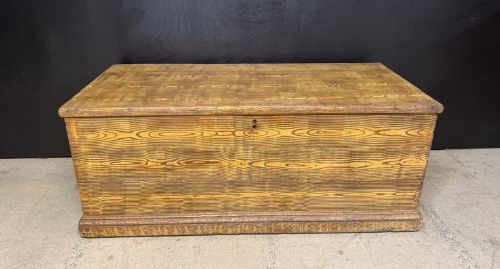
- A translucent or semi-opaque glaze applied over a lighter painted base to imitate the grain of more expensive woods. It was widely used on Victorian utilitarian furniture.
- Pitch pine
- A resinous pine variety known for its dense grain and durability. It frequently appears in heavy-duty Victorian trunks and campaign chests.
- Strapwork
- Ornamental bands of metal, typically iron or brass, fixed across the exterior of a box or chest for reinforcement and decoration.
- Tramp art
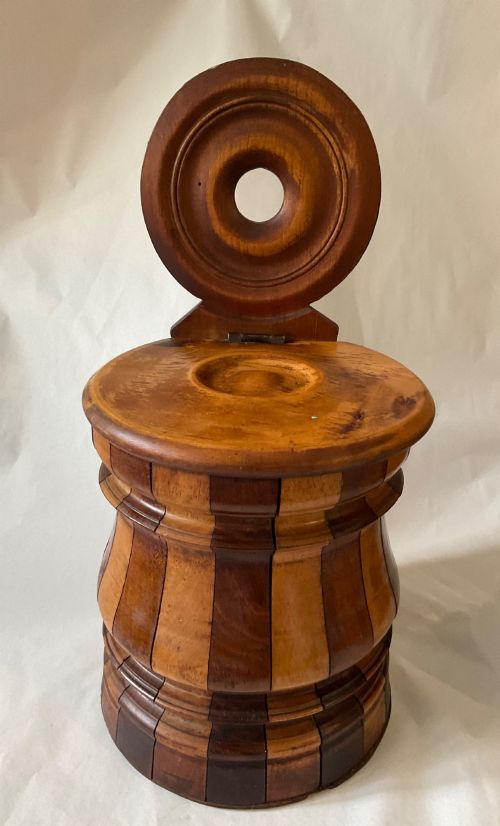
- Folk art sculpture created by itinerant workers using salvaged wood from packaging crates and cigar boxes. Pieces often feature layered, chip-carved geometric patterns.
Pine Wooden Box: Frequently Asked Questions
How do I date an old box?
Examine the construction methods, nail types, and hinge styles used in the piece. Hand-forged ironwork and pegged joinery generally point to eighteenth or early nineteenth-century origins.
Surface patination and timber choice also offer clues. Waxed finishes and pitch pine denote Victorian production, whilst earlier pieces display distinct regional joinery traits.
What is a mule chest?
A mule chest combines a traditional lidded blanket box with one or more drawers built into the base. This design evolved to provide easier access to stored textiles without lifting the main lid.
They gained popularity during the Georgian period and continued into the nineteenth century as practical farmhouse storage furniture.
How should I clean a waxed finish?
Dust the surface regularly with a soft, dry cloth to prevent grit accumulation. Apply a quality beeswax sparingly when the pine looks dry, buffing gently to restore the sheen.
Avoid using water, modern spray polishes, or harsh chemical cleaners, as these strip historic wax layers and damage the underlying timber patination.
What is scumble paint?
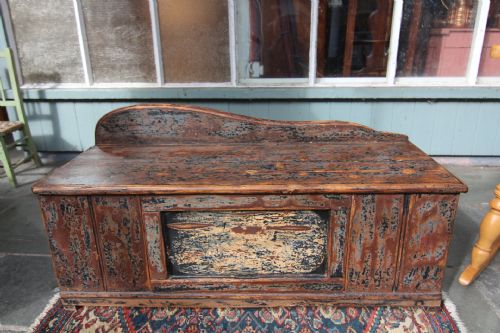
Scumble paint is a decorative surface technique where a dark tinted glaze is dragged or combed over a lighter base coat. Artisans used this method to simulate richer timbers like oak or mahogany on cheaper pine furniture.
Victorian makers frequently employed this finish to smarten up utilitarian household boxes and storage trunks.