
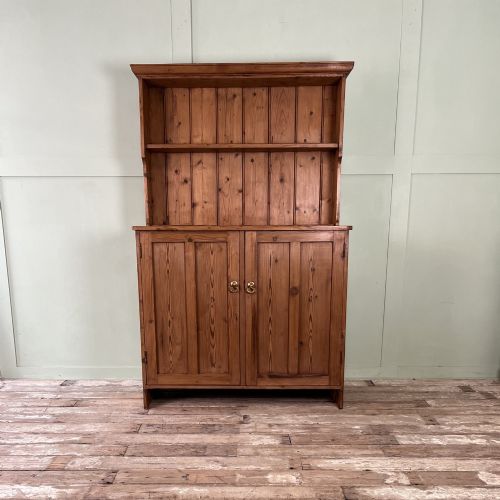
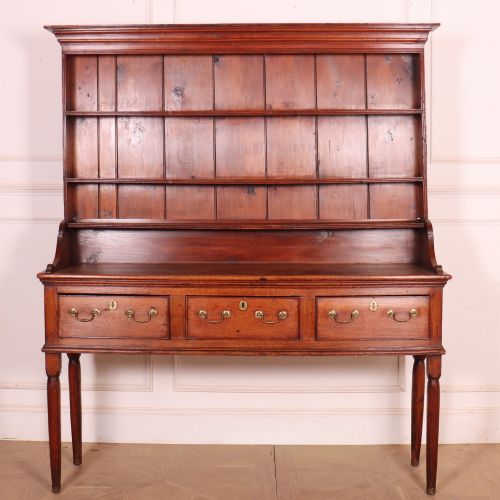
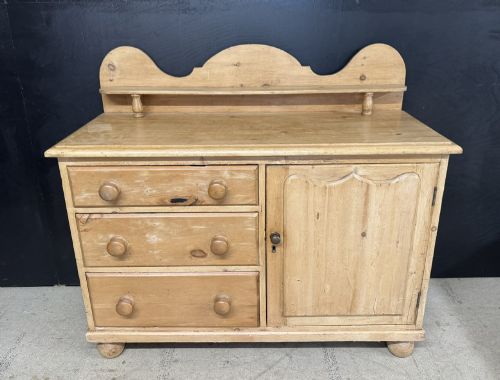
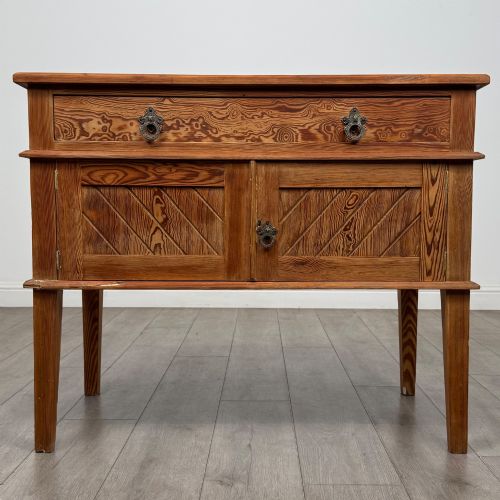
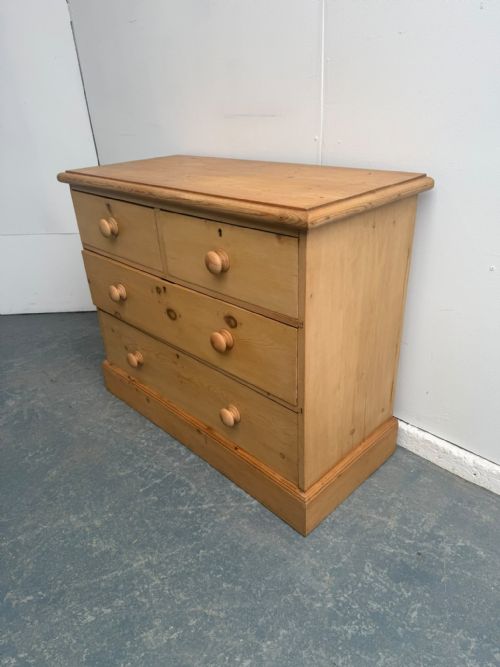


Pine Sideboard Unit
These pine sideboard unit options offer practical storage with the warm, rustic charm of nineteenth-century country furniture.
Pine Sideboard Unit
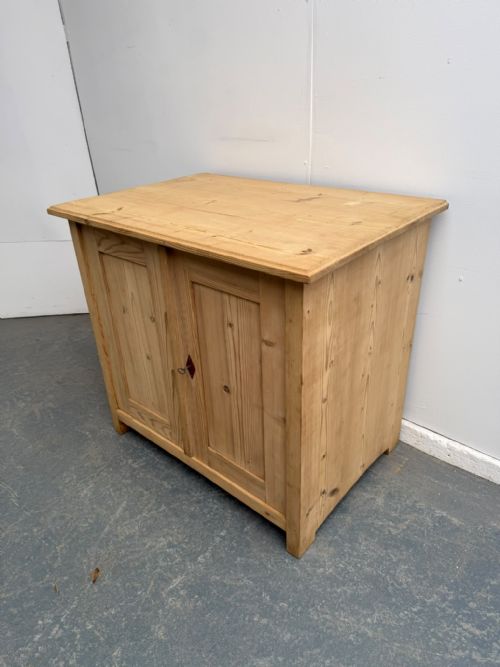
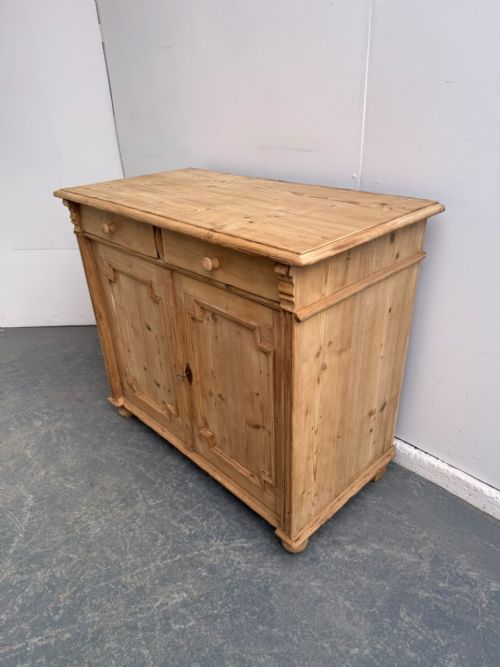
A pine sideboard unit brings together versatile timber storage forms, ranging from kitchen dresser bases to low cupboards and multi-drawer banks. Buyers searching for a pine sideboard unit encounter various forms dating from the Georgian, Regency, and Victorian periods, as well as around nineteen hundred.
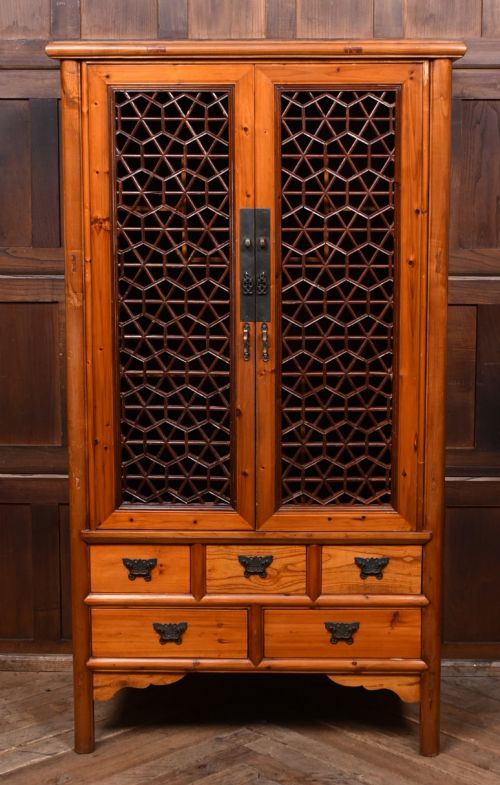
The pieces on this page lean heavily towards nineteenth century examples, encompassing British country styles alongside Scandinavian and Japanese influences. Kitchen dresser bases and two-door storage cupboards dominate the selection, providing utilitarian surface space and enclosed shelving.
How they were made
Construction relies primarily on solid pine and pitch pine, occasionally paired with cedar, iron, and brass fittings. Carpenters utilised timber planks to build sturdy frames for dressers, cupboards, and chests of drawers.
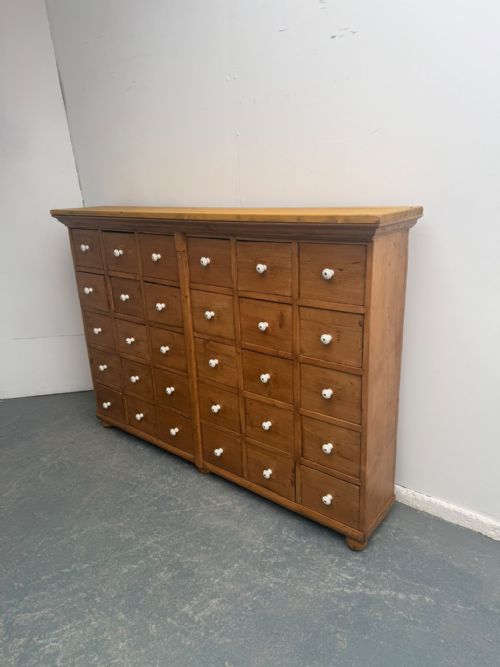
One extraordinary Victorian example crams thirty individual drawers into a single bank for maximum sorting power.
What varies in quality
Quality differences stem from the original purpose and the intricacy of the joinery, distinguishing utilitarian shop fittings from domestic furniture. Larger multi-drawer configurations and refined hardware elevate certain examples above standard pantry cupboards.
The preservation of original painted surfaces or clean waxed timber grain dictates the visual appeal of each unit. Proportion and the integration of functional elements like multiple drawers or glazed sections further divide the standard grade from the exceptional.
The Pine Sideboard Unit Glossary
- Pine
- A soft timber widely used for country furniture because it is easy to work and takes wax or paint well. It forms the primary structural material for these sideboards and dressers.
- Pitch pine
- A heavier, harder resinous variety of pine noted for its prominent grain pattern. Victorian cabinet makers utilised it for durability in hardworking household furniture.
- Dresser base
- The lower section of a kitchen dresser, usually featuring cupboards and drawers beneath a flat top. It functions independently as a sideboard or serving surface.
- Bank of drawers
- A multi-drawer cabinet originally designed for commercial or institutional storage. These units contain numerous small compartments rather than standard cupboard space.
Pine Sideboard Unit: Frequently Asked Questions
How do I date a pine sideboard?
Dating relies on construction methods, timber choice, and the overall style associated with periods like the Georgian or Victorian eras. Examining the drawer dovetails and backboards provides clues to the manufacturing decade.
Hardware such as brass pulls or iron hinges also helps establish a timeline, though many pieces underwent updates or stripping during their working lives.
Can I paint or wax these units?
Many of these pieces are specifically offered in a raw state ready to wax or paint according to domestic preference. Applying a traditional wax nourishes the timber and enhances the natural grain.
Alternatively, applying a painted finish aligns with the historic tradition of decorating country pine furniture to suit kitchen and dining spaces.
Are these sideboards suitable for modern kitchens?
The generous proportions and deep storage capacities make these units practical additions to contemporary culinary spaces. They serve as reliable kitchen islands, coffee stations, or general storage consoles.
Their robust construction ensures they handle modern utility demands just as they did in nineteenth-century larders and dining rooms.
What is the difference between a dresser base and a cupboard?
A dresser base typically combines a flat top surface with a combination of drawers and lower doors designed for food preparation and storage. A cupboard focuses purely on enclosed shelving space behind doors.
Both forms belong to the wider family of utility furniture constructed from pine and other regional timbers.