
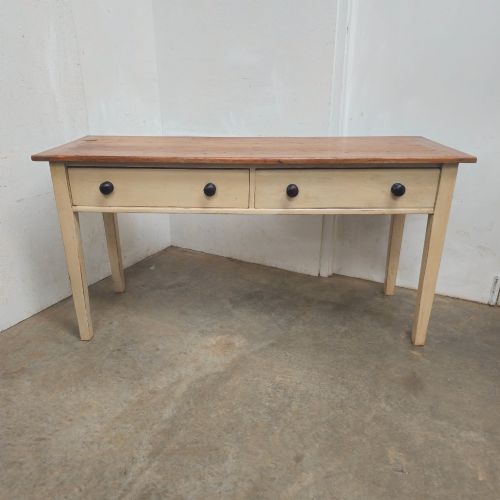
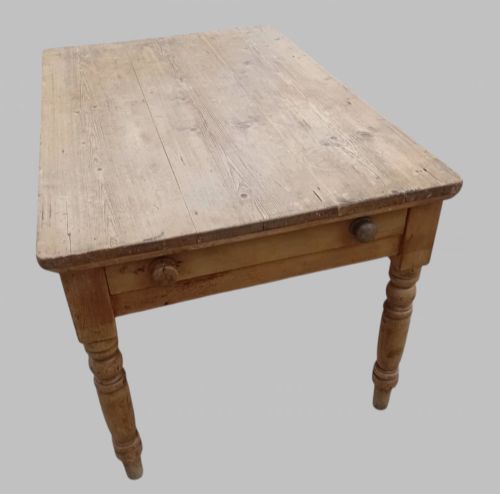
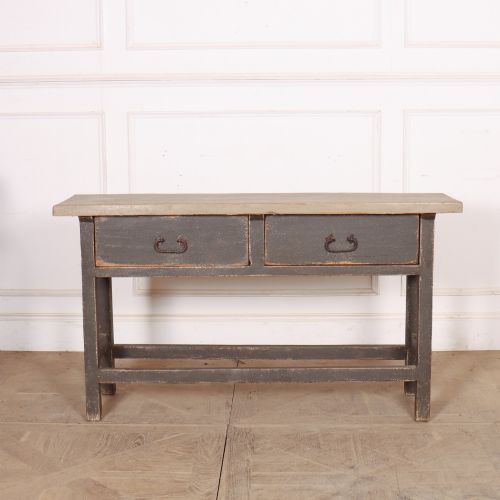
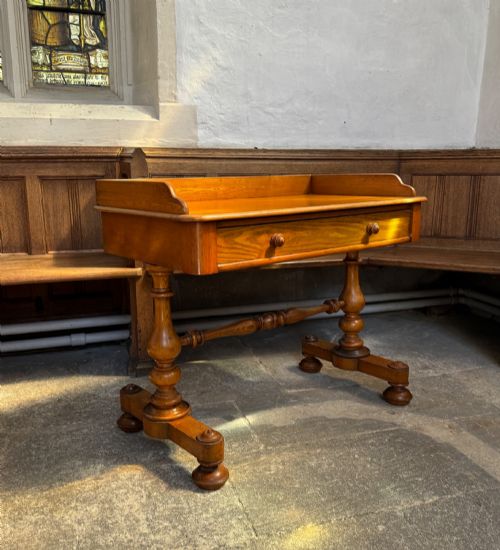
Pine Side Table with Drawers
A pine side table with drawers brings honest utility and warmth to a room, offering practical surface space alongside concealed storage.
Pine Side Table with Drawers
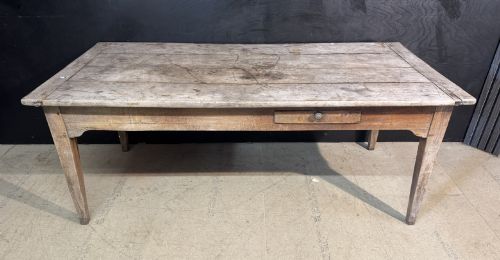
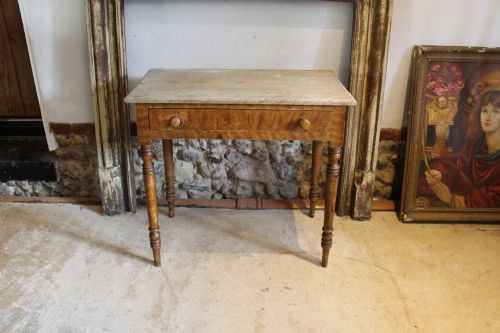
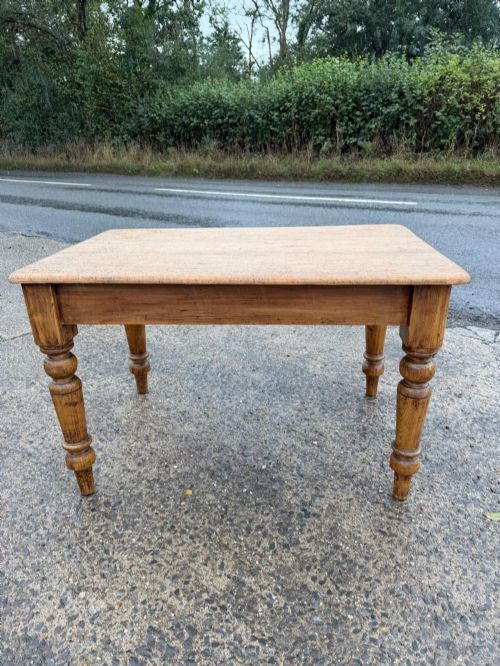
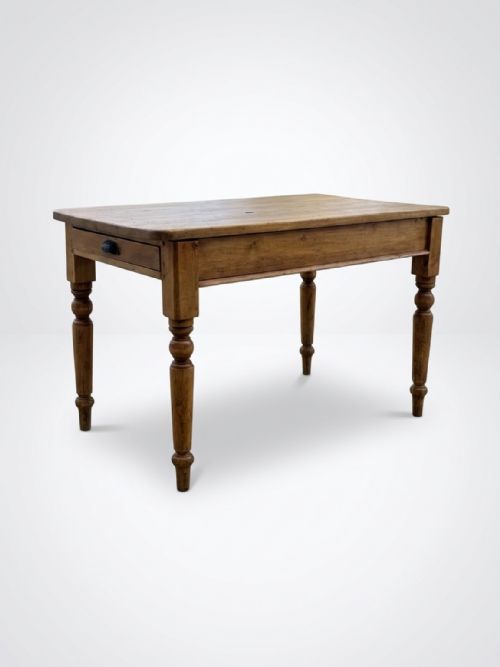
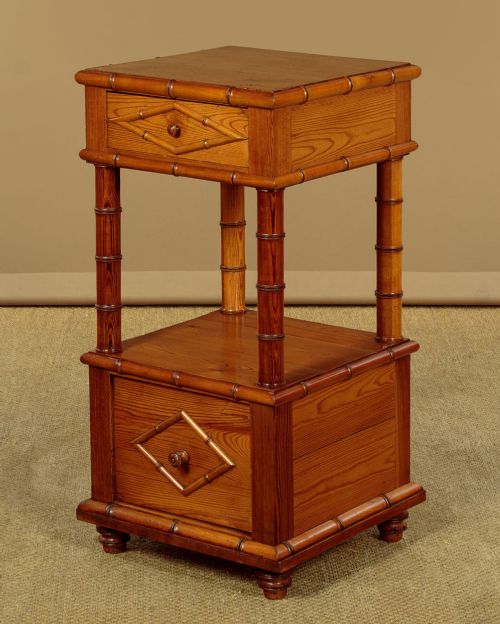
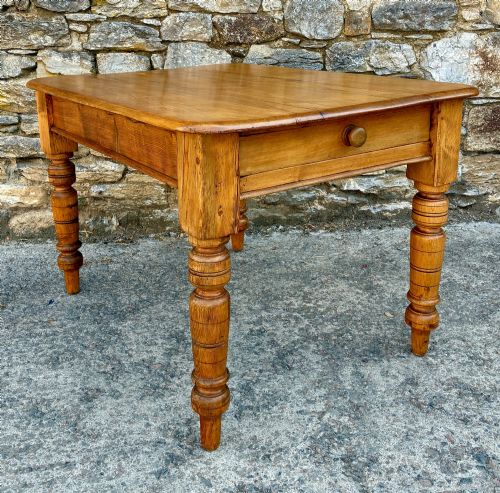
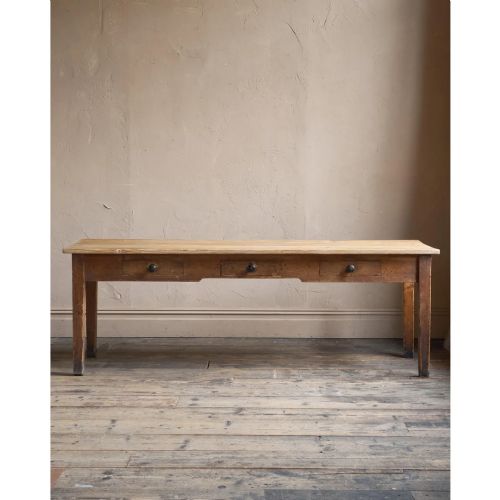
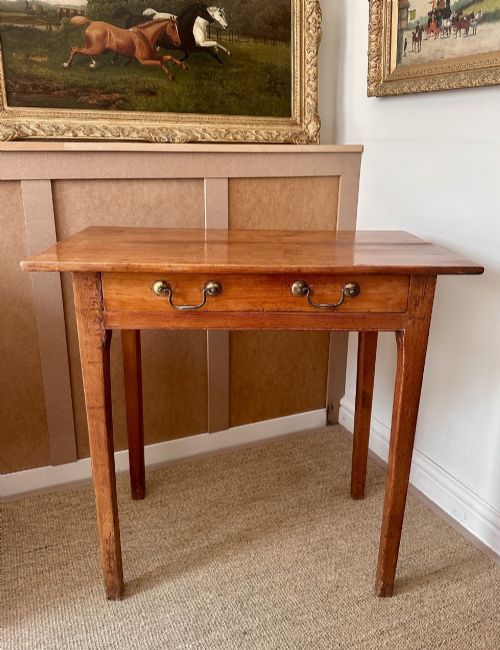
When searching for a pine side table with drawers, you encounter pieces originating primarily from the nineteenth century and the Victorian era, alongside examples from the early twentieth century. These domestic items span functional forms including washstands, writing desks, hall tables, and compact kitchen tables equipped with single or double drawers to the front frieze.
The aesthetic leans towards regional and vernacular traditions, encompassing English, French, and Scandinavian country styles as well as rustic farmhouse iterations. Such tables served utilitarian purposes in sculleries, dairies, and bedrooms, meaning their current incarnations carry the distinct character of genuine working furniture.
Materials and construction
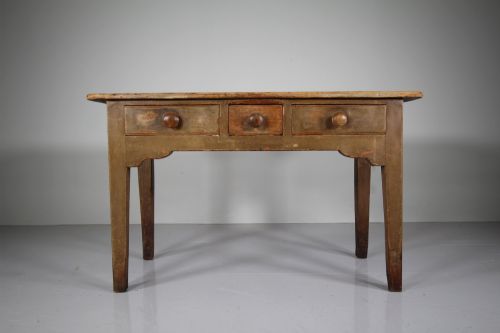
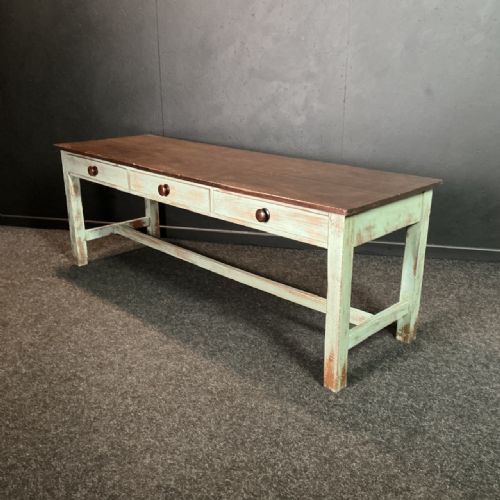
Construction relies heavily on standard pine and denser pitch pine, sometimes paired with fruitwood or supported by metal elements and cast iron. Surfaces frequently display original paint finishes, ranging from muted tones to specific decorative hues like blue, while others retain exposed wood surfaces shaped by decades of use.
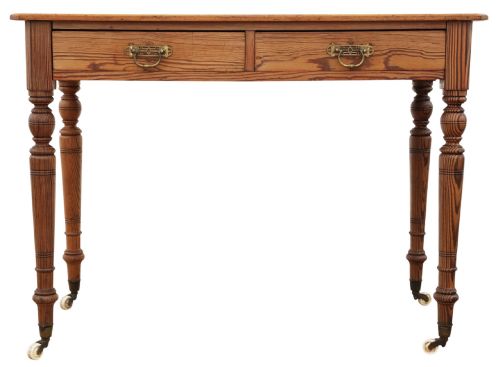
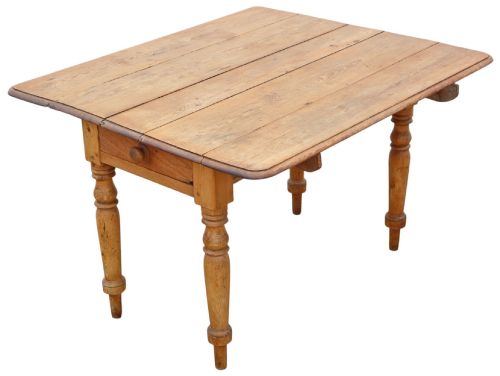
Hardware details typically include brass handles or turned wooden knobs, while structural variations encompass folding drop-leaf mechanisms, gallery backs, and lower tiers or shelves. Joinery traditions of the period dictate simple yet robust frames built to withstand daily domestic labour.
Listings demonstrate a strong presence of nineteenth-century Victorian pieces, alongside select early twentieth-century examples in both painted wood and natural pitch pine.
Distinctions in quality
The standard of a piece rests largely on the integrity of its original surfaces and the honesty of its wear. Tables retaining their authentic period paint or well-patinated bare wood sit at a different level from those stripped down or heavily reworked in later decades.
Proportion and utility also drive distinction, where balanced dimensions, smoothly operating drawers with appropriate brass or wooden pulls, and structural soundness set finer examples apart from simpler, utilitarian workshop pieces.
The Pine Side Table with Drawers Glossary
- Pitch pine
- A dense, resinous softwood commonly utilised in nineteenth-century furniture for its durability and prominent grain pattern.
- Frieze
- The horizontal band situated immediately beneath the tabletop, frequently housing one or more drawers in these designs.
- Washstand
- A domestic table designed to hold a basin and jug, often equipped with a gallery back and drawer storage.
- Drop-leaf
- A hinged tabletop section that folds down to save space or extends to increase surface area when required.
Pine Side Table with Drawers: Frequently Asked Questions
Where did these tables originate?
These tables stem primarily from nineteenth-century British, French, and Scandinavian domestic environments, where they functioned in kitchens, sculleries, and bedrooms.
Their forms reflect regional workshop traditions rather than rigid industrial manufacturing, resulting in diverse local characteristics.
How were drawers traditionally constructed?
Drawers in these pieces were built to endure heavy daily use, integrated directly into the front frieze beneath the main surface.
They commonly feature simple tongue-and-groove or dovetailed box construction, operated via brass pulls or turned wooden knobs.
Are painted finishes original?
Many tables retain their original paint layers, which range from simple utilitarian coats applied in period workshops to specific decorative colours.
Surviving early paint adds significant character and historical context, though some pieces were stripped or repainted later in life.
How do I style a pine table at home?
The understated nature of these pieces allows them to function as sideboards, hall surfaces, or writing desks in modern rooms.
Pairing them with contrasting textures or contemporary lighting helps ground the rustic warmth of the aged timber.