
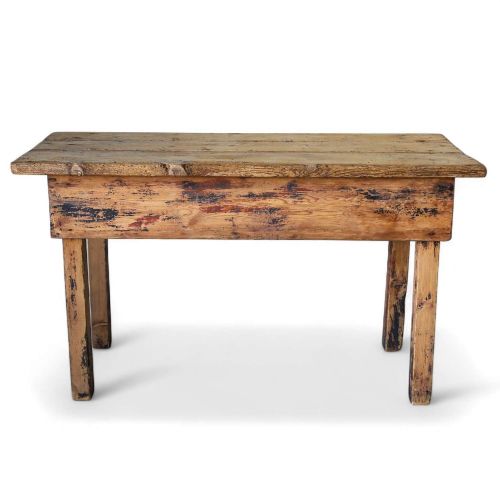
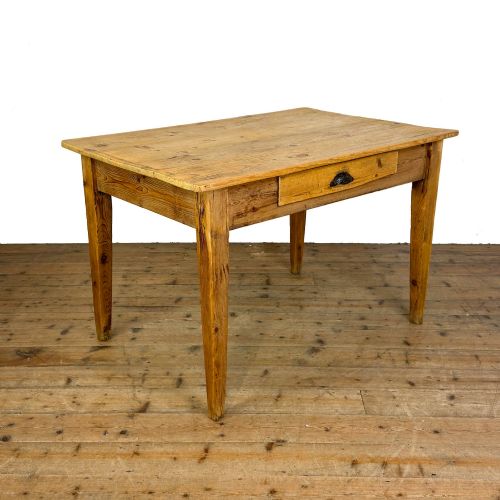
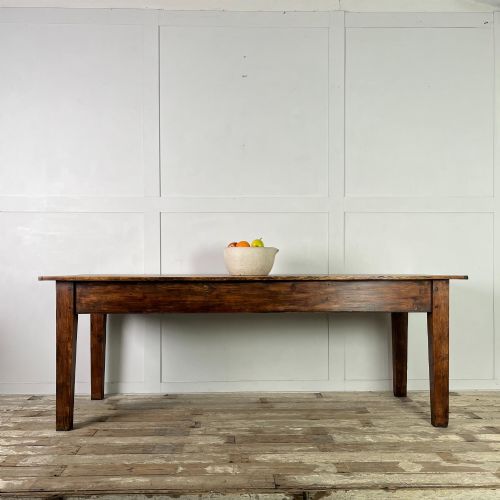
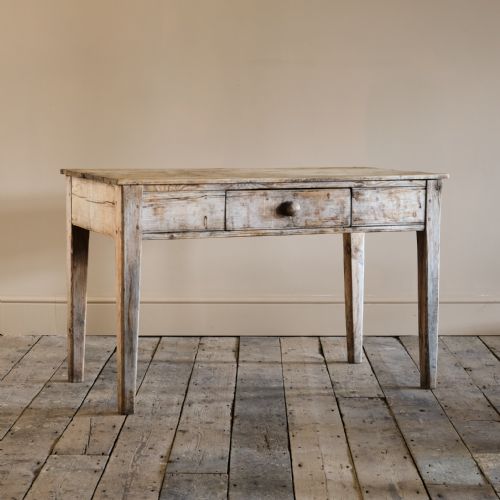
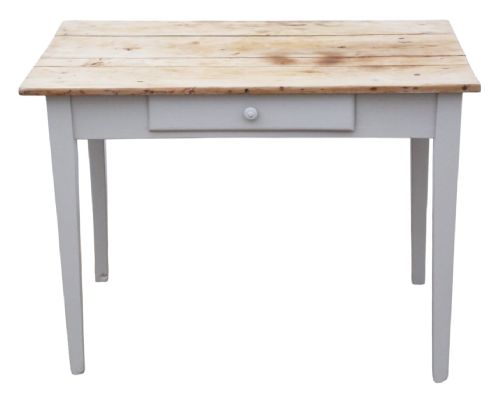


Antique Pine Worktable
An antique pine worktable brings honest utility and rugged charm to a modern kitchen or prep space.
Antique Pine Worktable
When you search for an antique pine worktable, you are looking at sturdy utilitarian surfaces built for food preparation, baking, and scullery tasks in past centuries. These tables range from modest domestic pieces to large industrial and farmhouse examples originating from Britain, France, Scandinavia, and Wales.
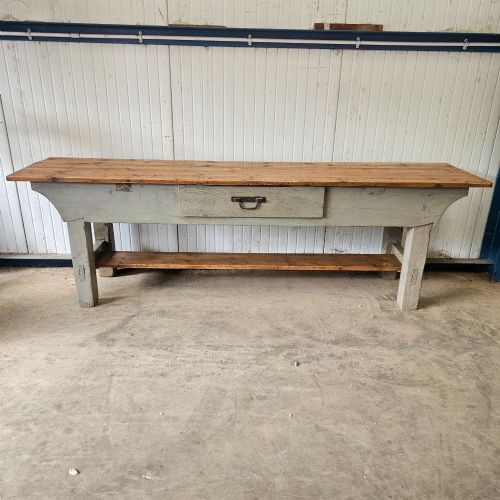
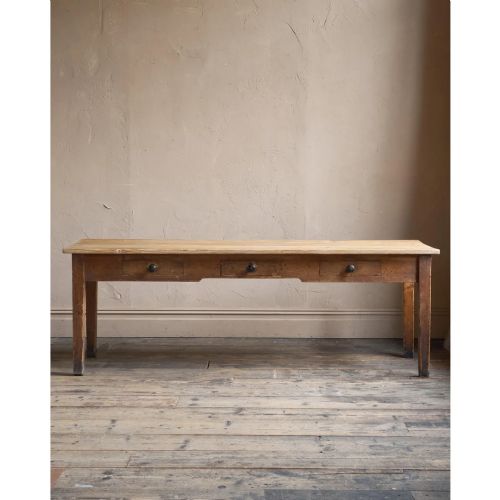
You are most likely to meet 19th-century and Victorian examples on this page, often featuring scrubbed timber tops, painted bases, and practical storage drawers. Their robust forms encompass kitchen tables, bakers prep tables, and preparation surfaces designed for heavy daily use.
Materials and Construction
These pieces are constructed predominantly from solid pine and pitch pine, occasionally paired with elm for durable tabletops and sturdy wooden frames. Iron and brass hardware, along with cast iron elements, appear on operational components and drawer fittings.
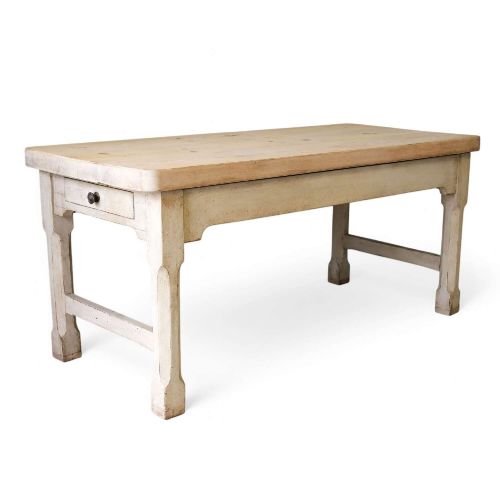
Makers often applied layers of paint to the bases of scullery and bakers tables, whilst the working surfaces were left bare to endure regular scrubbing. Hand-stripped finishes and later painted treatments reflect the practical maintenance these hardworking objects received over generations.
Judging Quality and Character
The distinction between standard utility items and finer examples rests on the balance of proportions, timber selection, and the integrity of original construction. Tables featuring substantial solid pine tops, integrated drawers with period joinery, and retained original paint finishes stand higher in the range.
Proportion and scale dictate desirability, with larger farmhouse and scullery formats commanding attention for domestic spaces. The depth of patination on the scrubbed wood tells the story of active service in kitchens and bakeries.
The Antique Pine Worktable Glossary
- Scrub-top
- A tabletop made from softwood like pine or sycamore that was repeatedly scoured with water and sand to keep it hygienic. This process leaves the grain raised and pale.
- Pitch pine
- A durable, resinous variety of pine timber prized for its strength and rich grain pattern. It was frequently utilised for heavy-duty furniture and prep surfaces.
- Scullery table
- A utilitarian table designed for washing, food preparation, and messy kitchen chores. They often feature drawers for knives and cloths.
- Bakers table
- A specialised work table with a large flat top, traditionally used for kneading dough and pastry preparation. Many examples incorporate painted softwood bases.
- Patina
- The surface sheen and colour acquired by wood and paint through decades of use, cleaning, and exposure to light. It is a key indicator of age and authenticity.
Antique Pine Worktable: Frequently Asked Questions
How do I clean an antique pine worktable?
Maintain the scrubbed timber top using mild soap and warm water, scrubbing gently along the grain rather than across it. Avoid harsh chemical cleaners that strip the natural dry finish of old softwood.
Nourish unpainted wooden bases occasionally with suitable wax or oil to prevent the timber from drying out. Keep painted surfaces dusted and dry to preserve their historical character.
Can I use an antique worktable as a kitchen island?
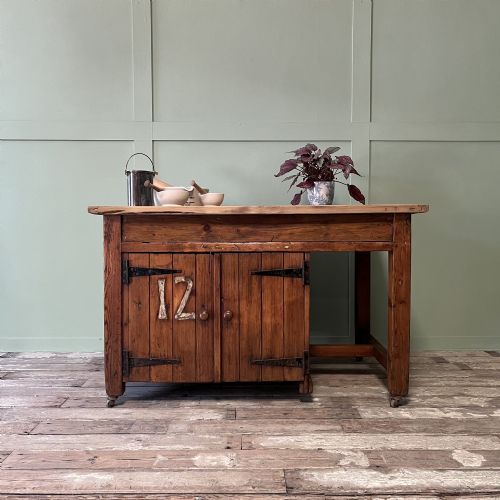
These tables make ideal kitchen islands because their original purpose was food preparation and heavy daily use. Their generous proportions and sturdy construction easily accommodate modern culinary tasks.
Check the working height of the table against your kitchen counters to ensure comfortable day-to-day usage. Many Victorian and 19th-century examples offer useful drawer storage for utensils.
What is the difference between a scullery table and a farmhouse table?
Scullery tables were built strictly for utilitarian tasks in the back areas of large houses, typically featuring plain pine boards and functional storage drawers. Farmhouse tables generally served as the central dining and gathering point for the household.
Scullery versions often display the pale, scrubbed timber associated with constant washing, whereas farmhouse examples may retain darker patinated finishes or painted bases.
How do I spot original paint on a worktable?
Original paint exhibits natural wear patterns, softening around edges and corners where hands and utensils brushed against the timber over generations. Look for multiple underlying layers and subtle crazing rather than uniform modern brushstrokes.
Tables described with later paint indicate that a past owner refreshed the base, which is common for functional kitchen furniture that saw heavy domestic service.