

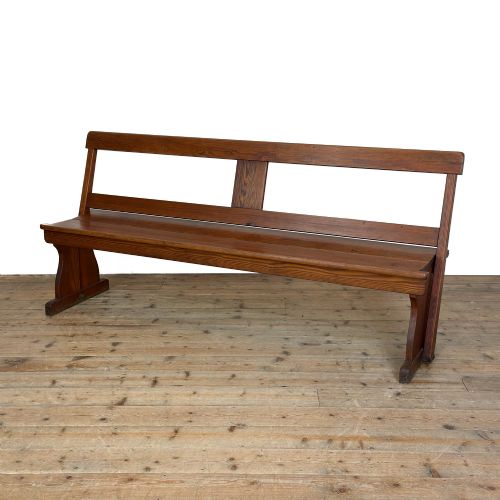
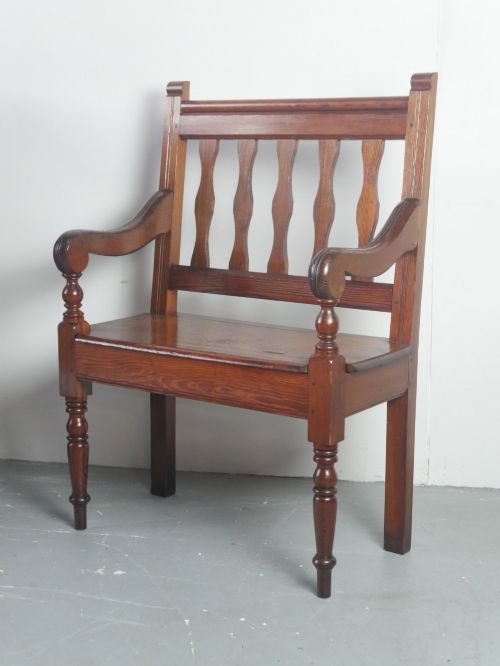
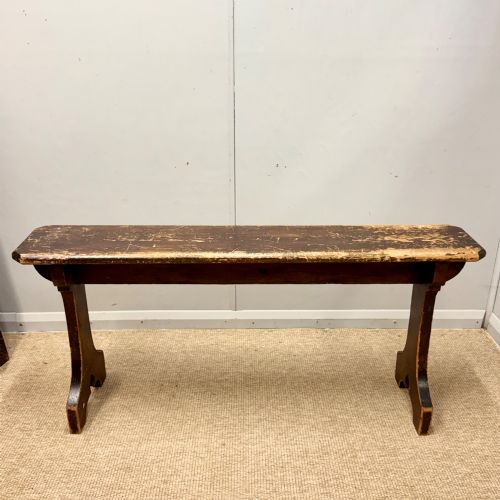
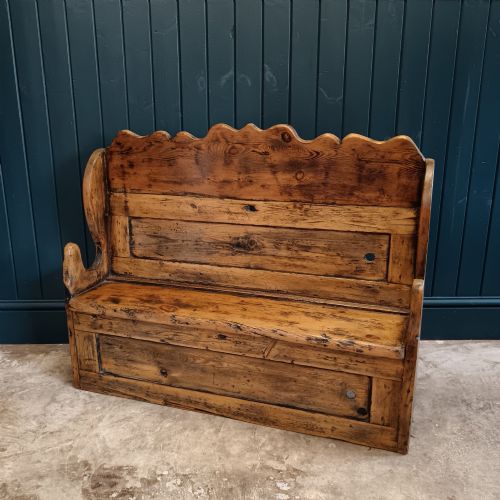
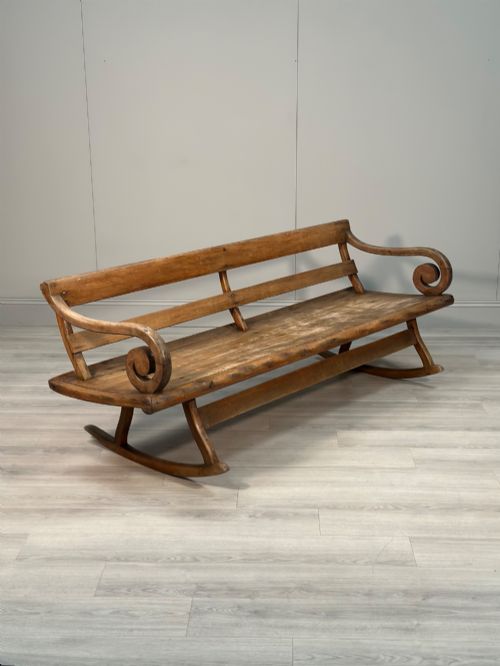
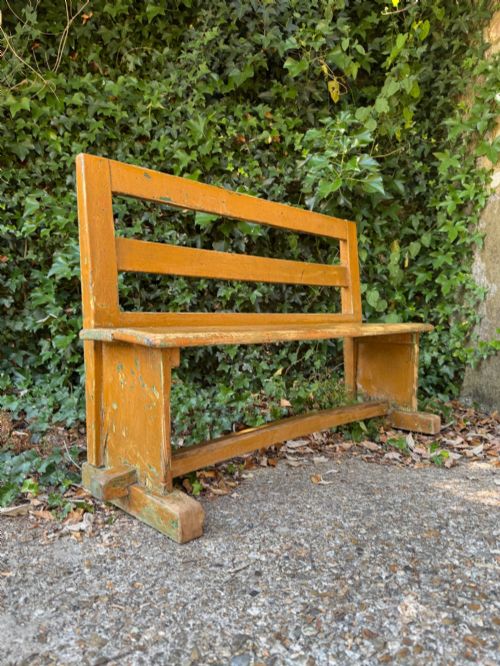
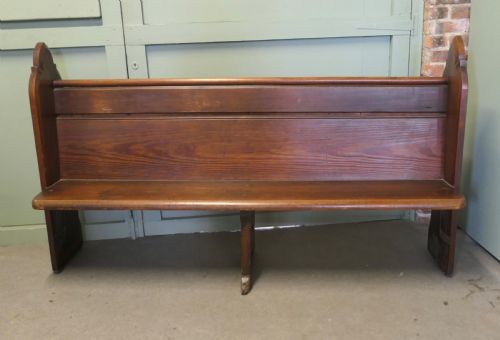
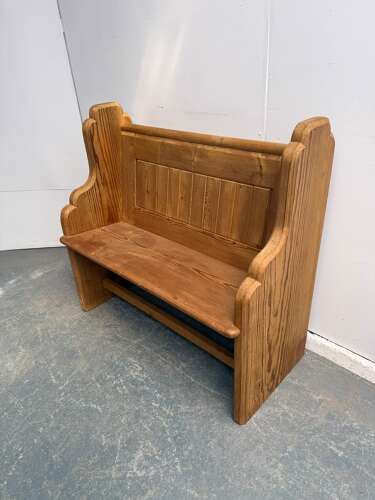
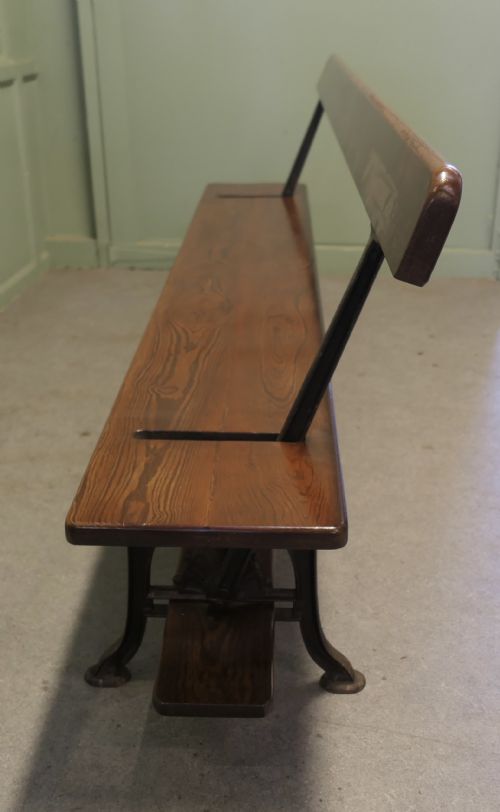
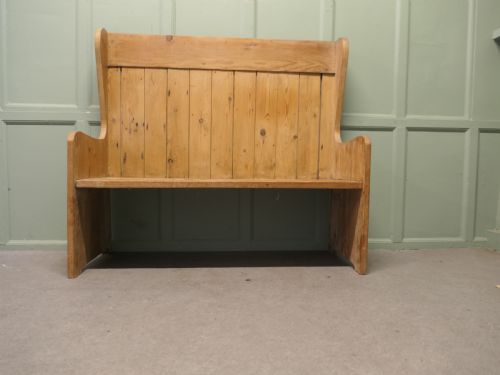
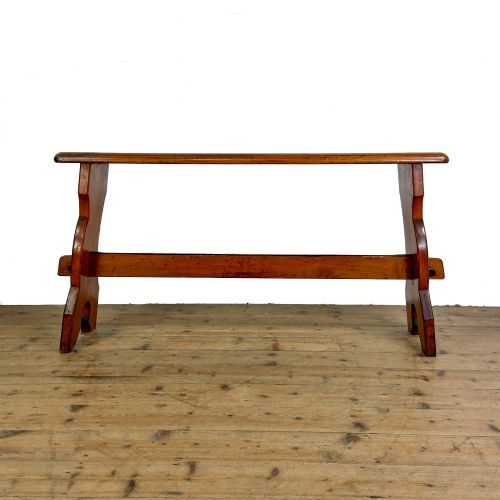
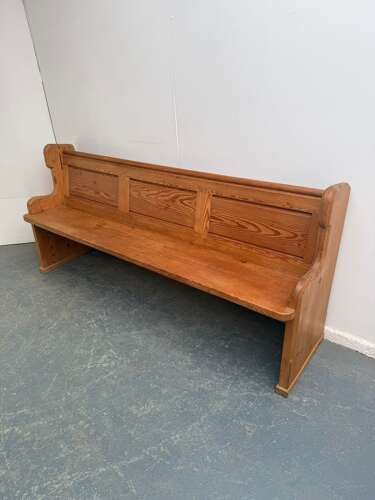
Pine Pew Bench
Pine pew bench pieces bring enduring utility and robust timber character to hallways and kitchens, offering honest historical seating.
Pine Pew Bench
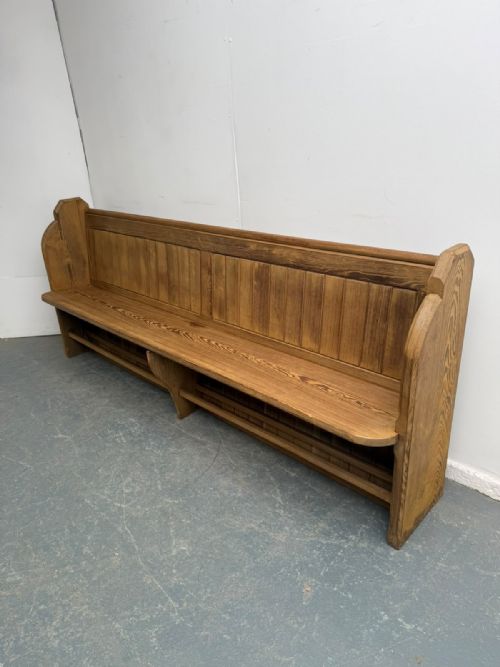
A pine pew bench represents a sturdy tradition of utilitarian seating, drawing from ecclesiastical, domestic, and tavern origins across the nineteenth and early twentieth centuries. Buyers search for these pieces to anchor hallways, kitchens, and living spaces with functional history.
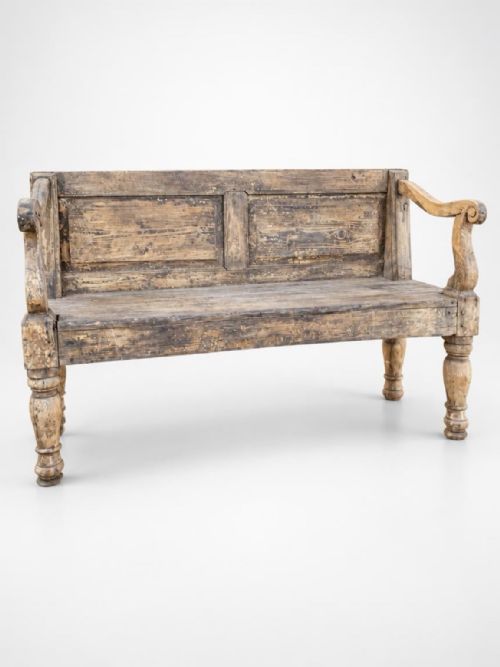
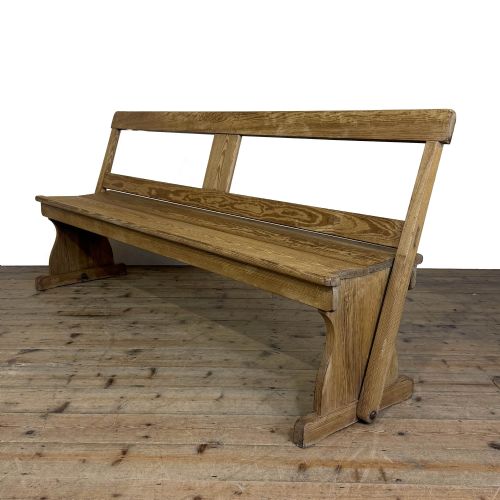
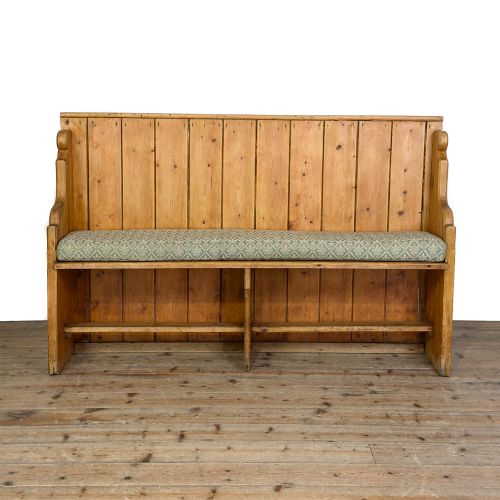
The selections available here range from austere chapel pews and school benches to high-back settles and flip-over formats designed for versatility. Regional variations include English country examples, Irish formats, and continental painted pieces.
Formats vary from simple one-seater chapel chairs to long tavern benches and deep hall seating, often incorporating storage boxes beneath the seat or clever reversible backs.
Materials and Construction
Makers relied primarily on solid pine and pitch pine, supplemented by elm, timber, and occasional iron brackets or fixings for structural reinforcement. Surfaces display waxed finishes, honey brown patina, or historic layers of paint in blue, cream, and other colours.
Joinery techniques prioritize practical durability over delicate ornament, utilising board construction, pegged joints, and solid plank backs to withstand heavy communal use in churches, pubs, and schools.
Pine Pew Bench Retail Price Guide 2026
Typical asking prices for pine pew bench among the pieces listed under this phrase on Sellingantiques today, from the lower quarter to the upper quarter. They describe what is for sale here now, not the wider market.
Tram and trolley bus seats occasionally moonlight as indoor benches, proving that Victorian commuters enjoyed remarkably solid pine seating.
Defining Quality in Pine Seating
Quality rests in the integrity of the timber, the depth of the natural patina, and the survival of original painted surfaces rather than decorative excess. Superior examples retain their original configuration, whether configured as a barrel settle, a box base, or a church pew.
Proportion and scale distinguish finer country pieces, where slender hallways seats or high-back settles balance practical utility with pleasing architectural lines.
The Pine Pew Bench Glossary
- Settle bench
- A wooden bench with a high back, solid arms, and often a enclosed box base beneath the seat to block draughts in traditional interiors.
- Chapel pew
- A linear form of church seating constructed with simple panelled or solid timber ends, designed for communal worship spaces.
- Pitch pine
- A dense, resinous variety of pine timber prized for its prominent grain pattern and robust durability in demanding environments.
- Patina
- The surface sheen and colour developed across decades of handling, waxing, and exposure to light in domestic or public settings.
- Flip-over bench
- A convertible seating design featuring a reversible backrest that alters the direction of the seat.
Pine Pew Bench: Frequently Asked Questions
Where should I place a pine pew bench?
These benches suit narrow hallways, large kitchens, and dining areas where linear seating maximises floor space while providing sturdy utility.
High-back settles work particularly well against hallway walls or beside fireplaces to create a sheltered seating nook.
How do I care for a waxed pine bench?
Maintain the surface by applying a traditional beeswax polish periodically to nourish the dry timber and preserve the underlying honey brown patina.
Avoid placing antique pine seating in direct sunlight or beside heat sources to prevent the wood from splitting.
What is the difference between a pew and a settle?
Pews are typically open-ended linear benches designed for institutional settings like churches, chapels, and schools.
Settles incorporate high backs and solid wooden sides designed to shelter sitters from cold draughts in domestic homes and taverns.
Are these benches comfortable for daily use?
Most historical pews and settles feature upright wooden backs and solid plank seats intended for functional posture rather than lounging.
Adding loose squab cushions or textiles softens the timber seat for extended sitting around a dining table.