


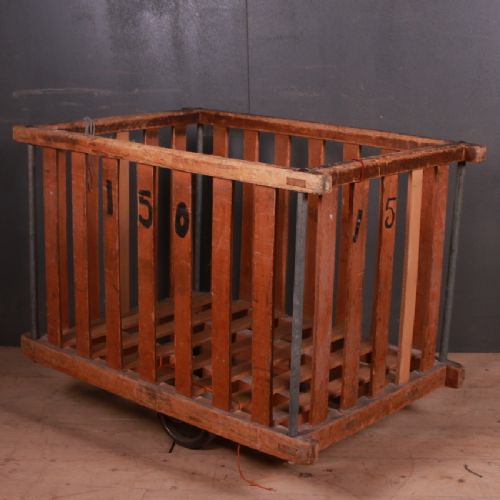


Pine Log Bin
These pine log bin pieces are robust fireside containers designed to hold heavy fuel, offering both utility and character.
Pine Log Bin
A pine log bin serves as a practical fireside receptacle for timber, logs, and coal in country houses and domestic settings. Buyers searching for a pine log bin encounter various forms ranging from rustic boxes and baskets to lidded coffers and fitted trolleys.
The pieces on this page span the nineteenth century, including Victorian examples alongside Scandinavian country and Swedish painted designs. Most options lean towards functional utilitarian forms made to withstand heavy daily use beside the hearth.
How they were made
Construction relies heavily on solid timber, with pine forming the primary body across nineteenth-century and later pieces. Craftsmen joined panels using robust methods suited to holding dense loads of wood and fuel.
Metal reinforcement frequently appears on these containers to add structural strength. Iron bands, brass mounts, and steel fittings secure the pine structure, while some items feature applied paint finishes typical of Scandinavian country workshops.
Several heavy-duty log bins double as trolleys, ensuring that moving firewood remains an effortless wheeled pursuit.
What varies in quality
Quality in these fireside containers rests upon the integrity of the timber and the original strength of the construction. Pieces reinforced with substantial iron or brass banding show superior resilience compared to lighter variants.
Surface treatment also dictates the character and desirability of each piece. Original painted finishes on Swedish and Scandinavian examples hold greater visual depth than later stained or altered surfaces.
The Pine Log Bin Glossary
- Pine
- A softwood commonly utilised for country furniture and utilitarian household boxes due to its accessibility and workability. It takes paint finishes and iron banding well.
- Log bin
- A deep container specifically built to store firewood near a fireplace or stove. These items often feature reinforced corners or handles for lifting heavy timber.
- Cooffer
- A large wooden chest traditionally used for storage, sometimes adapted or repurposed for holding fuel. These heavy-duty boxes provide secure enclosed storage.
- Aesthetic Period
- A late nineteenth-century design movement focusing on visual beauty and artistic expression rather than narrative content. Pieces from this era often display refined decorative elements.
Pine Log Bin: Frequently Asked Questions
What is a pine log bin?
A pine log bin is a sturdy wooden container built to hold firewood and coal beside a hearth. These receptacles protect flooring from debris while keeping fuel close at hand.
Designs range from simple painted boxes to iron-banded storage chests and industrial trolleys. They reflect practical domestic needs from the nineteenth century onward.
How were log bins used?
These bins sat beside fireplaces in country houses and domestic rooms to store heavy timber and logs. Their solid construction handled the weight and rough texture of firewood.
Many examples include metal bands or handles to help move heavy loads across wooden floors. Some double as console tables or general storage chests when not holding fuel.
How do I date a pine log bin?
Dating relies on examining construction techniques, timber wear, and associated hardware like iron bands or brass fittings. Pieces from the nineteenth century often display hand-cut joinery and aged patination.
Scandinavian and Swedish examples frequently feature original painted surfaces typical of late nineteenth-century rural craftsmanship. Comparing the hardware style helps distinguish Victorian pieces from later twentieth-century iterations.
Where do painted log bins come from?
Painted log bins frequently originate from Scandinavian countries including Sweden, where rural workshops produced utilitarian pine furniture with decorative colour finishes. These pieces showcase traditional regional aesthetics.
The paintwork often bears the marks of age and use, distinguishing authentic country items from modern reproductions. White, muted, and original polychrome finishes appear across these regional pieces.